Mold Inspection vs Mold Testing in Texas: Which One Do You Actually Need?
A mold inspection is a visual and moisture-based search of the home that finds where mold is growing and what is feeding it. Mold testing collects air or surface samples and sends them to a laboratory to identify species and measure spore concentrations. Most Texas homeowners need the inspection first. Testing adds value when you smell mold but cannot see it, when a doctor wants data for health concerns, when you need documentation for a real estate transaction or legal dispute, and when a clearance check is required after licensed remediation.
Musty Smell, No Visible Mold? Call (469) 548-7594 Finding the Moisture Is the First Step
(469) 548-7594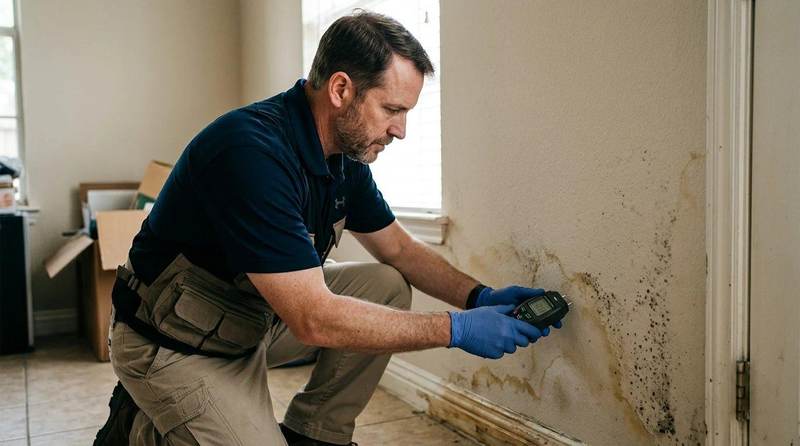
Mold Inspection vs Mold Testing at a Glance
| Mold Inspection | Mold Testing | |
|---|---|---|
| What it is | A visual and moisture-focused search of the home | Lab analysis of air or surface samples |
| Tools used | Flashlight, pin and pinless moisture meters, thermal camera, borescope | Air pumps with spore traps, tape lifts, swabs, bulk material samples |
| What it answers | Where is the mold, how large is it, and what is causing the moisture? | What type of mold, and how do indoor spore levels compare to outside? |
| Time on site | Usually 1-3 hours | Sampling during the visit, lab results in 2-4 business days |
| Best for | Almost every mold concern as a first step | Hidden mold, health documentation, real estate records, clearance |
| Limitations | Cannot identify species or measure airborne spore levels | Shows a snapshot in time; does not find the moisture source by itself |
The simplest way to think about it: the inspection finds the problem, the testing measures it.
What Happens During a Professional Mold Inspection in Texas
Step 1 Interview and History
The assessor asks when you first noticed the issue, whether the home has had leaks, floods, AC problems, roof damage or plumbing issues. Health symptoms respiratory irritation, headaches, allergic reactions are noted because they can indicate airborne spore exposure even before visible growth is found.
Step 2 Exterior Check
Roof condition, gutters and downspouts, grading around the foundation, sprinkler heads hitting walls, and drainage near the slab. Exterior moisture problems often feed interior mold that the homeowner never connects to the outside.
Step 3 Interior Walk-Through
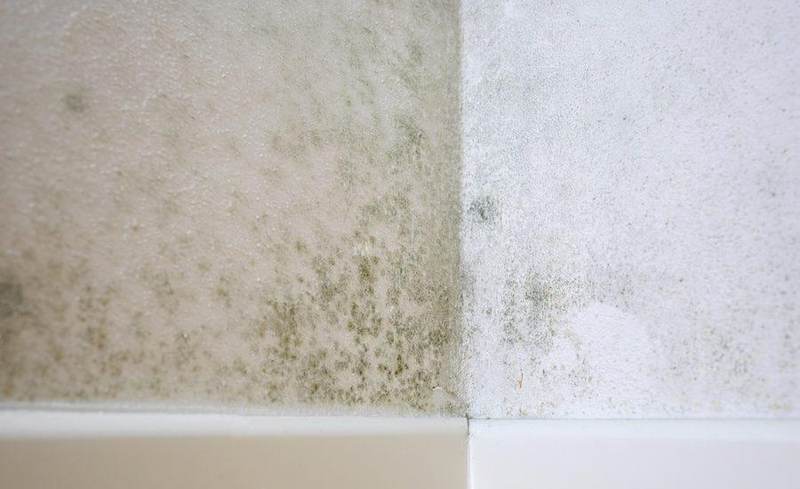
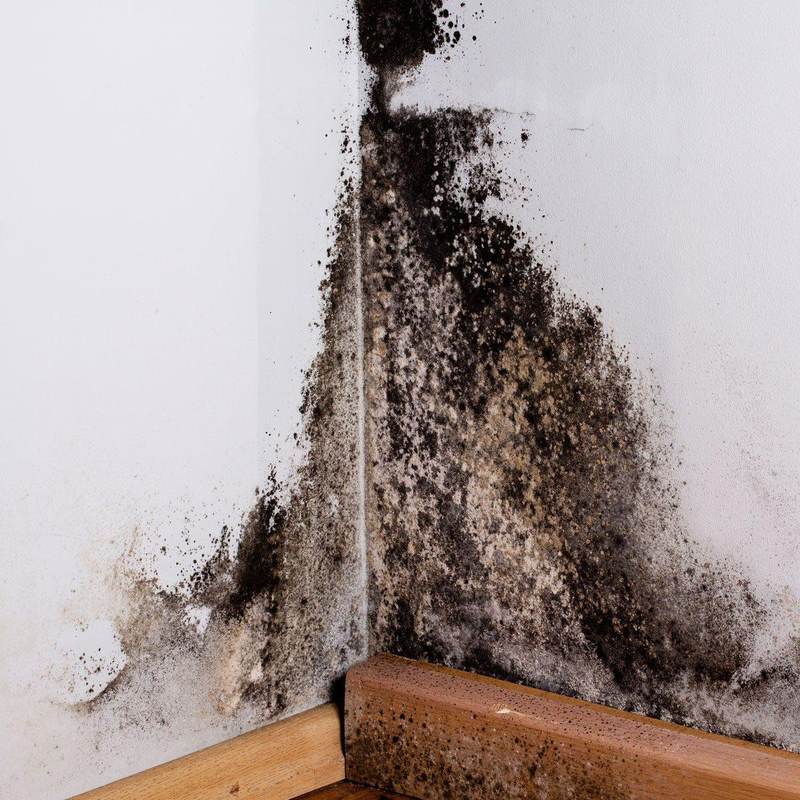
Every room gets checked: walls, ceilings, baseboards, under sinks, around tubs and showers, closets, the water heater area, the AC air handler and the attic. The assessor looks for visible growth, staining, peeling paint, swollen drywall, warped trim and musty odor all signs of water damage in walls that indicate hidden moisture.
Step 4 Moisture Readings and Thermal Imaging
Pin and pinless meters measure moisture content in drywall, wood framing, flooring and subfloor. Thermal imaging highlights cool, damp areas behind walls and ceilings that are invisible to the eye. These readings often reveal wet zones larger than the visible mold patch.
Step 5 Report and Recommendations
The assessor delivers a written report documenting where mold is present, the estimated affected area in square feet, the likely moisture source, and the recommended next steps. This report determines whether the job falls under Texas TDLR licensing requirements.
Types of Mold Tests and What Each One Tells You
| Test Type | How It Works | Best For |
|---|---|---|
| Air sample (spore trap) | A pump pulls a measured volume of air through a cassette indoor and outdoor samples compared | Detecting hidden mold by comparing indoor vs outdoor spore levels |
| Wall cavity air sample | Sample taken through a small hole drilled in drywall | Checking for mold growth inside a suspected wet wall without full demolition |
| Tape lift (surface sample) | Clear adhesive tape pressed on visible growth and sent to lab | Identifying what a visible colony actually is |
| Swab sample | Cotton swab rubbed on a surface | Same as tape lift, used on irregular or rough surfaces |
| Bulk sample | A piece of contaminated material cut out and sent to lab | Testing drywall, carpet, insulation or wood for mold penetration depth |
| Post-remediation clearance sampling | Air and/or surface samples after cleanup | Confirming spore levels have returned to normal after licensed remediation |
The most useful air tests compare indoor spore levels to outdoor levels. Some amount of mold spores typically 1 to 30 microns in size float in Texas air at all times. A problem shows up when indoor levels significantly exceed outdoor levels, or when species that colonize wet building materials (Aspergillus, Penicillium, Stachybotrys) appear indoors and not outside.
When Mold Testing Is Worth Paying For
You smell mold but cannot see any growth. Air or wall-cavity sampling can confirm a hidden problem behind drywall or under flooring and justify the cost of opening walls.
Someone in the household has health symptoms that may be mold-related, and a physician wants laboratory data to support treatment decisions.
You are buying, selling or renting a property and need written documentation of indoor air quality for the transaction.
There is a dispute with a landlord, builder, contractor or insurance carrier where lab results provide objective evidence.
After licensed remediation, clearance testing confirms the area meets acceptable spore levels before containment comes down and the Certificate of Mold Damage Remediation (CMDR) is issued.
After a flood or sewage backup, testing can support decisions about which materials must be removed versus which can be cleaned.
When Mold Testing Is Usually Not Needed
You can already see mold growing. If it is visible, it needs to be removed regardless of species. The EPA does not generally recommend sampling to identify visible mold before cleaning it.
The affected area is small and the cause is obvious a little growth under a leaking sink or around a poorly sealed shower.
You plan to remove the contaminated materials anyway after a known water event. In those cases, the money is better spent on fixing the moisture source, drying the structure and removing the mold not on lab results that will not change the plan.
What Texas TDLR Rules Say About Mold Assessment and Remediation
Texas licenses mold assessors and mold remediators through the Texas Department of Licensing and Regulation (TDLR) under Chapter 1958 of the Texas Occupations Code. For any mold area of 25 contiguous square feet or more being handled by a hired company, the law requires:
A licensed mold assessment consultant must inspect the property, document the mold and write a remediation protocol describing exactly what must be removed and how.
A separate licensed mold remediator performs the removal work following that protocol.
The independence rule: The assessor and the remediator on the same project must be independent of each other. The same company cannot write the protocol and also perform the removal. This protects the homeowner from a company inventing work for itself.
After remediation, the assessor returns for a post-remediation clearance check. If the area passes, a Certificate of Mold Damage Remediation (CMDR) is issued.
What this means for you as a homeowner: if a company offers to test your home and also remove the mold on the same licensed job, ask specifically how they meet the independence requirement. Ask any assessor for their TDLR license number and verify it. Read our full breakdown of when mold remediation is required in Texas for the complete rules including homeowner exemptions.
Be cautious with "free mold inspections" from companies that also sell remediation. A free inspection that consistently ends with a large removal quote is a red flag. Independent assessors who do not perform remediation have no financial incentive to overstate the problem.
Estimated Mold Inspection and Testing Costs in Texas
These are estimated averages, not quotes. Visual inspection with moisture readings typically costs a few hundred dollars for a standard-sized home. Air samples are usually priced per sample with an outdoor control sample included more rooms mean more samples. A full assessment with a written remediation protocol runs higher, depending on home size and the number of affected areas. Clearance testing after remediation is priced separately. For the remediation work itself, see our mold remediation cost guide for estimated ranges by area size and location.
Mold Inspection Questions Texas Homeowners Ask First
What Is the Actual Difference Between a Mold Inspection and Mold Testing?
An inspection is a visual and moisture check that finds where mold is and what is causing the moisture. Testing sends air or surface samples to a laboratory to identify mold species and measure spore concentrations. The inspection finds the problem; testing measures it. Most homeowners need the inspection first.
Do I Need a Mold Test If I Can Already See Mold Growing?
Usually not. Visible mold should be removed regardless of what species it is. Testing helps more when mold is hidden, when a physician needs lab data for health concerns, or when clearance confirmation is required after licensed remediation.
Can the Same Company Test for Mold and Remove It in Texas?
Not on the same licensed job. Texas TDLR rules require the licensed assessor and the licensed remediator to be independent of each other on any project over 25 contiguous square feet. This independence rule exists to prevent conflicts of interest.
Are Home Mold Test Kits From the Store Accurate?
Settle-plate kits grow mold in virtually any home because some spores are always floating in the air. They do not compare indoor and outdoor levels, so they rarely answer the real question whether your indoor levels are abnormally high. Professional air sampling with indoor-outdoor comparison provides actionable data.
What Should I Do After a Mold Inspection Finds Moisture but No Visible Mold?
Fix the moisture source and dry the wet materials immediately. Drying within 24 to 48 hours can prevent mold from ever colonizing. See our structural drying and water extraction services, or read about the full mold remediation timeline if growth has already started.
Where We Handle Mold Inspections and Water Damage Across Texas
Houston and Gulf Coast High humidity, frequent flooding and AC-driven moisture problems make this the highest-demand mold inspection market in the state. We serve Magnolia, Montgomery, Crosby and Sweeny.
Dallas-Fort Worth Slab leaks and hail-damaged roofs drive most DFW mold calls. We serve Aledo and Van Alstyne.
Austin and San Antonio Flash floods, roof leaks and AC condensate problems. We serve Manchaca and Castroville.
East Texas Piney Woods humidity and pier-and-beam crawl spaces keep mold risk high year-round. We serve Bullard and Chandler.
Every Mold Problem Is a Water Problem First
Find the moisture, fix the moisture, dry the structure then decide whether testing adds value. Our crews locate hidden leaks, extract standing water, and dry homes to verified moisture readings so mold never gets the 24-to-48-hour window it needs. When mold is already growing, we coordinate with licensed assessment and mold remediation teams to keep the timeline as short as possible.
Call (469) 548-7594 24/7 Moisture Detection and Mold Prevention
More Texas Water Damage Guides
Practical, no-pressure guides written for Texas homeowners.
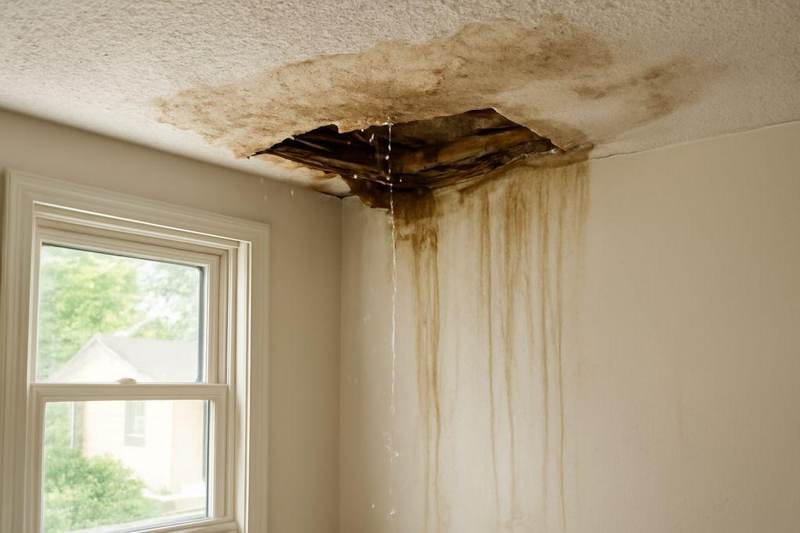
AC Leaking Water in Your Texas Home: 7 Causes, What to Do Now, and How to Stop the Damage (2026)
Read the guide →9 Signs of Water Damage in Walls: What Texas Homeowners Should Check Before Mold Spreads (2026)
Read the guide →
When Is Mold Remediation Required in Texas? TDLR Rules, Size Thresholds and Homeowner Options (2026)
Read the guide →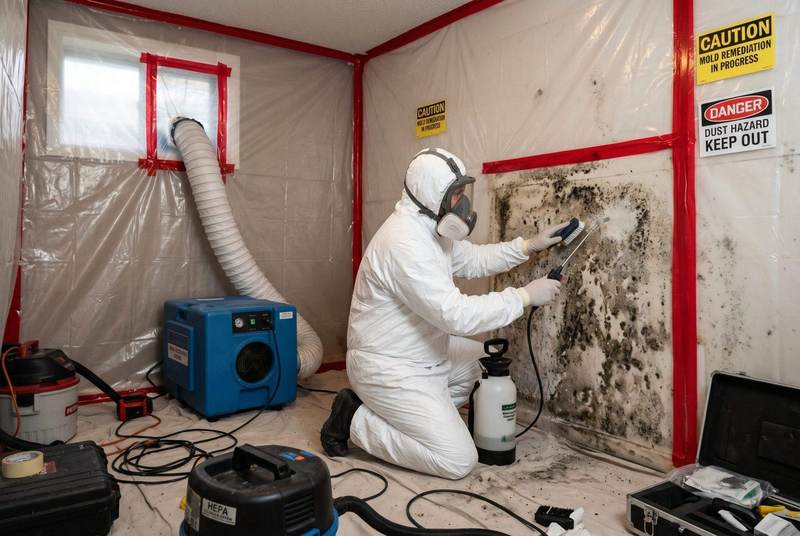
Mold Remediation Cost in Texas: 2026 Estimated Ranges by Job Size
Read the guide →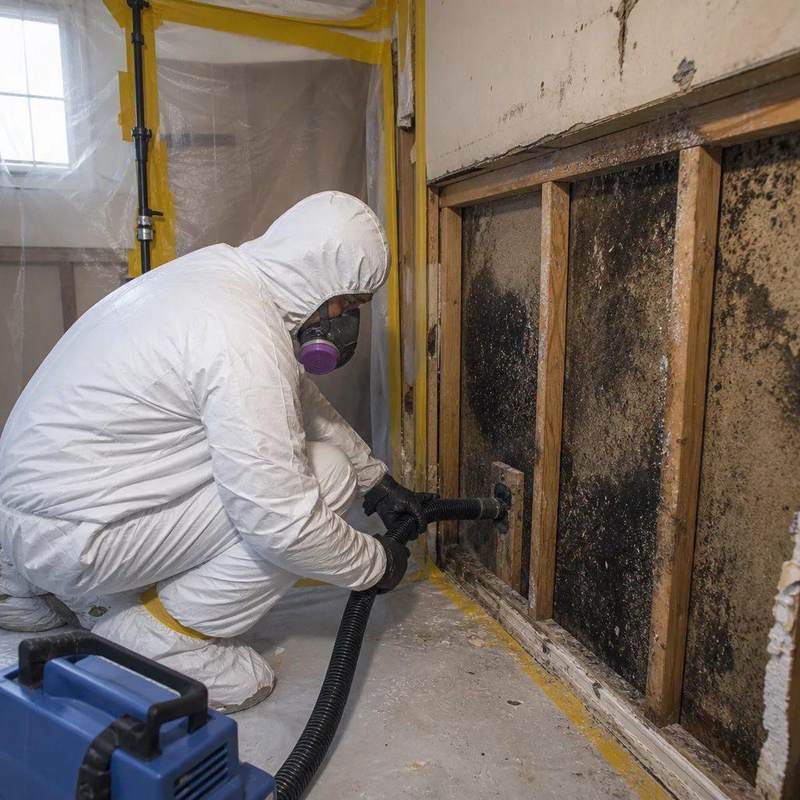
Mold Remediation Timeline in Texas: How Long Each Step Takes From Inspection to Clearance (2026)
Read the guide →
Slab Leak in Dallas-Fort Worth Signs, Detection and Damage Prevention (2026)
Read the guide →
Texas Hail Damage Roof Leaks: How Storms Break Your Roof and What to Do Next (2026)
Read the guide →