
Structural Drying in Texas
The puddle is gone, but your walls, floors, ceilings, and other building materials may still contain moisture.
Structural drying is the controlled process of removing remaining moisture from affected building materials after water extraction. It can involve air movers, dehumidifiers, moisture meters, moisture monitoring, and targeted drying methods based on the condition of the property.
Texas Water Damage Solutions provides structural drying for residential and commercial properties after water damage.
The goal is not simply to make a surface feel dry. The goal is to identify remaining moisture, manage the drying environment, monitor progress, and verify when affected materials have reached an appropriate drying standard.
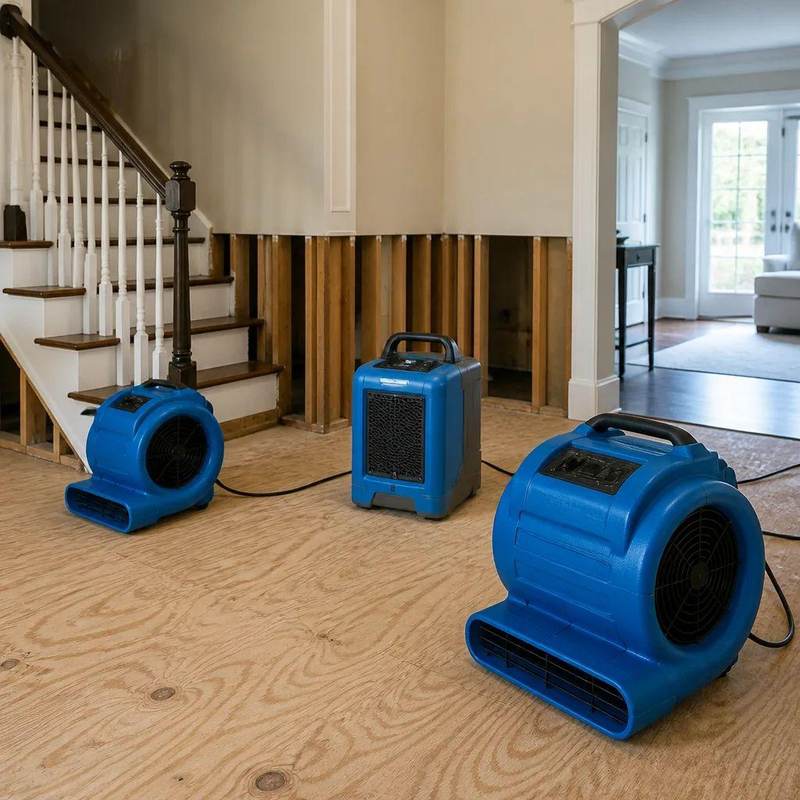
What Is Structural Drying?
Structural drying is the process of removing moisture that remains inside or around building materials after water has been extracted.
Water can move beyond the visible surface and enter materials such as:
- Drywall
- Wood framing
- Subfloors
- Concrete
- Insulation
- Carpet
- Carpet padding
- Flooring
- Baseboards
- Cabinets
- Wall cavities
This is why removing standing water does not necessarily mean that the property is dry. A floor may look dry while moisture remains underneath. A wall may feel dry while moisture remains inside the wall cavity.
Structural drying addresses that hidden moisture through controlled airflow, dehumidification, temperature management, moisture monitoring, and targeted drying methods when appropriate.
Water Extraction vs. Structural Drying
Water extraction and structural drying are closely connected, but they serve different purposes.
Water Extraction
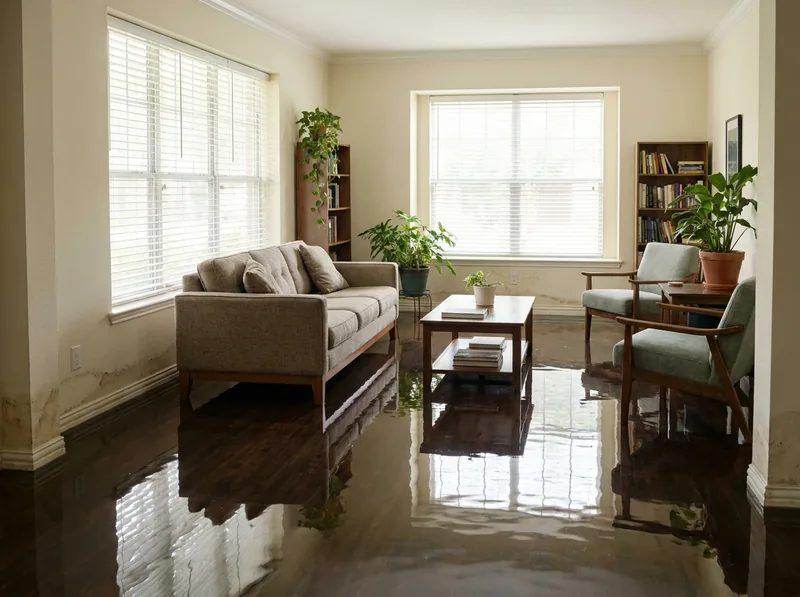
Water extraction focuses on removing accessible liquid water. This can include standing water, floodwater, water from carpet, water from flooring, and water left after a burst pipe.
Structural Drying
Structural drying focuses on removing remaining moisture from affected materials.
For example, after a burst pipe: Water extraction, moisture assessment, structural drying, verification, restoration.
A property can have no visible standing water while still containing significant moisture. Related service: Water Extraction
How Structural Drying Works
Professional structural drying is a controlled process rather than simply placing fans around a wet room.
The drying setup generally combines airflow, dehumidification, temperature management, and moisture monitoring, with each part doing a specific job.
Baseline Moisture Readings
Before or during the drying setup, affected materials can be measured to establish their current moisture condition. Readings may be taken from drywall, wood, flooring, subfloors, and other affected materials. An unaffected area or comparable material can provide a reference point when appropriate.
The goal is not to use one universal moisture number for every property. Different materials and environmental conditions can have different normal moisture levels. The drying target should be based on the affected material and appropriate reference conditions.
Airflow Drives Evaporation
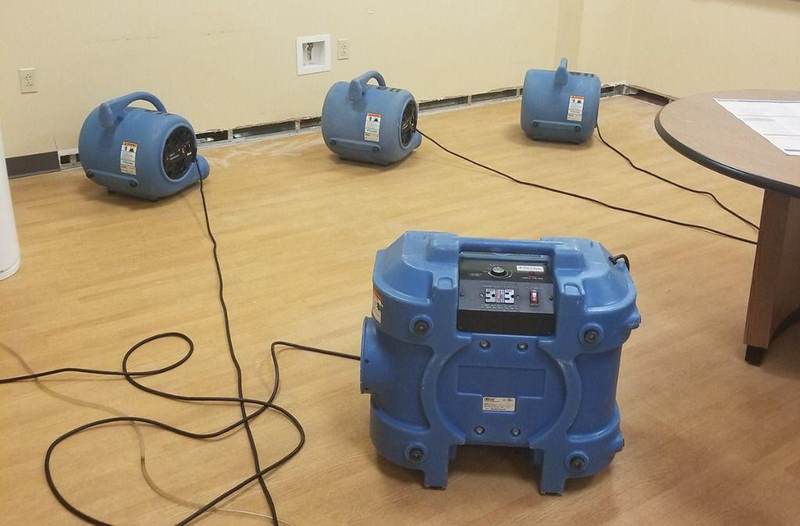
Air movers are used to increase airflow across wet surfaces. The purpose is not simply to blow air around a room. Proper airflow helps replace the layer of humid air sitting against a wet material with drier air, allowing additional moisture to evaporate from the material.
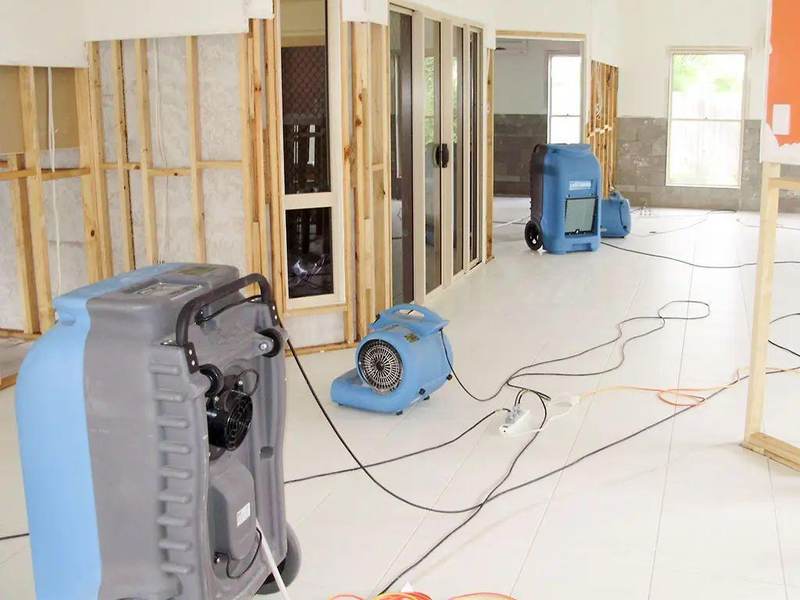
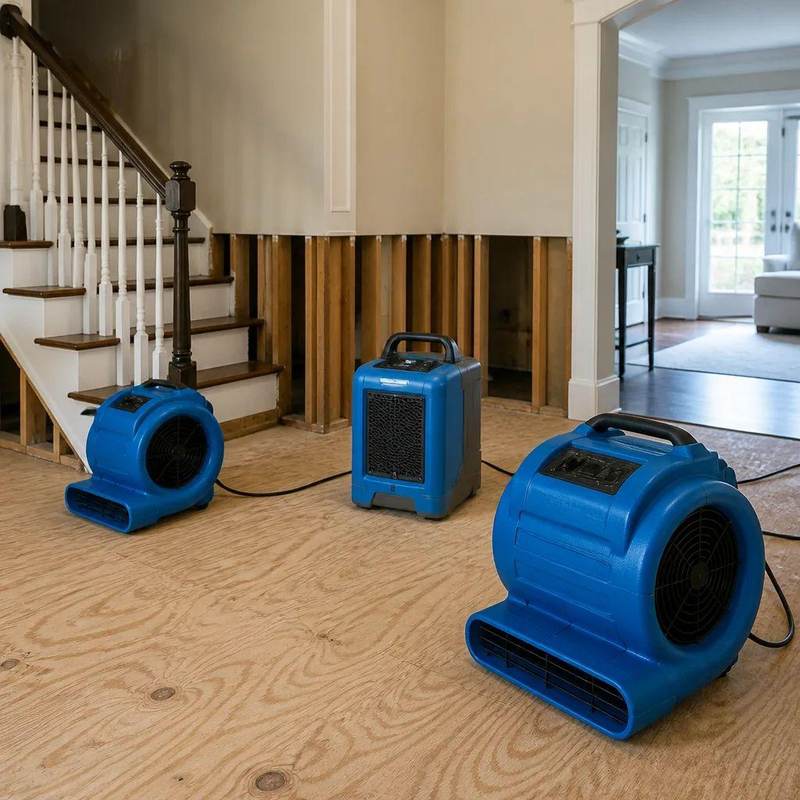
Air movers may be positioned around wet walls, floors, carpet, exposed subfloors, and other affected surfaces. Placement can be adjusted as drying conditions change. More equipment does not automatically mean better drying. Correct placement and appropriate airflow matter.
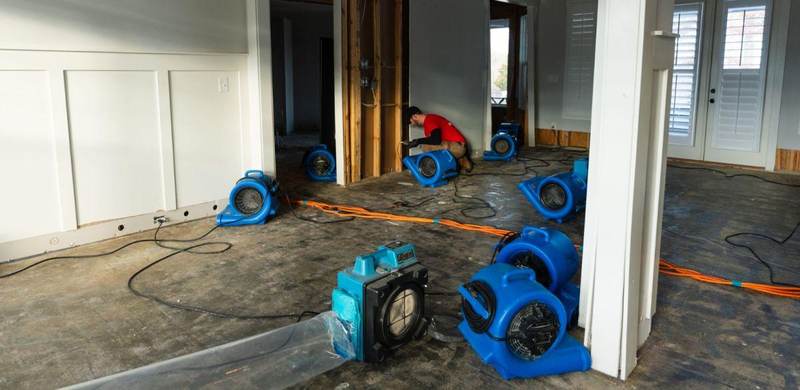
Dehumidification Removes Moisture From the Air
As water evaporates from building materials, moisture enters the surrounding air. Dehumidification helps remove that moisture from the drying environment. Depending on the conditions, professional drying equipment may include low-grain refrigerant, or LGR, dehumidifiers. These systems are designed for high-moisture environments and can support the controlled drying process when properly sized and operated. The objective is to maintain an environment that allows moisture to continue moving out of affected materials.
Temperature Management
Temperature can influence evaporation and drying conditions. Warmer air can hold more water vapor, which can support evaporation under appropriate conditions. However, temperature should be managed rather than increased without limits. The drying environment needs to remain appropriate for building materials, contents, indoor conditions, equipment, and the specific water-loss situation. Structural drying is therefore a balance between airflow, humidity, temperature, and material conditions.
Moisture Monitoring During Structural Drying
Drying should not be judged only by how a surface looks or feels. Moisture monitoring helps determine whether moisture levels are changing as expected. During the drying process, readings can help identify materials that are drying normally, areas that are drying slowly, locations that require additional airflow, areas that may need additional dehumidification, and materials that require further evaluation. Equipment placement can then be adjusted based on the moisture conditions.
How Do You Know When a Structure Is Dry?
There is no single moisture number that applies to every material and every property. A reasonable drying target depends on material type, normal moisture condition, environmental conditions, unaffected reference materials, water-loss circumstances, and location within the structure. For example, the appropriate target for wood is not necessarily the same as the target for drywall, concrete, or another material.
The goal is to compare affected materials with appropriate reference conditions and document the progress toward the applicable drying target. Dry to the meter is more meaningful than simply dry to the touch.
Structural Drying Equipment
Different water-loss situations require different equipment.
Air Movers
Air movers increase airflow across affected surfaces and help support evaporation. Their placement can be adjusted as drying progresses.
LGR Dehumidifiers
Low-grain refrigerant dehumidifiers can remove moisture from the air during structural drying. Equipment capacity should be matched to the moisture load and drying conditions.
Moisture Meters
Moisture meters help measure moisture conditions in affected materials. Depending on the material and situation, technicians may use pin meters or pinless meters.
Thermal Imaging
Thermal imaging can help identify temperature differences that may indicate areas requiring additional investigation. A thermal camera does not directly measure moisture. Instead, it can help identify areas that should be investigated with appropriate moisture-measuring equipment.
Specialty Cavity Drying
Some situations may require targeted drying for enclosed spaces such as wall cavities, areas beneath flooring, and other difficult-to-access locations. Where appropriate, targeted drying can sometimes reduce unnecessary demolition. Whether drying in place is suitable depends on the material, water source, contamination, accessibility, and actual condition of the structure.
When Is Structural Drying Needed?
Structural drying may be appropriate when water has affected building materials beyond a surface that can simply be wiped or cleaned.
Burst Pipe Water Damage
A broken plumbing line can send water into walls, floors, ceilings, and other areas.
Flood Damage
Floodwater can saturate flooring, drywall, insulation, and other building materials.
Appliance Water Damage
Washing machines, dishwashers, refrigerators, and other appliances can release water into surrounding areas.
Water Heater Leaks
A failed water heater can release substantial water into nearby flooring and building materials.
Roof Leak Water Damage
Roof leaks can introduce water into ceilings, insulation, walls, and attic areas.
Storm Water Damage
Storm-related water intrusion can affect exterior walls, roofs, windows, doors, and interior materials.
Sewage Backup: Sewage-related water requires additional contamination and safety considerations.
Signs Your Property May Need Structural Drying
You may need further drying or moisture assessment when:
- Standing water has already been removed but materials remain wet
- Drywall has absorbed water
- Flooring remains damp
- Carpet padding was saturated
- Subfloors were exposed to water
- Walls feel different from unaffected areas
- There is a persistent musty odor
- Moisture is suspected behind walls
- Water entered insulation
- Water traveled beneath flooring
- A large water loss affected multiple rooms
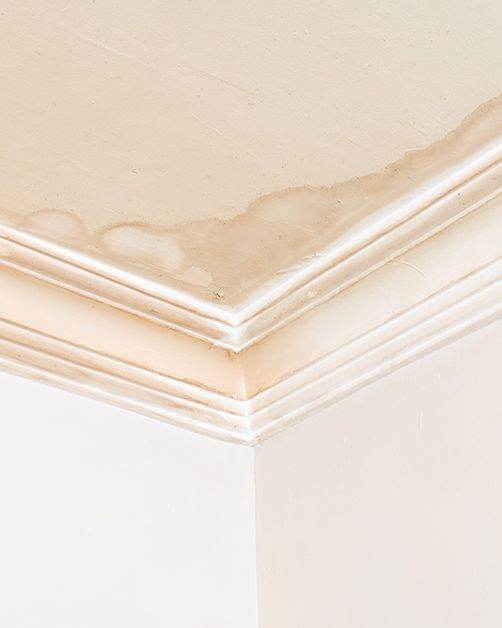
A property does not have to look visibly wet for moisture to remain.
Hidden Moisture After Water Damage
Hidden moisture is one of the main reasons visual inspection alone may not be enough. Water can move into wall cavities, behind baseboards, under flooring, carpet padding, subfloors, wood framing, insulation, cabinets, and around plumbing penetrations.
If moisture remains trapped, affected materials may experience additional problems. That is why moisture assessment and monitoring are important parts of the drying process.
Drying in Place vs. Material Removal
Not every wet material should automatically be removed. The decision depends on material type, water source, water condition, amount of saturation, length of exposure, material condition, and ability to dry the material effectively.
Some materials may be suitable for drying in place. Other materials may require removal because they are heavily saturated, contaminated, damaged, or unable to return to an acceptable condition through drying. Examples that may require additional evaluation include saturated insulation, heavily affected carpet padding, severely damaged drywall, materials exposed to contaminated water, and materials with established microbial growth.
The correct decision should be based on the actual condition rather than a one-size-fits-all rule.
Structural Drying in Texas
Texas presents an important environmental consideration: humidity. Outdoor humidity can be high in many parts of Texas, particularly during humid periods and along the Gulf Coast. Opening windows is therefore not automatically the best drying strategy. Depending on outdoor conditions, introducing humid outside air may slow the drying process rather than improve it.
A controlled drying environment allows equipment and moisture monitoring to work together without relying entirely on outdoor air. The exact approach depends on outdoor humidity, indoor humidity, temperature, material moisture, property conditions, and drying equipment.
How Long Does Structural Drying Take?
There is no single drying time that applies to every property. The timeline can depend on the amount of water absorbed, water category, materials affected, size of the affected area, indoor humidity, temperature, building construction, how quickly extraction occurred, whether materials can be dried in place, and whether some materials require removal.
A smaller, contained loss may dry relatively quickly. A multi-room loss with deep saturation can take substantially longer. The drying schedule should be adjusted according to moisture readings and the actual condition of the affected materials rather than based on a fixed promise.
Be cautious of anyone guaranteeing an exact drying time before inspecting the property and measuring moisture.
What Happens If Water Damage Is Not Properly Dried?
If moisture remains inside building materials, additional problems can develop.
Material Damage
Wood can swell or warp, while some flooring materials can deteriorate or delaminate.
Persistent Odor
Remaining moisture can contribute to musty odors.
Microbial Growth
Moist environments can support microbial growth when other necessary conditions are present.
More Extensive Repairs
A problem that could have been addressed through appropriate drying may become more complicated if affected materials deteriorate.
The objective of structural drying is to identify and address moisture before it creates additional damage.
Can You Dry Water Damage Yourself?
For a very small and easily accessible water spill, basic cleanup may be possible. However, larger water losses can be much more difficult to dry properly. Extra caution is warranted when walls are affected, floors are saturated, water entered multiple rooms, water entered insulation, floodwater is involved, sewage is involved, electrical hazards may exist, the water source is unknown, or hidden moisture is suspected.
Household fans may move air, but they do not automatically provide the controlled airflow, dehumidification, moisture monitoring, and targeted drying that a larger water loss may require.
What Happens After Structural Drying?
Structural drying is part of a broader restoration process. Depending on the property, the next steps may include moisture verification, cleaning, sanitization where appropriate, removal of damaged materials, repairs, reconstruction, and final restoration. The exact sequence depends on the type and extent of the water damage.
Structural Drying for Homes and Businesses
Structural drying can be necessary in both residential and commercial properties.
Residential Properties
Common affected areas include kitchens, bathrooms, laundry rooms, bedrooms, living rooms, garages, utility areas, and attics.
Commercial Properties
Commercial water damage may affect offices, retail spaces, restaurants, warehouses, multi-unit properties, and other commercial buildings. Commercial drying may also require consideration of occupied areas, equipment, inventory, and business operations.
Structural Drying and Insurance Documentation
Water damage restoration often involves documenting what happened and what work was performed. Depending on the situation, useful records may include photos, moisture readings, equipment used, drying progress, areas affected, dates of monitoring, material conditions, and work performed.
Documentation can help organize information for an insurance claim. Insurance coverage varies by policy and circumstances, so documentation should not be presented as a guarantee of coverage or payment.
Frequently Asked Questions
The timeline varies according to the amount of water, affected materials, humidity, temperature, property size, and whether materials can be dried in place. Moisture readings help determine the appropriate drying schedule.
Small surface-level spills may sometimes be handled with basic cleanup. Larger water losses are different. Household fans do not provide the same controlled drying environment as professional air movers, dehumidification, and moisture monitoring. Opening windows may also introduce humid outdoor air depending on weather conditions.
There is no universal moisture number for every material. Appropriate drying targets depend on the material, its normal condition, environmental conditions, and suitable reference readings.
Equipment operation depends on the drying conditions and setup. Equipment may run for extended periods while the property is being actively dried, with monitoring used to determine when adjustments or removal are appropriate.
Properly planned drying should take the property and its contents into consideration. Equipment placement, airflow, temperature, and humidity should be managed according to the conditions.
Ask for documentation showing the affected areas, moisture readings, drying progress, equipment used where applicable, and the basis for determining that the affected materials reached the appropriate drying target.
Drying costs depend on the size of the affected area, how deeply materials absorbed water, and how long drying equipment needs to run. A single wet room dries far faster than water trapped under flooring across a whole level. We measure moisture levels, explain the drying plan, and verify everything is dry before we finish. Call (469) 548-7594 for an assessment.
Walls still damp after the water is gone?
Texas Water Damage Solutions can help with the water damage assessment, structural drying, moisture monitoring, and restoration process. Do not rely only on how a surface looks or feels. Measure the moisture. Dry the affected materials. Verify the result.
Request Structural Drying Service
Share the details and we will respond with next steps soon.