Texas Hail Storm Roof Leaks: How a 20-Minute Storm Creates Months of Water Damage
Texas hail season runs March through June, peaking April and May, when Gulf moisture collides with dry continental air and spawns supercells that drop baseball-sized ice across entire neighborhoods. A single storm can compromise thousands of roofs in one county and the leaks that follow often stay hidden inside attic insulation and wall cavities until mold is already growing.
Get Emergency Roof Leak Help Call (469) 548-7594
(469) 548-7594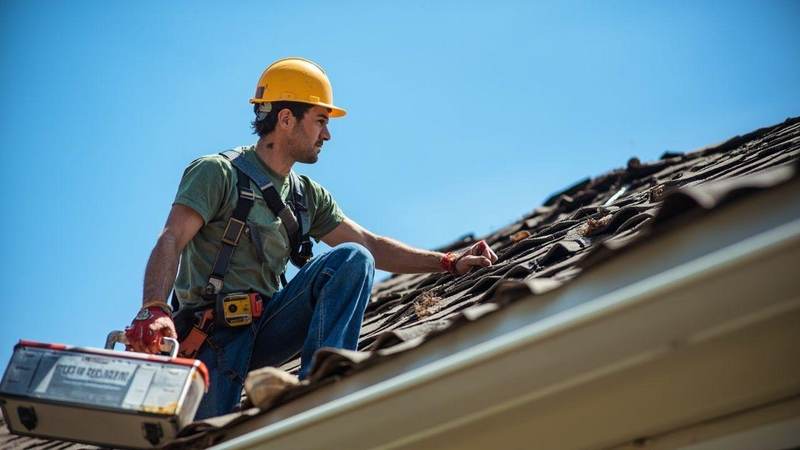
Texas Hail Damage at a Glance
| Detail | What to Know |
|---|---|
| Peak hail season | March-June, worst in April-May |
| Why Texas gets hit | Gulf moisture + dry west air = supercell thunderstorms |
| Common hail sizes that damage roofs | 1 inch (quarter) and larger |
| Shingle damage types | Granule loss, bruised fiberglass mat, cracked tabs, broken seals |
| Metal damage | Dented flashing, ridge vents, gutters, downspouts |
| Time before leaks appear | Days to months damage worsens with heat cycling |
| Biggest hidden risk | Water entering attic insulation and wall cavities undetected |
| Insurance filing window | Most Texas policies require prompt notice check yours |
| Class 4 impact-resistant shingles | UL 2218 rated, resist cracking from 2-inch steel ball drop |
Why Texas Gets More Damaging Hail Than Almost Any Other State
Texas sits where three air masses collide. Warm, humid air pushes north from the Gulf of Mexico. Hot, dry air flows east from the desert Southwest. Cold, dense air drops south from Canada and the Great Plains. When these masses meet over North Texas, Central Texas or the Panhandle, the atmosphere becomes violently unstable.
The result is supercell thunderstorms rotating updrafts strong enough to suspend ice stones for minutes, cycling them through freezing layers until they grow large enough to fall. A single supercell can lay a swath of hail damage 50 miles long and several miles wide.
Texas consistently ranks first or second in the nation for annual hail damage insurance claims. The Insurance Council of Texas reported hail and wind storms as the top cause of homeowner claims for over a decade. North Texas Dallas, Fort Worth, Plano, McKinney, Frisco sits in the heart of what meteorologists call Hail Alley, but damaging storms also hit San Antonio, Austin, Houston, Lubbock and the Hill Country.
Exactly How Hail Breaks a Roof Damage You Cannot See From the Ground
Hail damage is not always a hole punched through the shingle. Most hail damage is subtle, and that is what makes it dangerous the roof looks intact from the driveway but is already compromised.
Granule Loss The Roof's Sunscreen Gets Stripped
Asphalt shingles are coated with ceramic granules that protect the asphalt layer from UV radiation. Hail impacts knock granules loose, exposing the asphalt mat underneath. Each impact site now degrades faster in the Texas sun. You will see dark spots on the shingle where granules are missing, and granules collecting in gutters and at downspout outlets after a storm.
A roof with widespread granule loss may not leak immediately, but the exposed asphalt dries out, cracks and curls within months. What started as cosmetic damage becomes a leaking roof by the next heavy rain.
Bruised Fiberglass Mat The Hidden Fracture
Hail can fracture the fiberglass mat under the granules without breaking the surface. This bruise weakens the shingle structurally. With Texas heat cycling 100-degree days followed by 70-degree nights the bruised area flexes, cracks open, and water finds its way through. An adjuster can feel this damage by pressing on the shingle, but you cannot see it from the ground.
Cracked Shingle Tabs and Broken Seal Strips
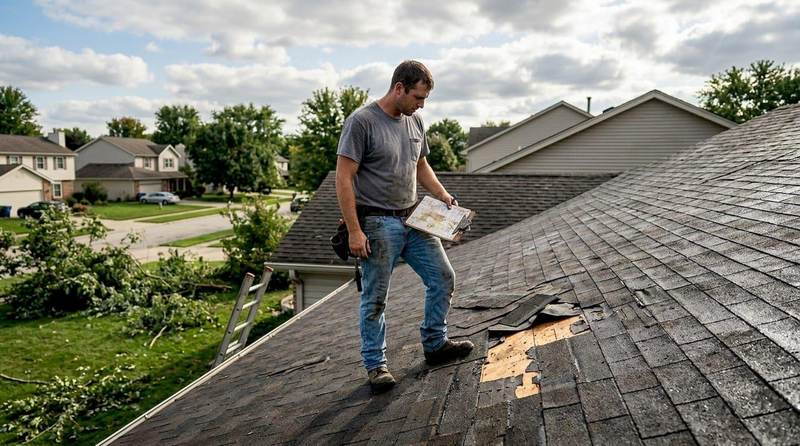
Larger hail 1.5 inches and above can crack shingle tabs outright. Even when the tab holds together, the impact can break the adhesive seal strip that bonds one shingle layer to the next. Once that seal fails, wind lifts the shingle edge, rain drives underneath, and water runs down the roof deck into the attic.
Dented Flashing, Ridge Vents and Pipe Boots
Metal components on the roof step flashing along walls, valley flashing, ridge vent caps, pipe boot collars and gutter edges dent and deform under hail. A dented pipe boot loses its seal against the PVC vent pipe. Bent step flashing pulls away from the wall. These are often the first spots that leak after a hail storm, and they are the spots most commonly missed by homeowners checking their own roof.
Signs of Hail Damage Inside Your Home What Leaks Look Like Before You See Water on the Floor
Ceiling Stains and Bubbling Paint
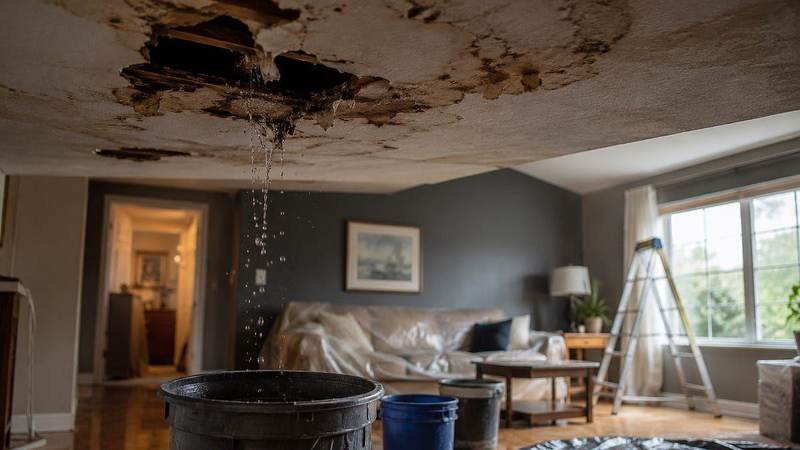
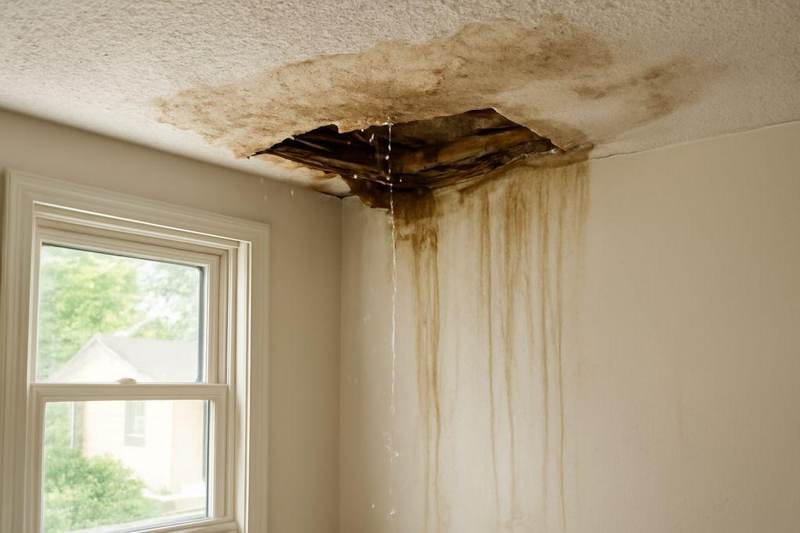
A brown or yellow ring on a ceiling is water that pooled on the back of the drywall. Bubbling or peeling paint on a ceiling especially in upper-floor rooms directly below the attic signals moisture reaching the drywall surface. Do not ignore a stain that appeared after a storm, even if the ceiling feels dry now. The insulation above may still be soaked.
Wet or Discolored Attic Insulation
If you can access your attic safely, look for dark patches in the insulation, especially near roof penetrations (vents, chimneys, skylights) and along the roof edge. Wet fiberglass insulation compresses and turns dark. Wet blown cellulose clumps. Either one means water is getting past the roof deck. Read more about detecting hidden water damage in walls and ceilings.
Musty Smell in Upper Rooms or Closets
A musty or earthy smell that appears after a storm especially in closets, hallways or bathrooms on the top floor often means moisture is trapped in the ceiling cavity or wall top plate. Mold colonizes wet insulation and drywall within 24 to 48 hours at Texas summer temperatures. If the smell persists more than a day or two, the moisture source is still active.
What to Do After a Texas Hail Storm Hits Your Roof
Step 1 Document Everything Before Calling Anyone
Photograph hail stones on the ground with a coin or ruler for scale. Photograph dented gutters, downspouts, window screens, AC condenser fins, mailboxes and car hoods these confirm hail size and prove the storm hit your property. Take wide shots and close-ups. Timestamp matters for insurance.
Step 2 Check the Attic From Inside
Do not climb on a wet or damaged roof. Instead, go into the attic with a flashlight. Look for daylight coming through the deck, dark stains on the underside of sheathing, wet insulation and water trails on rafters or trusses. This tells you whether the roof is actively leaking.
Step 3 Call Your Insurance Company
File a claim promptly. Most Texas homeowners policies require timely notice waiting months can jeopardize your claim. Document the date and time you called, the claim number, and the adjuster's name.
Step 4 Get a Reputable Local Roofer's Inspection
A qualified roofer inspects from the roof surface, checking for granule loss patterns, mat bruising, cracked tabs, broken seals and damaged flashing. They provide a written report with photos. Use this alongside the adjuster's inspection. Choose a roofer with a local address, verifiable insurance and references not a crew that appeared in town the day after the storm.
Step 5 Address Water Damage Separately and Immediately
A roofer repairs the roof. A water damage restoration crew dries the interior. These are two different jobs. If water entered the attic, soaked insulation, reached ceiling drywall or ran down wall cavities, the wet materials need extraction, removal and professional structural drying not just a roof patch. Waiting for the roof repair before addressing interior moisture gives mold a head start that turns a $3,000 drying job into a $10,000 mold remediation project.
Storm Chasers and Door Knockers How to Avoid a Bad Roofing Deal After Hail
Within hours of a major hail event, out-of-town roofing crews flood Texas neighborhoods. They knock doors, offer free inspections and push homeowners to sign contracts on the spot. Some are legitimate contractors working storm season. Many are not.
Red flags to watch for:
- No local office, just a cell phone and a truck
- Pressures you to sign before the adjuster visits
- Offers to pay your deductible or "waive" it this is insurance fraud in Texas
- Cannot provide proof of general liability and workers' compensation insurance
- Asks for full payment before work begins
- No written warranty beyond the shingle manufacturer's warranty
- Company name does not appear in Texas Department of Insurance records
A reputable roofer provides a written scope, lets you compare bids, works with your adjuster on the supplement if needed, and does not vanish when a warranty claim comes up two years later.
Class 4 Impact-Resistant Shingles Are They Worth It in Texas?
Class 4 shingles are rated under UL 2218. They survive a 2-inch steel ball dropped from 20 feet without cracking. Standard 3-tab and architectural shingles fail the same test.
In Texas hail zones, upgrading to Class 4 shingles makes financial sense for two reasons. First, many Texas insurance companies offer premium discounts of 10% to 35% for a Class 4 roof the discount often pays back the upgrade cost within a few years. Second, the next hail storm is less likely to crack the shingles, reducing the chance of interior water damage.
Class 4 shingles cost more per square than standard architectural shingles, but when you factor in the insurance savings and reduced damage risk, the math works in most North Texas, Central Texas and San Antonio zip codes where hail frequency is high.
The Hail-to-Mold Pipeline Why Roof Leaks Create the Worst Mold Problems
Roof leaks from hail damage feed water directly into the attic a dark, poorly ventilated space that stays hot in Texas summers. Fiberglass batt insulation absorbs water and holds it against the ceiling drywall. Blown cellulose insulation clumps into a wet mass that takes weeks to dry naturally. Both conditions are ideal for Aspergillus, Penicillium and Cladosporium colonization.
The EPA timeline holds here: mold spores begin colonizing wet organic material within 24 to 48 hours. But because attic leaks are invisible from inside the home, the moisture often sits for weeks or months before anyone smells it. By then, the colony has spread across insulation, drywall backing and sometimes roof sheathing.
Texas law requires a licensed mold assessor and a separate licensed remediator when the affected area exceeds 25 contiguous square feet a threshold that attic mold frequently crosses. Learn more about Texas mold rules and the 25 square foot threshold, how long mold remediation takes and estimated mold remediation costs.
Roof Leak vs Other Water Sources How to Tell Where the Water Is Coming From
Not every ceiling stain after a storm is a roof leak. Water can also enter through:
- Damaged siding or window flashing wind-driven rain enters wall cavities
- AC condensate overflow attic-mounted air handlers leak when drain lines clog during storms
- Plumbing above the ceiling a coincidental pipe leak in the wall that appeared around the same storm
- Gutter overflow clogged gutters push water behind fascia boards and into soffit cavities
A moisture survey with infrared imaging and penetrating meters traces the water path from stain back to source. Treating a roof leak when the real source is an AC condensate line means the leak continues after the roof is repaired.
What Texas Homeowners Ask After Every Hail Season
Can hail damage a roof without punching a hole through it?
Yes and this is the most common type of hail damage. Granule loss, fiberglass mat bruising, broken seal strips and cracked tabs all compromise the roof without creating an obvious hole. The damage worsens over weeks and months as Texas heat cycles the weakened material.
How long after a hail storm can I file an insurance claim?
Most Texas homeowners policies require prompt notice of damage. There is no single statewide deadline, but waiting months reduces your chances of a successful claim. File as soon as you suspect damage, even if you are not sure yet.
Should I let a storm chaser inspect my roof for free?
Be cautious. Get the inspector's full company name, local address, license and insurance information before anyone climbs on your roof. A legitimate roofer will provide all of this without hesitation. Never sign a contract during a free inspection.
Does my homeowners insurance cover the water damage inside from a hail-damaged roof?
Generally yes. Standard Texas homeowners policies cover sudden and accidental water damage from a covered peril like hail. The roof repair falls under dwelling coverage, and the interior water damage restoration is a separate line item. Delayed reporting or pre-existing maintenance issues can complicate the claim.
What size hail actually damages a roof?
Hail 1 inch in diameter (quarter-sized) and larger can damage standard asphalt shingles. Softer materials like wood shake and older 3-tab shingles can sustain damage from smaller hail. The angle, velocity, wind speed and shingle age all affect the impact.
Texas Towns Where Hail Season Hits Hardest
Our storm water damage and roof leak water damage crews respond across North Texas, Central Texas and beyond. Hail-prone areas we serve include Aledo, Argyle, Caddo Mills, Pilot Point, Springtown, Granbury, Decatur, Anna, Celina, Jarrell and dozens more across our full service area.
Hail Hit Your Roof? The Water Inside Is the Urgent Problem
Your roofer will get to the shingles. But the water that already entered your attic, insulation and ceiling drywall is soaking deeper every hour. Our crews bring HEPA air scrubbers, LGR dehumidifiers and infrared cameras to find and dry every wet surface before mold takes hold. We document every moisture reading for your insurance file. See our full emergency water damage response process.
Call (469) 548-7594 Now 24/7 Hail Storm Water Damage Response
More Texas Water Damage Guides
Practical, no-pressure guides written for Texas homeowners.
AC Leaking Water in Your Texas Home: 7 Causes, What to Do Now, and How to Stop the Damage (2026)
Read the guide →
Mold Remediation Cost in Texas: 2026 Estimated Ranges by Job Size
Read the guide →
Mold Remediation Timeline: How Long Does It Take in Texas?
Read the guide →
9 Signs of Water Damage in Walls: What Texas Homeowners Should Check Before Mold Spreads (2026)
Read the guide →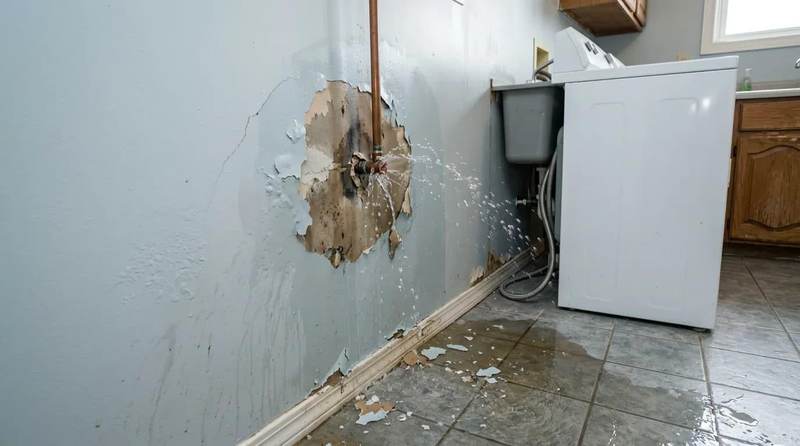
Water Leak in Wall Repair Cost in Texas: Detection, Pipe, Drying, Drywall (2026 Estimates)
Read the guide →