
Burst Pipe Water Damage in Texas
A burst pipe can create serious water damage in a very short time.
The plumbing problem is the broken pipe. The restoration problem is the water that has already entered the structure.
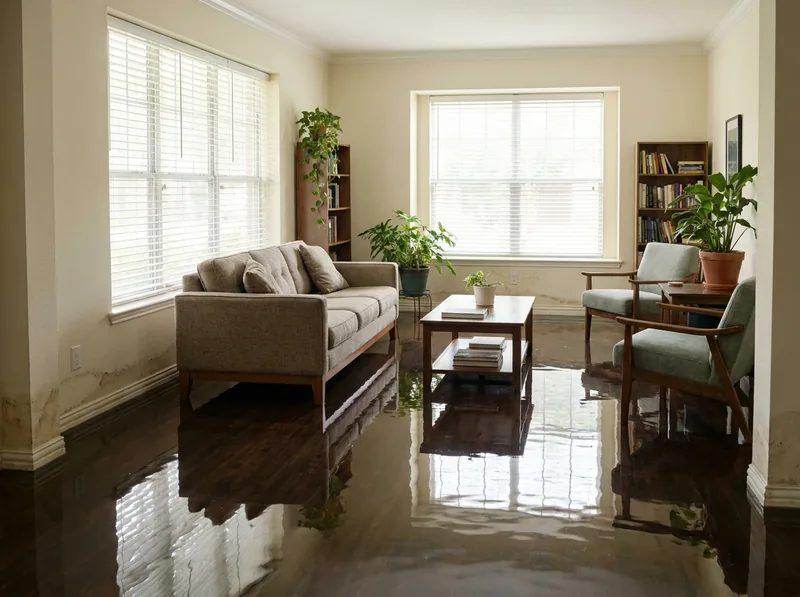
Water from a burst pipe can spread into walls, ceilings, floors, insulation, cabinets, carpet, subfloors, and other building materials before the damage is fully visible.
Texas Water Damage Solutions helps homeowners and businesses address burst pipe water damage through water extraction, moisture assessment, structural drying, moisture monitoring, material evaluation, and restoration.
What to Do After a Burst Pipe
The first priority is to stop additional water from entering the property.
- 1
Shut Off the Water
If you can safely reach the appropriate shutoff valve, stop the water supply. Depending on the property, the main shutoff may be located near the water meter, in a garage, in a utility room, near the water heater, or in another accessible location. Knowing where the shutoff is before a plumbing emergency happens can reduce the amount of water released into the property.
- 2
Stay Away From Electrical Hazards
Water near electrical systems can create serious hazards. Do not enter an area where water has reached electrical outlets, light fixtures, electrical equipment, wiring, or electrical panels unless it is safe to do so. If you are unsure, contact an appropriate qualified professional.
- 3
Protect Belongings When Safe
If there is no safety risk, move valuable belongings away from the affected area. Prioritize electronics, important documents, rugs, small furniture, and personal belongings. Do not walk beneath a severely sagging or bulging ceiling.
- 4
Document the Damage
Before moving or removing damaged property, photograph and record the broken pipe, source of the leak, standing water, wet walls, wet ceilings, flooring damage, damaged belongings, water stains, and visible moisture. This creates a record of the condition of the property.
- 5
Call the Plumber and Restoration Professional
A plumber addresses the plumbing failure. A water damage restoration professional addresses the water that entered the structure. Both parts of the problem may need attention. Call (469) 548-7594 for burst pipe water damage help.
Why Burst Pipe Water Damage Is Different
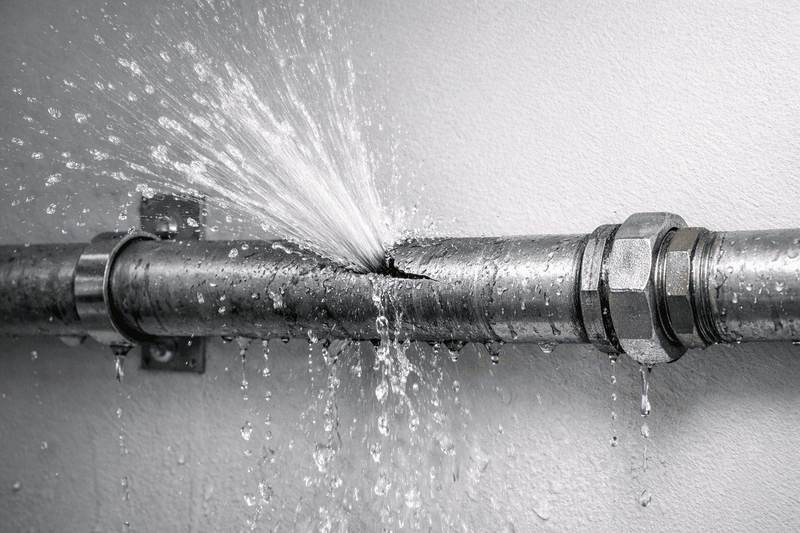
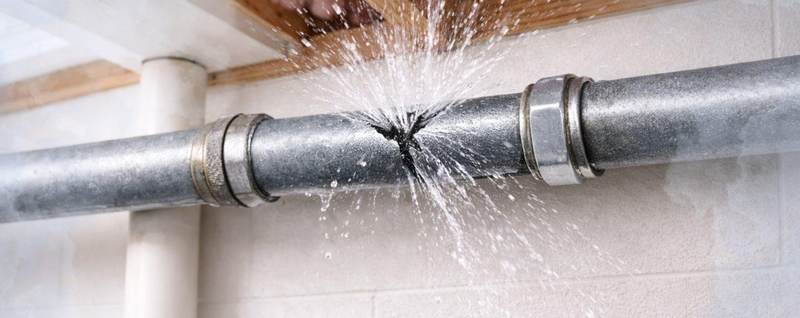
A burst pipe does not always create damage only where the pipe broke.
Water follows gravity and available pathways. It can travel: Pipe to wall cavity to framing to floor to subfloor to adjacent room. Or: Pipe to ceiling to insulation to wall to flooring.
That means the visible damage may be smaller than the actual affected area. A proper assessment should therefore look beyond the first wet spot.
Burst Pipe Water Damage Restoration Process
The exact process depends on the size and conditions of the loss. A typical restoration sequence is: Source Control, Water Extraction, Moisture Assessment, Material Evaluation, Structural Drying, Moisture Monitoring, Verification, Repairs.
Step 1: Stop the Water Source
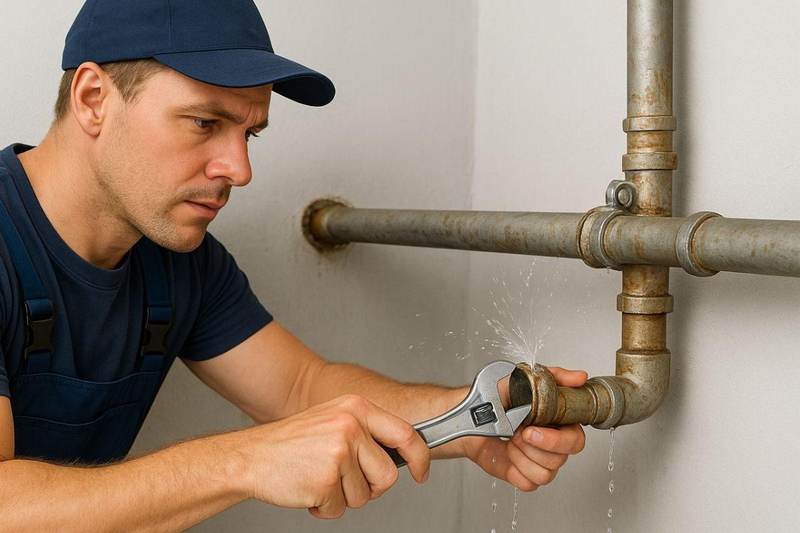
The first step is stopping the active leak. Possible plumbing problems include burst supply lines, failed pipe connections, frozen pipes, broken fittings, failed valves, corroded plumbing, and damaged water lines. A plumber may need to repair or replace the failed plumbing component.
Step 2: Water Extraction
Once the water source is controlled, standing water should be removed. Depending on the loss, extraction may involve submersible pumps, portable extractors, truck-mounted extraction equipment, extraction wands, and commercial wet vacuums. Extraction can remove accessible standing water from floors, carpet, flooring assemblies, low areas, and other accessible spaces. But extraction is only the beginning. Removing standing water does not necessarily mean the structure is dry. Related service: Water Extraction
Step 3: Moisture Assessment
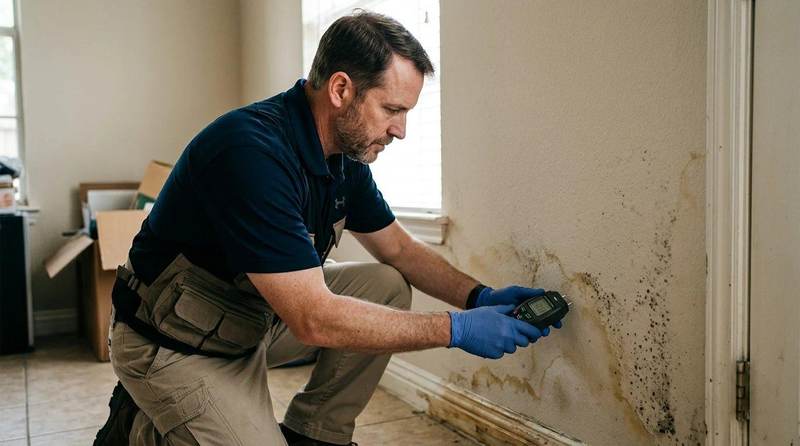
After visible water is removed, affected materials should be checked for remaining moisture. Potentially affected materials include drywall, wood framing, insulation, subfloor, flooring, cabinets, baseboards, ceiling materials, and wall cavities. Moisture meters can help identify materials that remain wet. Thermal imaging can sometimes help identify temperature differences that deserve further investigation.
Step 4: Determine What Can Be Saved
Not every wet material needs to be removed. The decision depends on material type, water source, amount of saturation, duration of exposure, physical condition, accessibility, and ability to dry the material effectively. Some materials may be dried in place. Others may require controlled removal to allow the structure behind them to dry. The objective is not unnecessary demolition. The objective is to remove materials that cannot be appropriately restored while preserving materials that can be dried and restored.
Step 5: Structural Drying
After extraction, moisture can remain inside building materials. Structural drying is the controlled process of reducing that remaining moisture. It may involve air movers, dehumidifiers, moisture meters, moisture monitoring, targeted drying, and controlled airflow. Air movement helps support evaporation. Dehumidification helps remove moisture from the air. Moisture readings help determine where drying is still needed. Related service: Structural Drying
Step 6: Moisture Monitoring
Drying should not be judged only by appearance. Monitoring helps identify remaining wet materials, slow-drying areas, moisture inside wall cavities, moisture near flooring, and materials that require additional drying. The drying setup can then be adjusted according to the actual conditions.
Step 7: Drying Verification
Before affected areas are closed, repaired, or rebuilt, the condition of the materials should be evaluated. This helps reduce the chance of sealing excessive moisture inside the structure. Dry-looking is not the same as adequately dry.
Step 8: Repairs and Restoration
Once the affected areas have been appropriately dried and evaluated, reconstruction can begin. Depending on the damage, repairs may involve drywall, paint, baseboards, flooring, cabinets, insulation, trim, and other affected finishes. This is where water damage restoration transitions into reconstruction.
Where Burst Pipe Water Hides
Burst Pipe Damage to Drywall
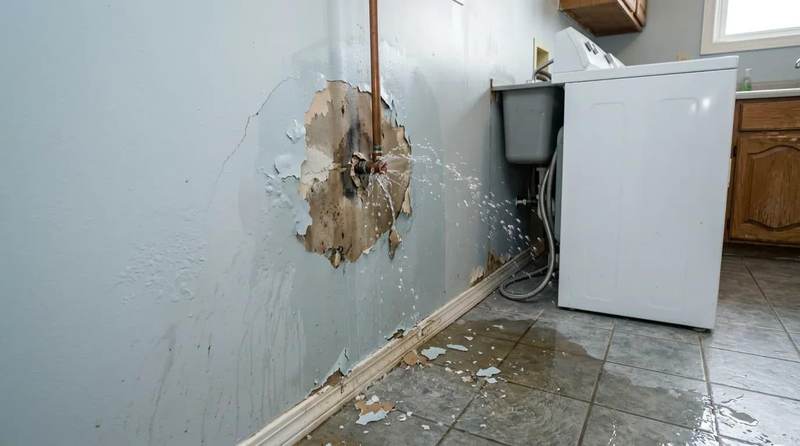
Drywall can absorb water from a burst pipe. Damage may appear as water stains, soft drywall, swelling, discoloration, peeling paint, damaged seams, and baseboard swelling. But visible staining does not necessarily show the full extent of the moisture. Water can also enter the cavity behind the drywall. Depending on the condition, drying may be possible, while heavily damaged or inaccessible sections may require removal.
Burst Pipe Damage Inside Walls
A pipe that breaks inside a wall can create a particularly difficult problem. Water can enter wall cavities, insulation, wood framing, electrical areas, baseboards, and adjacent flooring. A wall may look relatively normal from the outside while moisture remains inside. This is why moisture mapping is important after a concealed pipe leak.
Burst Pipe Damage to Ceilings
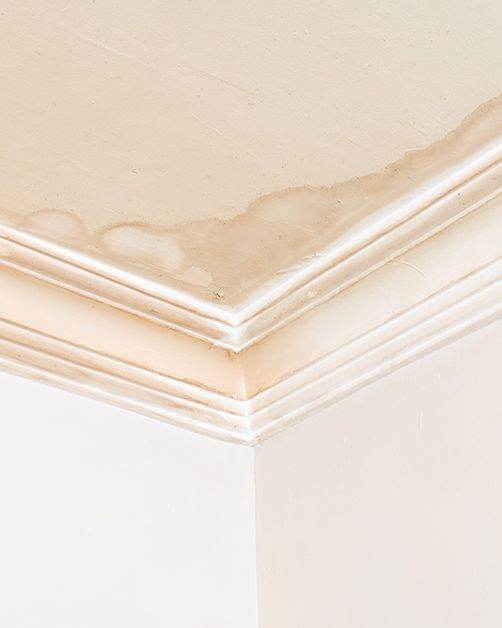
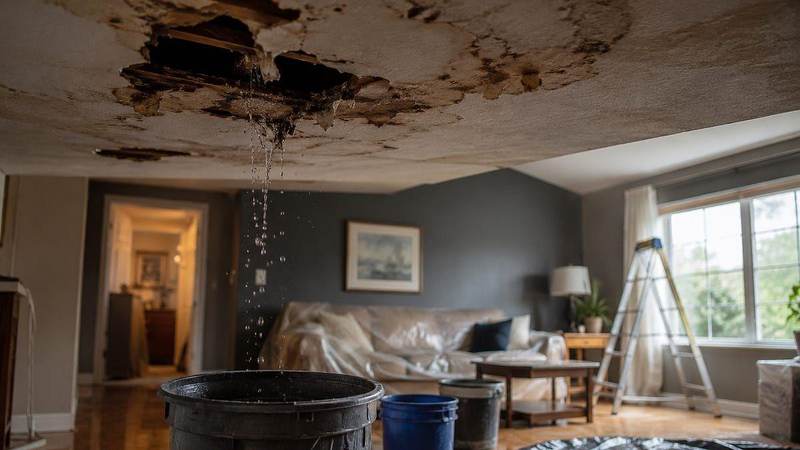
When a pipe breaks above a ceiling, water can move into ceiling drywall, insulation, joists, light-fixture areas, and upper walls. Warning signs can include brown or yellow staining, sagging drywall, bulging areas, dripping water, and peeling paint. A severely sagging ceiling should not be disturbed unnecessarily.
Burst Pipe Damage to Flooring
Water can spread across many flooring systems. Potentially affected materials include carpet, carpet padding, hardwood, laminate, vinyl, tile, and subfloor. Water can also migrate beneath flooring. A floor that looks dry on the surface may still contain moisture underneath.
Burst Pipe Damage to Carpet
Carpet can absorb significant amounts of water. The condition of the carpet, padding, subfloor, water source, and duration of exposure all affect the appropriate response. Carpet padding may hold moisture even after surface extraction. A proper assessment should therefore consider the entire flooring assembly.
Burst Pipe Damage to Insulation
Insulation inside a wall, attic, or ceiling assembly can become wet after a pipe failure. Depending on insulation type, degree of saturation, contamination, accessibility, and ability to dry effectively, the material may be dried or may require removal. Leaving persistently wet material inside an enclosed assembly can interfere with proper drying.
Can Water From a Burst Pipe Get Under Flooring?
Yes. Water can move through seams, joints, edges, penetrations, and other pathways. Depending on the flooring system, moisture can become trapped beneath flooring, underlayment, carpet padding, and subfloor materials. This is one reason surface appearance alone should not determine whether drying is complete.
Can a Burst Pipe Cause Mold?
Persistent moisture can create conditions that support microbial growth. The risk depends on moisture, material type, temperature, duration, and drying conditions. The best approach is to address the water source and begin appropriate extraction and drying as soon as practical. Prompt action can help reduce prolonged moisture exposure.
Why Do Pipes Burst in Texas?
Several factors can contribute to pipe failures.
Frozen Pipes
Texas can experience severe winter freezes. During freezing conditions, vulnerable plumbing can freeze. Frozen water can place significant pressure inside a pipe. When the pipe fails or water begins flowing again, substantial water damage can follow.
Pipes in Exterior Walls
Plumbing located near exterior walls may be more vulnerable during freezing weather, particularly where insulation or protection is inadequate.
Pipes in Attics and Garages
Unconditioned areas can expose plumbing to lower temperatures. This is especially important during extended freezing conditions.
Aging Plumbing
Older plumbing systems can experience corrosion, deteriorated fittings, cracked components, weak connections, and general wear. These conditions can increase the likelihood of leaks.
High Water Pressure
Excessive water pressure can place additional stress on plumbing components. A qualified plumber can evaluate household pressure and determine whether corrective action is appropriate.
Foundation Movement
Some Texas properties are built on expansive soils that can change volume as moisture conditions change. Movement can place stress on plumbing systems, particularly around foundations and slab penetrations.
Frozen Pipe Water Damage
Frozen pipe damage deserves special attention because the initial problem may not be obvious. A pipe can freeze while occupants see no active leak. When the pipe cracks or water pressure returns, the resulting leak may enter walls, ceilings, floors, cabinets, attics, and other concealed areas. After a freeze event, inspect for water stains, damp drywall, ceiling damage, unexplained water, low pressure, and unusual plumbing sounds.
Hidden Pipe Leaks
Not every pipe leak creates standing water. A hidden leak may produce subtle signs. Look for rising water usage, running water sounds when fixtures are off, musty odors, peeling paint, swollen baseboards, damp flooring, and low water pressure.
How Do You Find Hidden Water Damage From a Pipe Leak?
The investigation can include visual inspection, moisture mapping, moisture meters, pin meters, pinless meters, thermal imaging, and targeted inspection openings. No single tool tells the entire story. The goal is to determine where moisture is present and how far it has traveled.
Burst Pipe vs. Slab Leak
These terms are related but not identical. A burst pipe generally refers to a pipe that has failed and released water. A slab leak generally refers to a plumbing leak associated with piping under or within a slab foundation. A slab leak may develop slowly and remain hidden for some time. Possible signs include warm floor areas, unexplained water usage, sound of running water, damp flooring, and low water pressure. Plumbing diagnosis should be handled by an appropriate plumbing professional.
Burst Pipe vs. Regular Pipe Leak
A sudden burst pipe can release water rapidly. A smaller pipe leak may release water more slowly but remain active for much longer. Both can cause serious structural damage. The key questions are: Where did the water come from? How far did it travel? Which materials became wet? Can those materials be dried effectively?
What Happens If You Only Repair the Pipe?
Repairing the pipe stops the source. It does not automatically remove standing water, dry drywall, dry insulation, dry flooring, dry wall cavities, remove trapped moisture, or verify drying. This is the critical difference between plumbing repair and water damage restoration.
Burst Pipe Water Damage and Insurance
Insurance coverage depends on the specific policy and circumstances. Some sudden and accidental water losses may be covered, while gradual leaks, maintenance issues, wear and tear, or other exclusions may be treated differently. The cost of repairing the failed plumbing component may also be treated differently from the resulting water damage. Do not rely on a generic coverage statement.
Document the Loss
When safe, keep photos, videos, plumbing repair information, damaged-material records, moisture readings, drying records, and restoration documentation. Documentation can help organize information for an insurance claim. Coverage decisions are made according to the applicable policy and circumstances.
How Long Does Burst Pipe Water Damage Take to Dry?
There is no universal drying time. A contained loss affecting one room can have a very different timeline from a multi-room loss involving walls, ceilings, insulation, flooring, subfloors, and cabinets. Drying conditions can also be affected by temperature, humidity, material type, airflow, dehumidification, amount of moisture, and accessibility. Moisture readings should guide the drying process rather than an arbitrary number of days.
What Not to Do After a Burst Pipe
Do Not Ignore Hidden Moisture
Visible water may be only part of the loss.
Do Not Close Wet Walls
Do not rebuild over materials that have not been appropriately evaluated.
Do Not Assume a Dry Surface Means a Dry Structure
Moisture can remain underneath flooring or inside walls.
Do Not Enter Electrical Hazards
Water and electricity can create serious risks.
Do Not Remove Everything Without Assessment
Some materials may be salvageable.
Do Not Wait Unnecessarily
The longer materials remain wet, the more difficult restoration can become.
Preventing Future Burst Pipe Damage
Know Your Main Shutoff
Make sure everyone in the household knows where it is.
Protect Exposed Plumbing
Pay attention to plumbing in attics, garages, exterior walls, and crawlspaces.
During Freezing Weather
Follow appropriate cold-weather precautions, including maintaining indoor heat and protecting vulnerable plumbing.
Check Water Pressure
If pressure appears unusually high, have it evaluated by a qualified plumber.
Address Small Leaks Early
Do not ignore dripping pipes, water stains, corrosion, low pressure, or unusual plumbing sounds. Small problems can become larger losses.
Burst Pipe Water Damage in Texas Homes and Businesses
Residential Burst Pipe Water Damage
Homes can experience burst pipe damage in kitchens, bathrooms, laundry rooms, garages, attics, walls, ceilings, floors, and utility rooms. The restoration approach depends on the location and materials affected.
Commercial Burst Pipe Water Damage
Commercial properties can have additional complications because water damage may affect offices, retail areas, restaurants, warehouses, equipment, inventory, flooring, interior walls, and business operations. A commercial loss may require coordination between property management, plumbing professionals, restoration professionals, occupants, and insurers.
Texas properties experience different construction types and climate conditions across the state. Burst pipe losses can occur in Dallas-Fort Worth, Houston, Austin, San Antonio, North Texas, Central Texas, East Texas, South Texas, and Coastal Texas. The exact cause and restoration requirements vary by property.
Frequently Asked Questions
If safe, stop the water source, stay away from electrical hazards, protect belongings, document the damage, and arrange plumbing and restoration help.
Yes. Water can enter drywall, insulation, framing, baseboards, and wall cavities.
Yes. Water from plumbing above a ceiling can saturate drywall, insulation, framing, and surrounding areas.
A hidden pipe leak occurs where the source is concealed inside a wall, floor, ceiling, slab, cabinet, or another inaccessible area.
No. The decision depends on the material condition, water source, amount of saturation, accessibility, and ability to dry it effectively.
A plumber generally addresses the plumbing source. Water damage restoration focuses on extraction, moisture assessment, structural drying, monitoring, and restoration of affected materials.
Related Water Damage Services
A broken pipe is only the beginning of the problem.
The source needs to be repaired. Then the water already inside the property needs to be found, extracted, dried, monitored, and properly addressed. Texas Water Damage Solutions can help with burst pipe water damage, water extraction, moisture assessment, structural drying, moisture monitoring, material evaluation, and restoration.
If water is actively flowing, prioritize safety and shut off the water source only if you can do so safely.
Request Burst Pipe Help
Send the details of the burst pipe situation and we will respond as quickly as we can.