
Commercial Water Damage Restoration in Texas
Water damage in a commercial property is more than a building problem. It can become an operations problem, tenant problem, inventory problem, scheduling problem, and revenue problem at the same time.
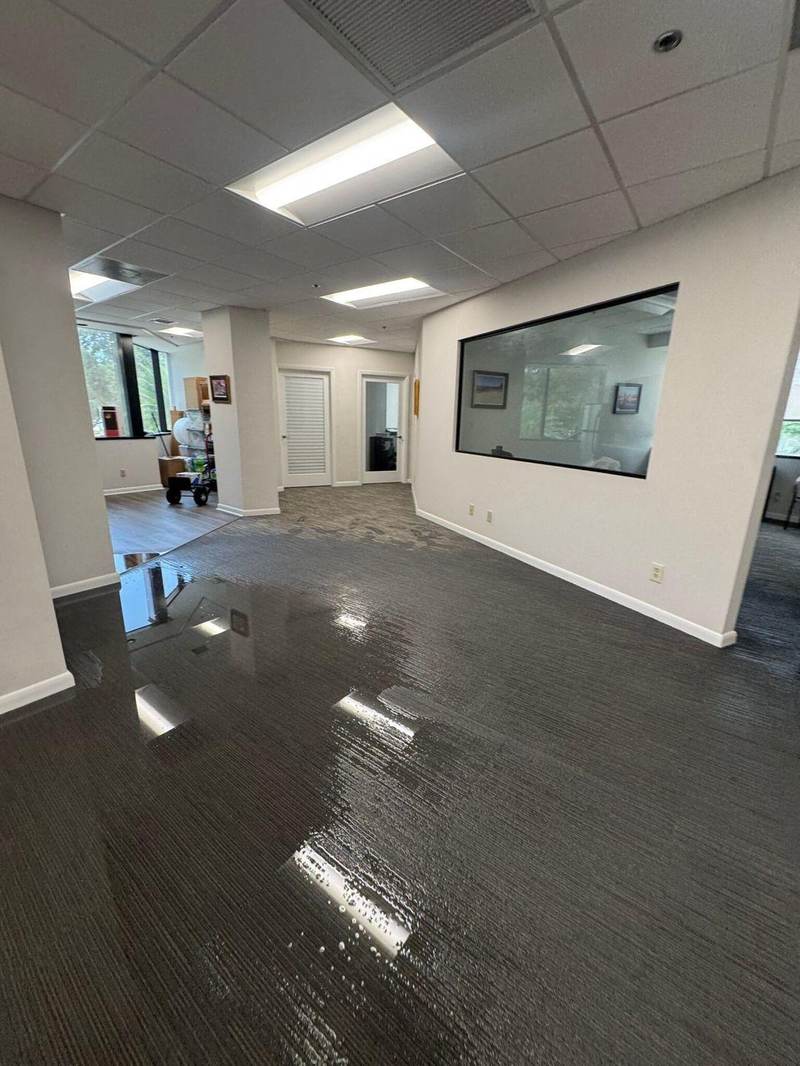
A burst supply line can affect several floors. A sprinkler discharge can saturate ceilings and flooring. A roof leak can damage offices, inventory, equipment, and interior finishes. A sewage backup can restrict an entire section of a property.
Texas Water Damage Solutions helps commercial property owners, managers, tenants, and facilities teams address water damage through water extraction, moisture assessment, moisture mapping, controlled material removal, structural drying, moisture monitoring, cleaning, contents handling, interior restoration, and documentation.
We work with offices, retail properties, restaurants, warehouses, multifamily buildings, hotels, medical and dental offices, and other commercial properties.
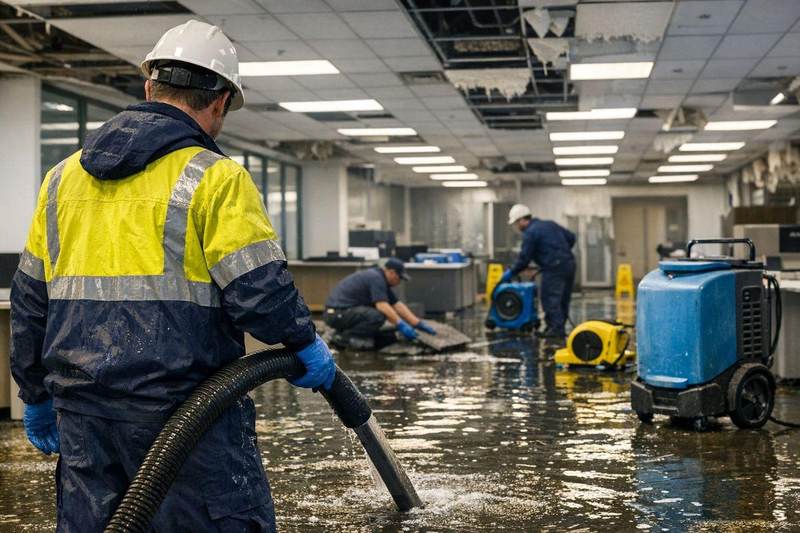
Why Commercial Water Damage Is Different
The water itself behaves the same way. The business environment around the water is different.
A residential loss may affect one family. A commercial loss can affect employees, customers, tenants, inventory, equipment, business operations, scheduled appointments, revenue-generating areas, common areas, and multiple floors.
Commercial restoration therefore requires more than simply removing water. The response needs to consider: Safety, Water Removal, Drying, Operations, Communication, Documentation, Restoration.
Commercial Water Damage Can Affect Business Operations
The cost of a commercial water loss is not limited to damaged drywall or flooring. Depending on the property, water damage can create operational disruption, customer disruption, tenant disruption, inventory exposure, equipment exposure, and scheduling problems. This is why commercial restoration should be planned around the actual use of the building, not simply the square footage.
Types of Commercial Properties We Can Help With
Commercial water damage can occur in many property types.
Office Buildings
Potential losses include plumbing leaks, HVAC condensate, restroom failures, roof leaks, supply line failures, and ceiling water damage.
Retail Stores
Water can affect merchandise, displays, flooring, ceilings, stockrooms, and customer areas.
Restaurants
Water damage may involve kitchens, dining areas, restrooms, plumbing, refrigeration areas, and ceiling systems. Sanitary or contaminated water requires additional precautions.
Medical and Dental Offices
Water losses can affect treatment rooms, waiting areas, offices, equipment areas, flooring, and ceilings. Restoration planning should account for the property's operational and safety requirements.
Warehouses
Water can affect inventory, pallets, packaging, equipment, loading areas, flooring, and storage zones.
Multifamily Properties
A single plumbing failure can affect multiple apartments, hallways, common areas, ceilings below the source, and multiple floors.
Hotels and Hospitality
Water damage can affect guest rooms, corridors, lobbies, restaurants, laundry areas, and mechanical areas.
Common Causes of Commercial Water Damage
Commercial water losses can originate from many sources.
Burst Supply Lines
A failed supply line can release large amounts of water into an occupied space. In a multistory building, water can travel through vertical pathways and affect lower floors.
Sprinkler Discharge
An accidental sprinkler activation or system problem can release a significant amount of water. The volume can spread through ceilings, walls, flooring, contents, and multiple rooms. The exact water condition should be assessed based on the source and circumstances.
HVAC Condensate Problems
Commercial HVAC systems can generate significant amounts of condensate. Problems with condensate drains, drain pans, rooftop units, drain lines, and roof penetrations can result in water entering ceiling spaces or occupied areas.
Roof and Storm Intrusion
Commercial roofing systems can be affected by hail, high winds, heavy rainfall, damaged membranes, flashing problems, and roof penetrations. The roof source should be addressed by the appropriate roofing professional while interior water damage is assessed and dried. Related service: Storm Water Damage
Sanitary Backups
Drain or sewer failures can introduce contaminated water. Depending on the source and condition, this may require containment, controlled access, appropriate protective equipment, contaminated-material evaluation, extraction, cleaning, disinfection, and structural drying. Related service: Sewage Cleanup
Water Heater Failures
Commercial or multifamily water heaters can release substantial amounts of water when a tank, valve, connection, or associated component fails.
Tenant-Related Water Losses
Water damage can also originate from open fixtures, failed appliances, renovation work, damaged plumbing, and tenant improvements. Responsibility for costs depends on contracts, leases, policies, and circumstances. The restoration scope should remain separate from the question of who ultimately pays.
The Commercial Water Damage Restoration Process
A typical commercial restoration sequence is: Assessment, Moisture Mapping, Water Extraction, Containment, Material Evaluation, Controlled Removal, Structural Drying, Moisture Monitoring, Cleaning, Contents Handling, Restoration, Final Verification.
Step 1: Emergency Assessment
The first step is understanding where the water came from, whether the source is still active, which areas are affected, how far water traveled, which floors are affected, which business operations are affected, and whether contamination is involved. The property should be assessed before a restoration scope is finalized.
Step 2: Moisture Mapping
Commercial buildings can hide moisture in walls, ceilings, flooring, subfloors, insulation, mechanical spaces, vertical chases, multiple units, and multiple floors. Moisture mapping helps establish the affected zones. For larger losses, documenting each affected area separately can make the restoration process easier to manage.
Step 3: Water Extraction
Standing water should be removed as soon as safely practical. Commercial extraction may involve high-capacity extractors, pumps, extraction wands, commercial wet vacuums, and other appropriate equipment. Extraction priorities can be based on the amount of water, material vulnerability, operational importance, safety, and risk of additional damage.
Step 4: Containment
Affected areas may need to be separated from unaffected areas. Depending on the situation, containment can involve physical barriers, sealed work areas, controlled access, appropriate airflow management, dust control, and equipment placement. The purpose is to prevent unnecessary spread of debris, dust, odors, or contaminants.
Step 5: Evaluate Affected Materials
Not every wet commercial material automatically needs to be removed. Materials are evaluated based on material type, water source, saturation, duration, physical condition, contamination, and ability to dry effectively. Potentially affected materials can include drywall, ceiling materials, carpet, carpet padding, insulation, flooring, baseboards, and other porous materials.
Step 6: Controlled Material Removal
When materials cannot be appropriately dried or restored, controlled removal may be necessary. The goal is targeted removal, not unnecessary demolition. This is particularly important in occupied commercial buildings where excessive demolition can increase downtime.
Step 7: Structural Drying
Commercial structural drying can involve commercial air movers, dehumidifiers, moisture meters, directed airflow, targeted drying, and moisture monitoring. Affected areas may include walls, ceilings, floors, framing, subfloors, cabinets, and other building assemblies. Drying equipment should be positioned according to the actual moisture conditions. Related service: Structural Drying
Step 8: Moisture Monitoring
A commercial property should not be considered dry simply because the visible water is gone. Monitoring can identify remaining wet materials, slow-drying areas, hidden moisture, moisture inside assemblies, and areas requiring additional drying. Readings can be documented throughout the drying process.
Step 9: Cleaning and Sanitizing
Cleaning requirements depend on the source of the water. Supply-line water may require standard cleaning and drying depending on the circumstances. Storm water may carry dirt and debris and may require additional cleaning considerations. Sewage or other contaminated water requires a more controlled restoration approach. Cleaning and disinfection should be appropriate to the water source and affected materials.
Step 10: Contents and Inventory
Commercial water damage can affect business property as much as the building itself. Potential contents include inventory, electronics, furniture, documents, equipment, merchandise, and office supplies. Contents may be salvageable and then cleaned, dried, and returned, or unsuitable for restoration and then documented and handled according to the appropriate process. A contents inventory can help organize the loss.
Step 11: Repair and Rebuild
After appropriate drying and evaluation, reconstruction can begin. Depending on the property, repairs may include drywall, ceiling systems, flooring, paint, baseboards, insulation, cabinets, and interior finishes. Repairs should be sequenced around the property's operational priorities.
Step 12: Final Verification
Before closing the project, the affected areas can be reviewed for moisture condition, completed restoration work, remaining visible damage, documentation, equipment removal, and final walkthrough. Commercial restoration should end with a clear record of what was done.
Commercial vs Residential Water Damage
The physical water damage can be similar. The business requirements are different.
Scale
Commercial buildings can involve larger square footage, multiple floors, multiple units, large contents inventories, and complex building systems.
Occupancy
A commercial property may need to remain partially operational during restoration.
Coordination
Commercial projects can involve owners, property managers, tenants, facilities teams, employees, insurers, contractors, and building representatives.
Documentation
Commercial losses may require detailed records for property damage, contents, restoration work, moisture readings, equipment, and operational interruption.
Can Commercial Water Damage Restoration Happen While the Business Is Open?
Sometimes. The answer depends on the location of the damage, size of the affected area, water source, contamination, safety requirements, building layout, and ability to isolate the work area. For example, a business may be able to continue operating in unaffected areas while restoration occurs in a separate zone. The restoration plan can be organized around the property's operating requirements when conditions allow.
Phased Commercial Restoration
For larger properties, restoration can be divided into phases. For example: Phase 1: Emergency stabilization. Phase 2: Extraction. Phase 3: Containment and material removal. Phase 4: Structural drying. Phase 5: Verification. Phase 6: Priority-area reconstruction. Phase 7: Remaining restoration. This can help property managers understand what is happening and which parts of the building may become usable first.
After-Hours Commercial Restoration
Some disruptive restoration activities may be scheduled during evenings, weekends, or closed business hours when practical. Examples can include demolition, equipment movement, material removal, and certain reconstruction activities. However, emergency extraction and stabilization should not necessarily wait for after-hours scheduling when delaying them could increase damage.
Working Around Tenants
Multifamily and multi-tenant properties require additional communication. A water loss can cross apartment boundaries, office suites, hallways, common areas, and multiple floors. A restoration plan should identify which areas are affected, which areas are contained, which areas remain usable, what work is occurring, and what occupants should expect.
Multi-Unit Water Damage
A leak on one floor can affect another. For example: Third-floor plumbing failure to second-floor ceiling to first-floor common area. Water does not follow property boundaries. This is why the migration path should be evaluated before deciding the complete restoration scope. Each affected area can be documented separately while common areas are prioritized according to the property's needs.
Commercial Water Damage Documentation
Documentation is especially important for larger commercial losses. A restoration file may include dated photographs, videos, moisture readings, moisture maps, equipment records, daily work logs, material removal records, contents inventory, scope documentation, drying progress, and final walkthrough. The documentation provides a record of the restoration work. It does not guarantee insurance coverage or payment.
Commercial Water Damage Insurance Claims
Insurance coverage depends on the applicable commercial policy and circumstances. Commercial policies can contain different coverage provisions, exclusions, deductibles, endorsements, business interruption provisions, and property coverage requirements. Do not assume a loss is covered simply because it involves water.
Keep Documentation
Record the source of the loss, date discovered, affected areas, photos, videos, emergency measures, contents, restoration work, moisture readings, equipment, and repair costs. For business interruption questions, the property owner or policyholder should work with the appropriate insurance professional. We provide restoration documentation; we do not interpret the policy or guarantee coverage.
Business Interruption and Water Damage
A commercial water loss can affect revenue even when the physical damage appears limited. Potential operational impacts include closed rooms, relocated employees, cancelled appointments, reduced customer capacity, lost inventory access, tenant disruption, and temporary closure. Restoration documentation can help establish the timeline of the physical restoration work. Coverage for business interruption is policy-specific.
What Property Managers Should Do First
If a commercial water loss occurs:
1. Stop the Source
Shut off the appropriate water source when safe.
2. Address Electrical Hazards
Keep people away from unsafe electrical areas.
3. Protect Inventory and Contents
Move items out of the water path where safe.
4. Document the Loss
Photograph and record the condition before unnecessary changes.
5. Notify Appropriate Parties
Depending on the property: owner, property manager, tenant, insurer, plumbing contractor, roofing contractor, fire protection contractor.
6. Call Restoration
(469) 548-7594. Tell us: property type, water source, affected areas, number of floors, approximate affected area, operating hours, whether the water is still active.
What Not to Do After Commercial Water Damage
Do Not Wait for Visible Water to Disappear
Hidden moisture can remain inside materials.
Do Not Rely Only on Household Fans
Large commercial losses may require proper extraction, drying equipment, and moisture monitoring.
Do Not Reopen Affected Areas Based Only on Appearance
Visual dryness is not the same as verified drying.
Do Not Remove Contents Without Documentation
Photograph and inventory affected business property when practical.
Do Not Demolish Across Multiple Areas Without Assessment
Unnecessary demolition can increase costs and downtime.
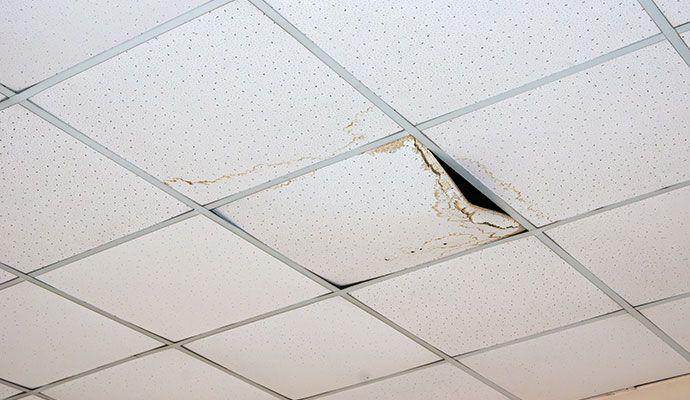
Do Not Ignore Water Above Ceilings
Ceiling plenums and concealed spaces can hold moisture.
Large-Loss Commercial Water Damage
A large-loss event may involve multiple floors, multiple units, large square footage, extensive contents, major operational disruption, complex drying, and multiple contractors. The response may require phased extraction, containment, drying, documentation, and reconstruction. The scope should be based on the actual property conditions rather than an arbitrary square-foot threshold.
Commercial Water Damage From a Burst Pipe
A burst pipe in a commercial building can affect more than the room where it failed. Water can travel through vertical chases, ceilings, walls, flooring, stairwells, and utility spaces. In a multistory property, lower floors may experience secondary water damage. Related service: Burst Pipe Water Damage
Commercial Water Damage From a Roof Leak
Roof leaks can affect ceiling systems, insulation, offices, inventory, interior walls, and flooring. The roofing contractor addresses the exterior source while restoration addresses interior water damage. Related service: Roof Leak Water Damage
Commercial Storm Water Damage
Severe weather can damage commercial roofing and allow water inside. Potential causes include hail, wind, heavy rainfall, fallen branches, and roof damage. Related service: Storm Water Damage
Commercial Sewage Damage
Sewage or contaminated drainage water requires a different response from a typical clean-water plumbing loss. Potential requirements include containment, restricted access, material evaluation, contaminated-material removal, cleaning, disinfection, and drying. Related service: Sewage Cleanup
Commercial Water Extraction
Water extraction is the physical removal of standing and accessible water. Commercial extraction can involve high-capacity equipment appropriate to the size and conditions of the loss. The goal is to remove accessible water before it continues affecting building materials. Related service: Water Extraction
Commercial Structural Drying
After extraction, moisture can remain in drywall, concrete, flooring, subfloor, framing, ceilings, and insulation. Structural drying uses controlled airflow, dehumidification, and moisture monitoring to address remaining moisture. Related service: Structural Drying
How Long Does Commercial Water Damage Restoration Take?
There is no universal timeline. A small office loss may be very different from a multistory plumbing failure. The timeline depends on the amount of water, number of affected areas, water source, contamination, material damage, contents, drying conditions, demolition requirements, reconstruction, and operational requirements. Extraction and stabilization can happen quickly, while drying and reconstruction may require substantially longer. The actual timeline should be updated as the property is assessed and moisture readings change.
Frequently Asked Questions
Document the source, affected areas, contents, photographs, videos, moisture readings, equipment, work performed, material removal, and restoration progress.
Provide clear information about affected areas, restricted access, expected work, and which areas remain usable. Communication should be coordinated through the appropriate property representative.
A lease may allocate certain responsibilities, but the actual responsibility depends on the lease language, cause of loss, insurance arrangements, and circumstances. Restoration scope and payment responsibility are separate questions.
The restoration process can include drying and interior restoration. The exact reconstruction scope depends on the property and project requirements.
Yes. Water can travel through ceilings, walls, vertical chases, stairwells, and other pathways.
Potentially. The appropriate response depends on the inventory, water source, exposure, material condition, and how quickly it is addressed.
Yes. Water can enter mechanical spaces, condensate systems, ceiling plenums, or areas surrounding HVAC equipment. The appropriate assessment depends on the source and affected components.
For significant losses, moisture monitoring can help identify remaining wet materials and guide the drying process.
Related Water Damage Services
Water damage is also a business problem.
The priority is to: Stop the source, map the damage, extract the water, dry the structure, protect usable space, document the work, restore the property. Texas Water Damage Solutions can help commercial properties with water extraction, moisture mapping, structural drying, moisture monitoring, controlled material removal, contents handling, cleaning, interior restoration, and commercial documentation.
Request Commercial Water Damage Help
Share the details of your commercial loss and we will get back to you promptly.