Mold Remediation Cost in Texas: Estimated Ranges, What Drives the Price and How to Keep It Down
Small mold jobs in Texas homes often cost an estimated few hundred to about $1,500. A room-sized job commonly lands in the low thousands. Attics, crawl spaces, HVAC systems and whole-floor jobs after floods can reach five figures. For jobs of 25 contiguous square feet or more, Texas TDLR rules add a separate licensed assessment and post-remediation clearance billed on top of removal.
Mold after a leak? Call (469) 548-7594 fixing the moisture first keeps the mold bill smaller
(469) 548-7594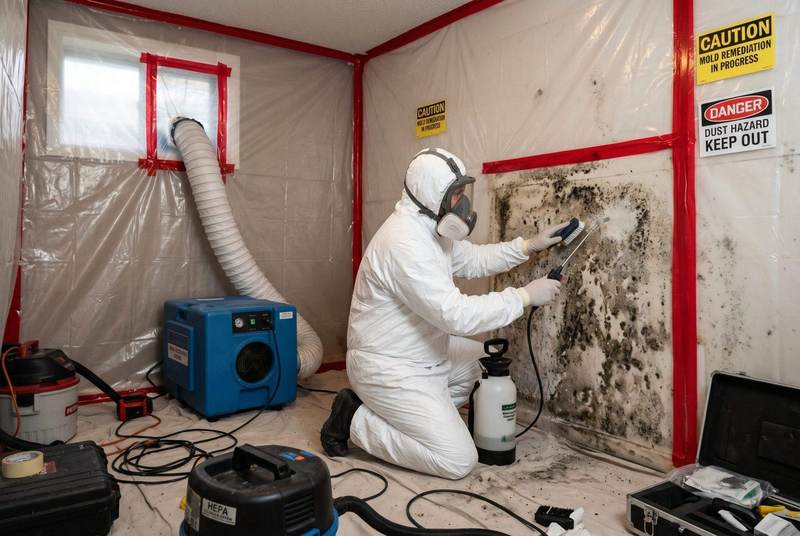
Mold Remediation Cost at a Glance
| Detail | What to Know |
|---|---|
| Small job (under ~10 sq ft) | Estimated few hundred to about $1,500 |
| Medium job (10 to 25 sq ft) | Roughly $1,500 to $3,500 |
| Large job (25 to 100 sq ft) | Roughly $3,000 to $7,000 |
| Very large job (100+ sq ft) | Often $6,000 and up |
| Whole-floor after flood | Often five figures, bundled with flood cleanup |
| Texas licensing threshold | 25 contiguous sq ft requires licensed assessor + remediator |
| Assessment fee | Often a few hundred dollars; full protocol costs more |
| Clearance testing | Billed separately by the independent assessor |
| Rebuild | Insulation, drywall, texture, paint often priced separately |
Why Mold Remediation Costs What It Does
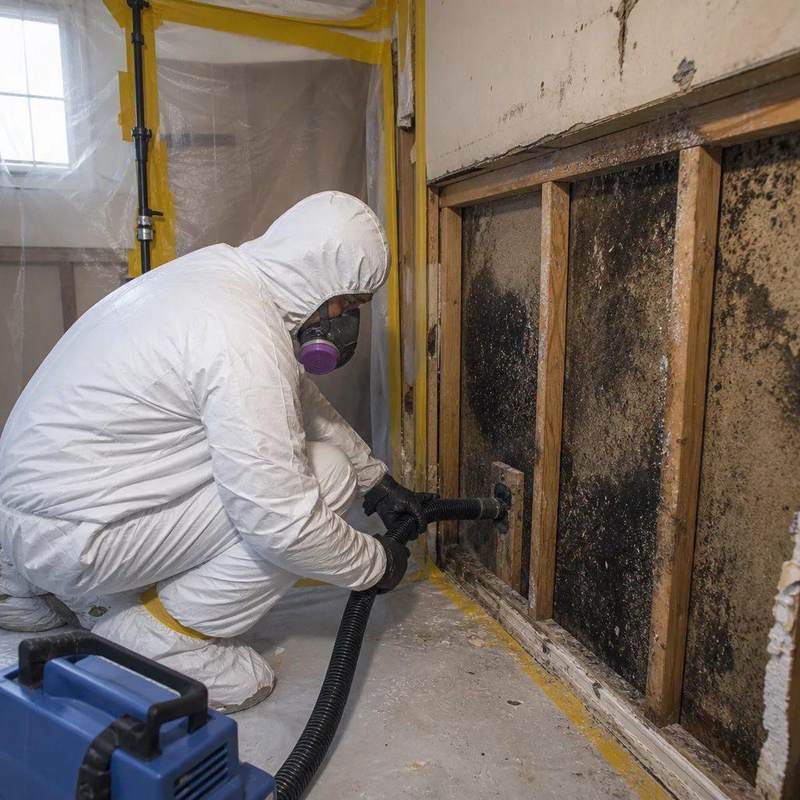
Mold remediation is not painting over a stain or spraying bleach on a wall. A legitimate job requires containment barriers, negative air pressure, HEPA air filtration capturing particles down to 0.3 microns at 99.97 percent efficiency, full personal protective equipment, physical removal and disposal of contaminated porous materials, surface cleaning with EPA-registered biocides, drying, air cleaning, and on larger Texas jobs a separate licensed assessor who writes a protocol and performs post-remediation clearance testing.
The equipment alone commercial HEPA air scrubbers, negative air machines, LGR dehumidifiers, specialized containment materials costs thousands of dollars per day to operate. Add skilled labor in protective gear working inside sealed containment, disposal fees for contaminated materials, antimicrobial treatment, and rebuilding what was removed, and the numbers make sense.
Understanding how the cost breaks down helps homeowners evaluate quotes, avoid overpaying, and spot companies that cut corners.
Estimated Mold Remediation Cost by Job Size
These are estimated averages for Texas homes. Actual costs depend on what the inspection finds.
Small Jobs Under About 10 Square Feet
A mold patch under a bathroom sink, around a shower surround, or behind a small section of baseboard that got wet from a slow supply line leak. If the mold is on a hard surface, the cause is fixed, and the area is under 10 square feet, many homeowners can handle it themselves with protective gear and a fungicide.
When a professional handles it, expect an estimated few hundred to about $1,500 depending on access and whether drywall must be opened. These small jobs typically do not trigger the Texas 25-square-foot licensing requirement.
Medium Jobs 10 to 25 Square Feet
Part of a wall behind a bathroom, a closet that shared a wet wall, or mold discovered behind baseboards after a leak inside a wall was repaired. Estimated range is roughly $1,500 to $3,500.
At 25 contiguous square feet, Texas law (TDLR Chapter 1958) kicks in and the job requires a licensed mold assessor and a separate licensed remediator. That regulatory threshold is a cost step the assessment, written protocol, and clearance testing add fees on top of the remediation itself. Read the full breakdown of when mold remediation is required under Texas law.
Large Jobs 25 to 100 Square Feet
A full wall or long run of drywall after a burst pipe was not dried fast enough, or mold found behind cabinetry after a slow kitchen leak. These jobs require full containment, HEPA air scrubbing, removal and disposal of contaminated drywall and insulation, antimicrobial treatment, drying, independent clearance testing, and rebuild.
Estimated range is roughly $3,000 to $7,000, with the wide spread driven by the amount of material to remove, access difficulty, and whether the HVAC system was contaminated.
Very Large Jobs 100 Square Feet and Up
Attics where a roof leak or AC condensate leak soaked the decking and insulation. Crawl spaces under pier-and-beam homes where moisture colonized the joists and subfloor. Multiple rooms after a flood where drying was delayed. HVAC systems where spores spread through the ductwork to every room.
These jobs often start at $6,000 and can reach well into five figures. Attic remediation in a Texas summer is especially labor-intensive because crews work in extreme heat inside sealed containment. Crawl space access adds time and difficulty.
Whole-Floor Mold After a Flood
When a Houston flood, DFW spring storm, or Central Texas flash flood puts water in the house and drying does not start within 48 hours, mold colonizes the lower walls throughout the ground floor. The flood cut removes contaminated drywall and insulation, but if mold has already established on the framing, remediation is required before rebuild.
These whole-floor jobs often reach five figures and are usually bundled with the overall flood damage restoration scope. Documenting the mold as part of the covered water damage event is critical for insurance.
Estimated Mold Remediation Cost by Location in the Home
Where the mold is growing affects cost as much as how much of it there is.
| Location | Why Cost Changes | Estimated Range |
|---|---|---|
| Bathroom | Small area, easy access, often surface mold on tile or grout | Low end |
| Behind drywall | Walls must be opened, insulation removed, framing treated | Middle |
| Under kitchen cabinets | Cabinets may need removal and reinstallation | Middle to high |
| Attic | Large roof deck area, extreme heat, possible insulation replacement | Often several thousand |
| Crawl space (pier-and-beam) | Tight access, joists and subfloor affected, vapor barrier work | Often several thousand |
| HVAC and ductwork | Air handler cleaning, duct cleaning or replacement | Varies widely |
The Parts of a Mold Remediation Bill
Understanding what you are paying for makes it easier to compare quotes and spot companies that skip essential steps.
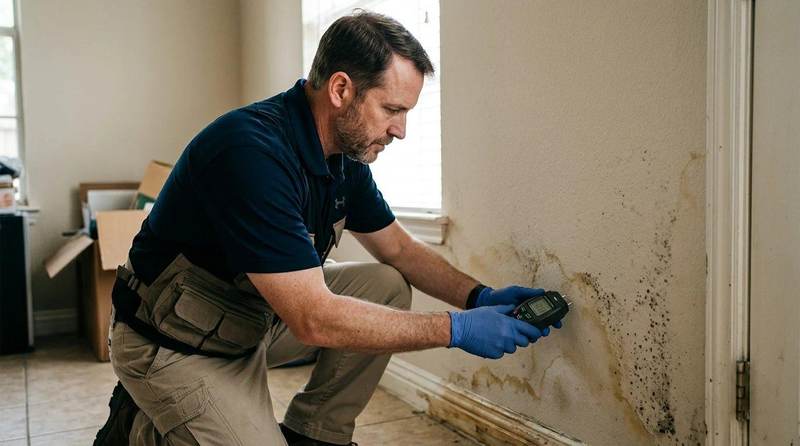
1. Inspection or assessment. A visual inspection, moisture check with meters and thermal imaging, and sometimes laboratory sampling. A basic inspection runs a few hundred dollars. A full licensed mold assessment with a written remediation protocol costs more. On jobs at or above the 25-square-foot Texas threshold, this assessment must be performed by a licensed mold assessor who is independent of the remediation company.
2. Containment. Plastic barriers, zipper doors and negative air machines with HEPA filters isolate the work area so spores do not spread to clean areas of the home. This is not optional on any professional mold job.
3. Removal. Cutting out and double-bagging contaminated drywall, insulation, carpet pad, and other porous materials. This generates the bulk of the disposal cost.
4. Cleaning. HEPA vacuuming every surface inside the containment, then wiping and treating framing, slab, subfloor and hard surfaces with EPA-registered antimicrobial.
5. Drying. Commercial LGR dehumidifiers and air movers run until the structure reaches verified dry readings. Mold will return if the structure is not completely dry. This step is essentially structural drying the same equipment and process used in water damage restoration.
6. Clearance testing. On licensed Texas jobs, the independent assessor returns after remediation to verify the mold has been successfully removed. This may include visual inspection and air or surface sampling. Clearance is billed separately from remediation.
7. Rebuild. New insulation, drywall, texture, paint, flooring and trim to replace what was removed. Rebuild is often priced as a separate line item or even a separate contract.
What Drives the Price Up (and What Keeps It Down)
The gap between a $900 mold job and a $9,000 one usually comes down to five things.
Hidden Mold Behind Walls and Ceilings
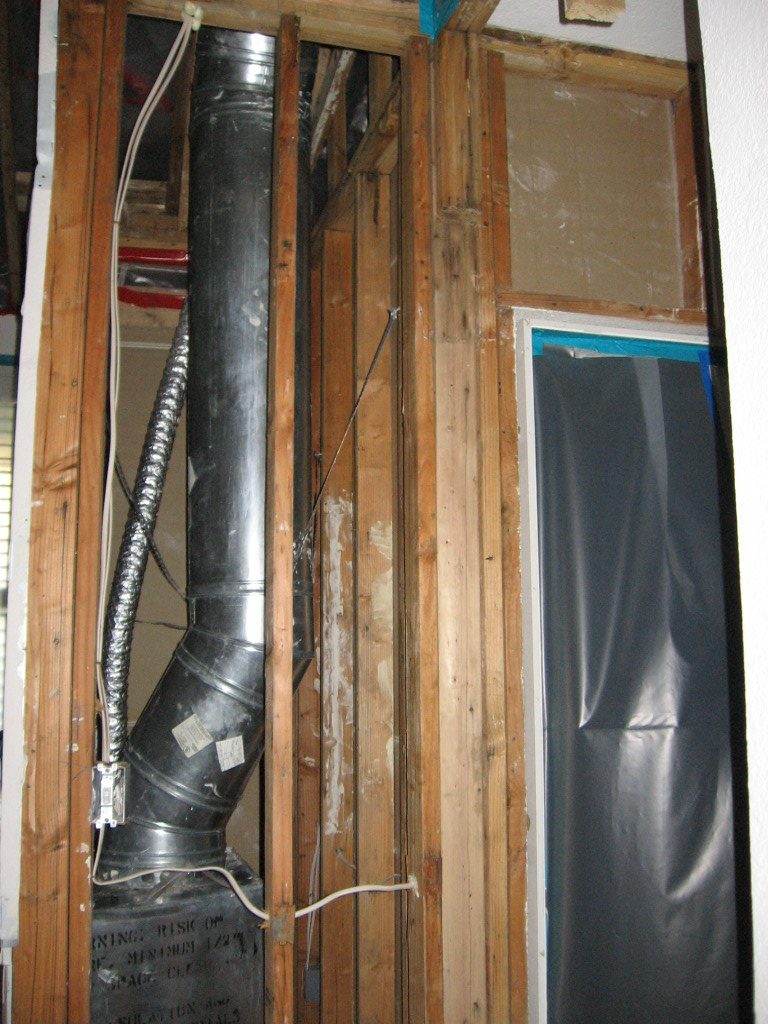
The mold you can see is rarely all the mold there is. A small patch around a bathroom exhaust fan may trace back to a roof leak that soaked the entire rafter bay. A ring of mold behind the toilet may extend down through the floor into the crawl space. Once the crew opens the wall, the scope often grows. That is not a bait-and-switch it is how mold works. A good company documents what they find with photos and moisture readings before expanding the scope.
Water Category and Contamination
Mold that grew after a clean supply line leak is straightforward. Mold after a sewer backup or flood involves Category 3 black water, which means every porous material the water touched is contaminated and must be removed regardless of whether mold is visible. The cleanup is more extensive, the disposal more regulated, and the antimicrobial treatment more thorough. IICRC S520 and S500 standards govern how contaminated mold jobs are handled.
HVAC System Contamination
When mold spores enter the HVAC system, the air handler and ductwork become a distribution network that spreads spores to every room with a register. Cleaning or replacing ductwork on a Texas home with 2,000 to 3,000 square feet of living space is a significant line item. If the evaporator coil or blower assembly is contaminated, the cost climbs further. An AC condensate leak that feeds mold inside the air handler is one of the most common ways this happens.
Access Difficulty Attics and Crawl Spaces
A Texas attic in July can reach 140°F or more. Crews in full protective gear working inside sealed containment in that heat work in short rotations with breaks, which means more labor hours per square foot. Crawl spaces present the opposite problem tight clearance, difficult movement, and limited ventilation. Both locations cost more per square foot than an open room with eight-foot ceilings.
The Rebuild After Removal
Remediation removes the mold and the materials it colonized. Rebuild puts the house back together. Matching the existing texture orange peel, knockdown, skip trowel on Texas homes requires skilled labor. Matching cabinet fronts, tile patterns or flooring that was discontinued adds cost or forces a larger replacement area. Some companies include basic rebuild in the remediation price; others bill it separately. Ask before signing.
Red Flags in a Mold Remediation Quote
Not every company quoting mold work will do it right. Watch for these warning signs.
A big number from a free inspection that included no moisture readings and no clear explanation of the scope. A quote that mentions no containment or HEPA air filtration without those, the crew is spreading spores to clean areas of the house. Plans to spray, fog or encapsulate mold without physically removing contaminated porous materials spraying over moldy drywall does not work. The same company performing both the assessment and the remediation on a job that triggers the 25-square-foot Texas licensing threshold Texas TDLR Chapter 1958 requires these to be separate licensed entities. Pressure to sign immediately or claims that the mold is an emergency health hazard requiring same-day commitment.
A legitimate mold company will take moisture readings, explain what needs to come out and why, detail the containment plan, and give you time to compare.
Does Insurance Pay for Mold Remediation in Texas?
Many Texas homeowners policies limit or exclude mold coverage, but there are important exceptions. Mold that results from a covered sudden water loss a burst pipe, an appliance failure, or a sudden roof leak from hail is sometimes covered, often with a dollar cap that ranges from $5,000 to $25,000 depending on the policy.
Mold from long-term leaks, chronic humidity, or maintenance issues is almost never covered. The key is documentation: photograph the water event, report it to your insurer quickly, and keep every receipt from the water damage restoration and the mold work.
When a covered water loss leads to mold because drying was delayed, the mold remediation may be covered as part of the original claim. Fast structural drying and water extraction within the first 24 to 48 hours often prevents mold entirely which is why the cheapest mold remediation is the one you never need.
Texas Mold Questions Homeowners Actually Search
How much does it cost to remove mold from a 10x10 room in Texas?
A 10-by-10-foot room with mold on one wall commonly falls in the roughly $3,000 to $5,000 range for remediation alone, depending on whether the mold reached the insulation, ceiling or adjacent walls. Assessment, clearance and rebuild add to the total. If the mold is on multiple walls or involves the HVAC, the cost can reach $7,000 or more.
Is a mold inspection the same as mold testing in Texas?
No. An inspection is a visual and moisture assessment of the property. Testing involves collecting air or surface samples and sending them to a laboratory. Testing is not always necessary if mold is visible and the source is identified, many professionals recommend skipping the lab cost and spending that money on remediation. Read the full comparison in our mold inspection vs mold testing guide.
Can I remove mold myself and save money?
For areas under about 10 square feet on hard, non-porous surfaces where the moisture source has been fixed, the EPA says homeowners can handle it with protective gear, a fungicide and proper ventilation. Once the area exceeds 10 square feet, involves porous materials like drywall or insulation, or is in a confined space, professional remediation with containment is strongly recommended. Above 25 contiguous square feet, Texas law requires licensed professionals.
How long does a typical mold remediation job take in Texas?
Small jobs often finish in one to two days. Medium jobs take two to four days for remediation, plus drying time. Large jobs attics, crawl spaces, multiple rooms can take a week or more before clearance. Rebuild time depends on the scope. Get the full breakdown in our mold remediation timeline guide.
What is the cheapest way to prevent mold after water damage?
Dry the structure within 24 to 48 hours. The EPA identifies this window as the threshold before mold colonization begins. Professional structural drying after a leak or flood typically costs a fraction of what mold remediation and rebuild would cost if drying is delayed. Remove wet materials promptly pull wet drywall and insulation, extract water from hardwood floors, and run dehumidifiers until moisture readings are normal.
Mold Remediation Cost Across Texas Regions
Labor rates, mold frequency and the types of problems differ across the state.
Gulf Coast and Houston metro. High humidity and flooding create the largest and most frequent mold jobs. Homes in Splendora, New Caney, Brazoria and Anahuac deal with crawl space moisture, post-hurricane mold, and AC-related growth. Whole-floor remediation after floods like Hurricane Harvey or Hurricane Beryl (July 2024) routinely reaches five figures.
Dallas-Fort Worth. Many mold jobs follow slab leaks that wet walls for weeks before discovery, or roof leaks from spring hail. Cities like Justin, Caddo Mills and Argyle see mold after winter storm pipe breaks and behind shower walls on slab foundations.
Central Texas and Hill Country. Flash flooding in Wimberley, Cedar Creek and Blanco drives post-flood mold. Older pier-and-beam homes in small towns have crawl space mold from decades of poor ventilation.
East Texas. Pier-and-beam homes in Bullard, Chandler and Diboll have joist and subfloor mold from damp crawl spaces. Attic mold from humidity and poor ventilation is also common.
Rural and small-town Texas. Driving distance from qualified mold companies can add trip charges. In towns like Bertram, Caldwell and Bowie, fewer local options mean getting multiple quotes takes more effort.
Stop the Water, Stop the Mold Bill
The most reliable way to control mold remediation cost is to prevent the mold from growing in the first place. Every hour a wet wall, ceiling, crawl space or attic stays wet after a water leak, flood, storm or pipe break brings the structure closer to the 24-to-48-hour mold colonization window identified by the EPA. Fast water extraction and structural drying are the cheapest mold prevention there is.
When mold has already set in, an honest scope from an independent assessor and a qualified remediation crew keep the cost where it belongs on the mold that is actually there, not on unnecessary testing, inflated square footage or skipped containment.
Our local Texas crews dry water damage fast to prevent mold, and coordinate licensed mold remediation when it is needed. Learn more on our mold remediation service page.
Call (469) 548-7594 24/7 Water Damage and Mold Response Across Texas
All prices are estimated averages for typical Texas homes and are not quotes.
More Texas Water Damage Guides
Practical, no-pressure guides written for Texas homeowners.