
Water Damage Restoration
The full job, explained straight: find the water, remove it, dry the structure, clean up, rebuild.
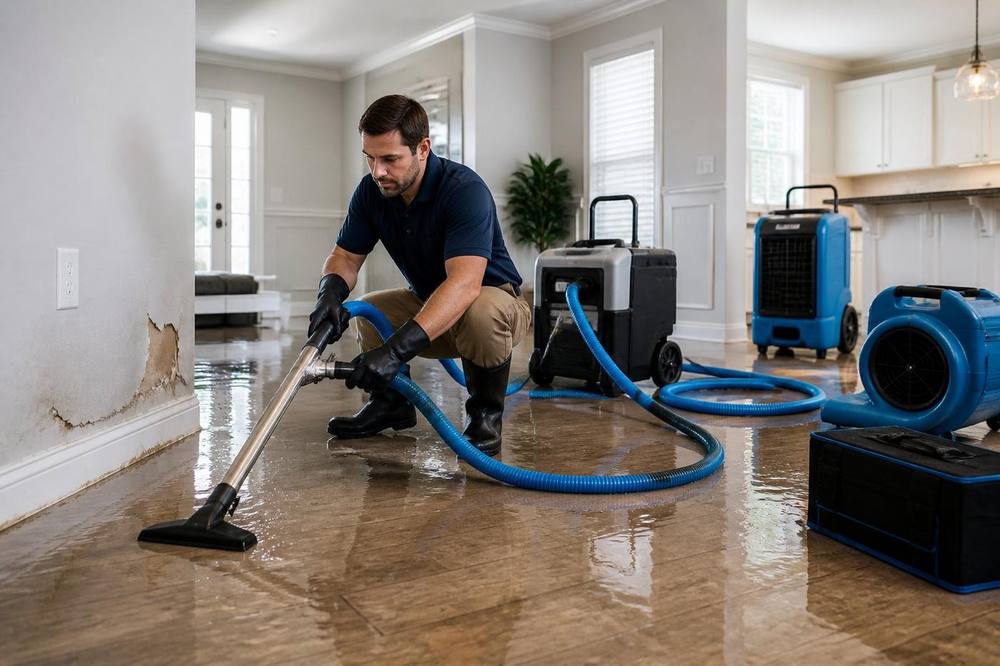
Water damage restoration is the complete process of getting a property back to its pre-loss condition after water intrusion. That means finding every place the water went, removing it, drying the structure to verified levels, cleaning what the water touched, and repairing what cannot be saved.
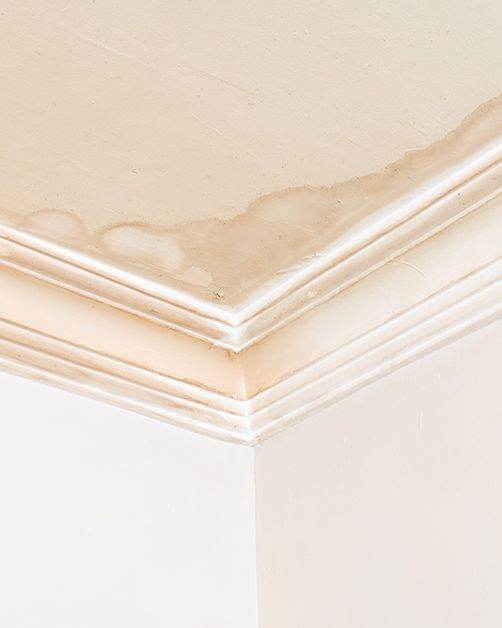
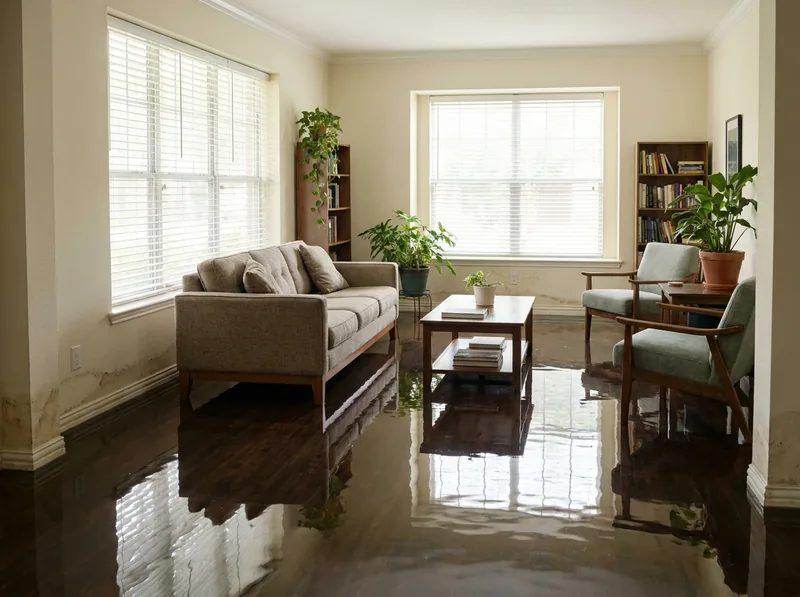
Most people picture the visible part: the puddle, the stain, the warped baseboard. The actual work happens in the parts you cannot see. Water migrates into wall cavities, under flooring, into insulation and subfloors. Restoration done properly addresses all of it, because the damage you skip is the damage that comes back as mold, odor, or structural weakening months later.
What you should do when water damage happens
- Stop the source if you can do it safely: main water valve for plumbing, HVAC off for condensate overflows.
- Shut off electricity to affected areas if water is near outlets, panels, or equipment.
- Move valuables, documents, and electronics out of the wet area.
- Take photos and short videos before anything is moved, with timestamps. This helps your documentation later.
- Call (469) 548-7594. Describe where the water is, where it came from, and whether the source is stopped.
What to avoid
- Do not use a household vacuum on standing water, and do not assume a box fan dries a wall cavity. Surface drying hides the moisture that causes the real damage.
- Do not pull up flooring or open walls yourself unless there is an immediate safety reason. Disturbing materials without knowing the water category can spread contamination.
- Do not delay because the visible area looks small. The visible area is almost never the full area.
- Do not throw away damaged items before documenting them if you plan to file an insurance claim.
The restoration process, step by step
-
 1
1Inspection and moisture mapping
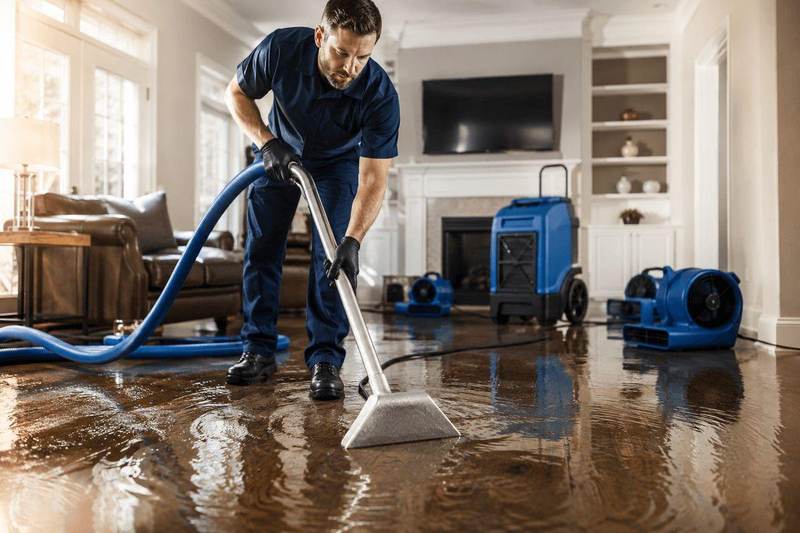
Everything starts with finding the source and tracing where water traveled. We use moisture meters and thermal imaging to map affected areas, including wall cavities, under flooring, and ceiling spaces. This map decides the scope of work. A stain on drywall is a symptom; the map shows the actual extent.
-
 2
2Water extraction
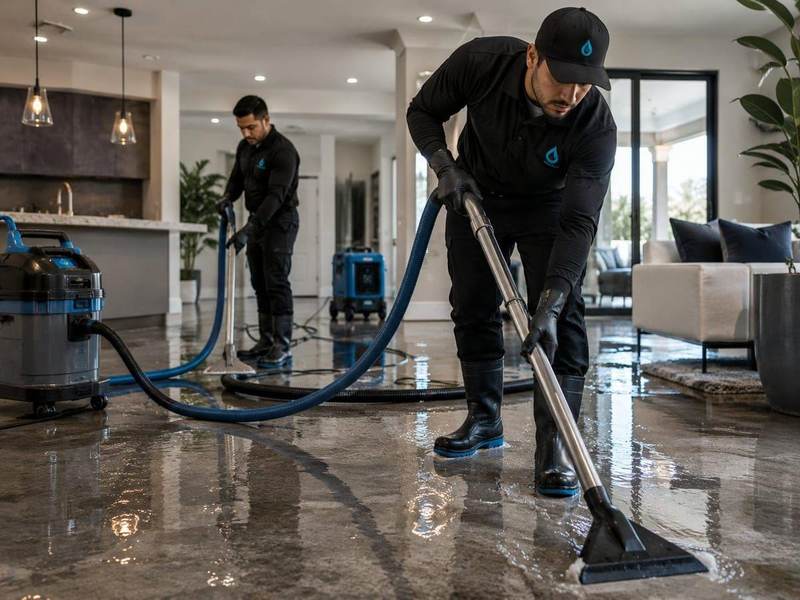
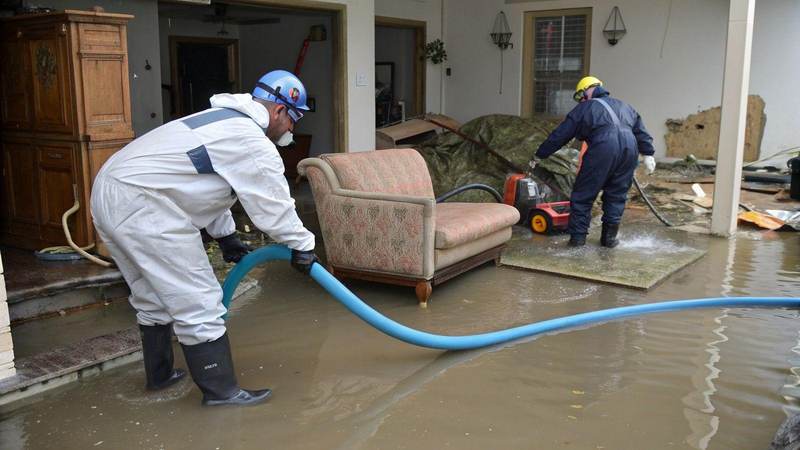
Standing water is removed with extraction equipment, truck-mounted or portable depending on the job. Speed matters here more than anywhere else. Every hour of standing water is another hour of absorption into porous materials, which means more demolition later.
-
 3
3Drying and dehumidification
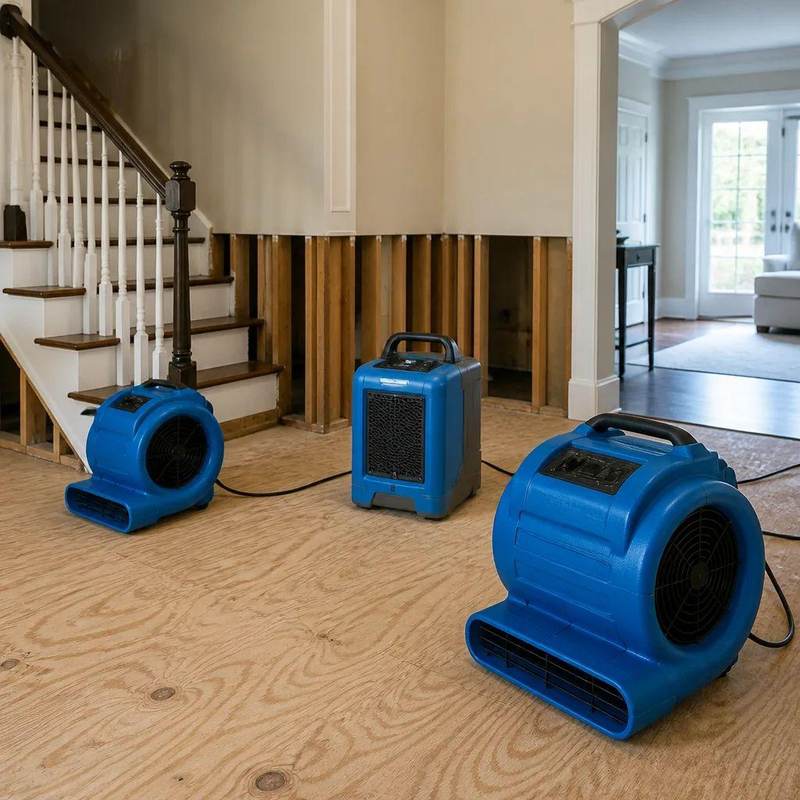
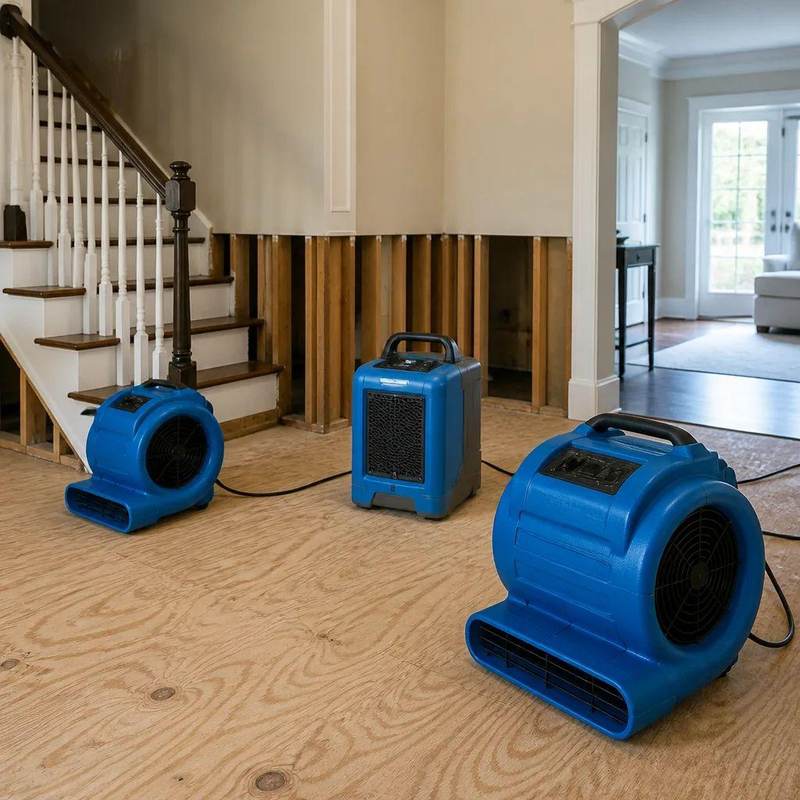
Air movers create airflow across wet surfaces while dehumidifiers pull moisture out of the air so it does not resettle into materials. In Texas humidity this phase needs active management, because humid air slows drying and gives mold an opening. We take moisture readings throughout and keep equipment running until materials reach verified dry levels. Dry to the eye is not the standard. Dry to the meter is.
-
 4
4Cleaning and sanitizing
Once dry, affected surfaces are cleaned and disinfected. The strictness of this step depends on the water category (below). Clean-water losses get thorough cleaning. Contaminated losses require removal of porous materials that cannot be sanitized, then disinfection of everything that remains.
-
 5
5Repair and restoration
Damaged drywall, flooring, insulation, trim, and cabinetry are repaired or replaced. Minor jobs may need only a section of drywall and paint. Major losses can require rebuilding entire rooms. Either way, the finish work only starts after drying is verified, never before.
-
 6
6Final verification and documentation
We walk the completed work with you, confirm moisture readings are at target levels across all affected areas, and hand over the full documentation package: photos, readings, scope, and materials used.
Mitigation vs restoration: two phases, one job
These terms get mixed up constantly, including by insurance paperwork, so here is the plain version.
Mitigation is the emergency phase. Its job is to stop the damage from getting worse and stabilize the property. Extraction of standing water, removal of materials that cannot be salvaged, and deployment of drying equipment all belong to mitigation. It starts immediately and it is measured in hours and days.
Restoration is the rebuild phase. It begins after the property is dry and fully assessed. Drywall goes back up, flooring is replaced, trim and paint are finished. Its job is returning the property to pre-loss condition. It is measured in days and weeks.
Why the distinction matters: the two phases involve different scopes, different documentation, and often different line items on an insurance claim. A company that handles both keeps one accountable record across every phase, instead of handing you off between contractors.
Not sure how bad it is? A quick call costs nothing.
Describe what you see. We will tell you honestly whether you need a crew.
Categories of water change the job
Not all water carries the same risk, and the category decides how aggressive the cleanup must be.
Category 1: clean water. From supply lines, faucets, or a broken pipe carrying clean water. The lowest contamination risk, but it degrades fast. Clean water left sitting for 48 hours or more can pick up contaminants from the materials it contacts.
Category 2: gray water. From appliances like dishwashers and washing machines, or toilet overflow without solids. Contains enough contaminants to require protective handling and more thorough cleaning.
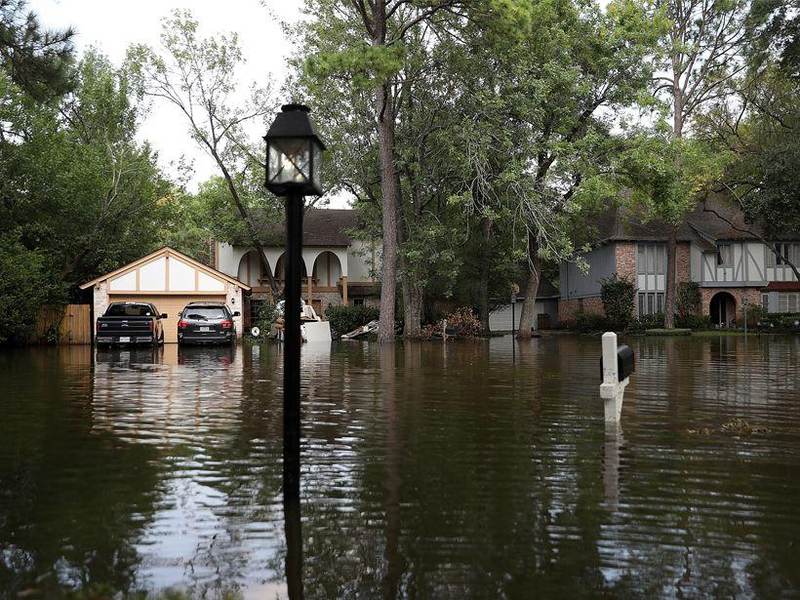
Category 3: black water. Sewage backups, rising floodwater, seawater, and storm surge. Carries bacteria, chemicals, and debris. Porous materials touched by black water generally cannot be sanitized and must be removed. This is handled as a health risk first and a property problem second. See our sewage cleanup process Sewage Cleanup
Identifying the category correctly at inspection is what keeps a job safe and keeps the documentation honest.
What is included and when you need it
What is included
- Mitigation phase: Extraction of standing water, removal of materials that cannot be salvaged, and deployment of drying equipment all belong to mitigation.
- Restoration phase: Drywall goes back up, flooring is replaced, trim and paint are finished.
- Claim-ready documentation: Every job produces a written record built for claims: dated photos of the loss, moisture readings across affected areas, the categorized scope of work, and an itemized account of materials removed and work performed.
Signs you need this
- Standing water: There is standing water you cannot fully remove.
- Water in the structure: Water has reached wall cavities, subfloors, or insulation.
- Gray or black water: The water is gray or black.
- Multiple rooms: The loss covers multiple rooms.
- Mustiness or spreading stains: You smell mustiness or see discoloration spreading.
- Unknown source: The source is unknown.
Clean water on a hard surface the size of a dinner plate is a mop job. Almost everything beyond that benefits from moisture mapping at minimum.
How long does restoration take
There is no honest single answer, because the timeline follows the damage. Extraction happens on day one. Drying typically runs several days with daily moisture readings guiding equipment adjustments. Cleaning and repair follow. A contained clean-water loss in one room can move from call to completion in about a week. A multi-room sewage or flood loss with demolition and rebuild takes longer. We give you a realistic timeline after inspection, and we update it if the moisture map changes.
Insurance documentation we provide
Every job produces a written record built for claims: dated photos of the loss, moisture readings across affected areas, the categorized scope of work, and an itemized account of materials removed and work performed. This aligns with what adjusters need to evaluate mitigation and restoration as separate phases. We coordinate with your adjuster on technical details. We do not interpret your policy or promise coverage outcomes.
Frequently asked questions
Mitigation is the emergency phase: stop the damage, extract water, dry and stabilize. Restoration is the rebuild phase: repair and replace damaged materials to return the property to pre-loss condition. Both are part of full water damage restoration.
Only the drywall that cannot be dried or sanitized. Clean-water exposure caught early can sometimes be dried in place. Drywall soaked by contaminated water, or left wet long enough to lose integrity or grow mold, must be removed.
Surface water evaporates, but moisture trapped inside walls, under floors, and in insulation does not dry reliably on its own, especially in humid climates. Unverified drying is the most common cause of mold problems appearing weeks after a leak.
It depends on the material and the exposure. Tile over concrete often survives. Hardwood, laminate, and carpet pad frequently do not after significant soaking. Inspection determines what can be dried and what must go.
Moisture meters. Materials are compared against dry standards for that material type, and equipment stays until readings confirm it. That verification is part of our process on every job.
Sudden and accidental losses, like a burst pipe, are commonly covered under Texas homeowners policies. Gradual leaks and floodwater from rising water are typically excluded. Documentation from day one protects whatever claim you file.
See our insurance documentation guidance above, or call (469) 548-7594 to start the process.
Related Restoration Services
Start with an inspection, not a guess
The difference between a one-week job and a three-month problem is usually what happened in the first 48 hours. If water has entered your property, get it mapped, extracted, and drying now.
(469) 548-7594