Texas Drought and Slab Leaks: How a Dry Summer Breaks the Pipes Under Your Foundation
Texas droughts dry out expansive clay soil, which shrinks and pulls away from slab foundations. The slab settles unevenly, and the copper supply lines, cast iron drains and PVC connections underneath bend, crack or pull apart at joints. When heavy rain finally returns, the clay swells and moves the slab again and that second shift is often what breaks a pipe that was already stressed.
Water Bill Climbing During a Dry Spell? Call (469) 548-7594 We Find the Leak and Dry the Damage
(469) 548-7594
Drought Slab Leaks at a Glance
| Detail | What to Know |
|---|---|
| Root cause | Expansive clay soil shrinks in drought, swells in rain slab moves with it |
| Worst soil types | Blackland Prairie clay (North TX), gumbo clay (Houston), clay belts east of I-35 |
| Driest year on record | 2011 foundation and pipe repair calls soared statewide |
| Pipes most at risk | Copper supply lines and cast iron drains under slab, installed 1960s-1990s |
| Warning signs | Rising water bill, warm floor spots, meter running with everything off |
| Why leaks spike after rain | Wet clay swells fast, lifts slab, cracks already-weakened pipes |
| Foundation watering | Soaker hoses 12-18 inches from slab, even moisture on all sides |
| Average detection cost | See our leak detection cost guide for estimated ranges |
| Damage pattern | Water wicks up from slab through bottom plates into wall cavities |
The Clay Problem Under Texas Homes Why Your Soil Is Working Against Your Foundation
Much of Texas sits on expansive clay. In North Texas, it is the Blackland Prairie a belt of dark, heavy clay running from San Antonio through Austin, Waco, Dallas and into Oklahoma. Around Houston, people call it gumbo. Central Texas and San Antonio have their own clay belts east of Interstate 35.
All of these soils share one destructive habit: they absorb water and swell dramatically, then lose water and shrink just as dramatically. In a long drought, the clay contracts. Wide cracks open in yards. The soil around the foundation drops, and the slab loses support in some spots while staying supported in others. The slab bends. Then a wet spell soaks the soil, the clay swells, and it pushes the slab back up but not evenly.
Texas has seen this cycle at its worst in recent memory. 2011 was the driest year on record for the state, and foundation repair and pipe leak calls soared across every major metro. Hot, dry summers in 2022, 2023 and 2025 brought waves of water main breaks and residential slab leaks across Houston, Dallas and San Antonio as clay pulled away from buried pipes and foundations.
Exactly How Drought Breaks the Pipes Under Your Slab
| What the Soil Does | What Happens to the Pipes | Where It Leaks |
|---|---|---|
| Shrinks and pulls away from slab | Slab settles unevenly; pipes cast into or under it bend | Supply lines under the slab (slab leak) |
| Opens deep vertical cracks | Yard lines lose soil support and sag | Main line from meter to house |
| Shifts at the foundation edge | Pipes pull at the point where they enter the slab | Joint where yard line meets house plumbing |
| Swells fast when rain returns | Slab lifts, stressing already-weakened pipe connections | Old copper and cast iron under the slab |
| Moves drain lines | Cast iron and PVC drains crack or separate at joints | Drain leaks under slab, sewer gas smell |
Aging pipe makes every drought cycle worse. Many Texas homes built from the 1960s through the 1990s have copper supply lines under the slab and cast iron drains. After decades of soil movement, hard water deposits and natural corrosion, these pipes are thinner and more brittle than the day they were installed. A pipe that survived 20 droughts may not survive the 21st.
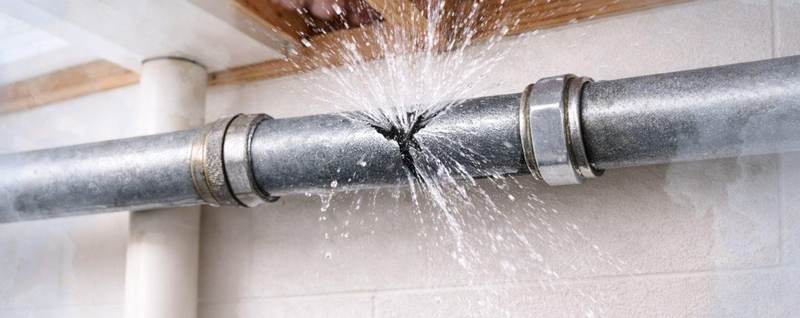
8 Warning Signs of a Drought Slab Leak in Your Texas Home
1. Water Bill Rising Without a Change in Use
A slab leak runs 24 hours a day because supply lines are always under pressure. Even a small crack adds thousands of gallons per month. Compare your current bill to the same month last year. A jump of 20% or more with no explanation deserves a meter check.
2. Water Meter Running With Every Fixture Off
Turn off every faucet, showerhead, toilet, ice maker, sprinkler timer and washing machine in the house. Watch the meter dial or digital readout for 15 minutes. If it moves, you have a leak somewhere in the system.
3. Warm Spot on the Floor
A hot water supply line leaking under the slab heats the concrete above it. Walk barefoot on tile or hard flooring and feel for a section that is warmer than the surrounding area. This is one of the most reliable early signs of a hot-side slab leak.
4. Wet, Soft or Green Patch in a Dry Yard
During a drought, a spot in the yard that stays green or feels soft and muddy while everything else is brown and hard may mark a yard line leak. The water is feeding that patch of grass from below.
5. Swollen Baseboards or Damp Carpet Along One Wall
Water from a slab leak reaches the slab surface and wicks up through the bottom plate of the wall into the drywall and baseboard. Swollen baseboards, damp carpet or cupped wood flooring along one section of wall especially on a bathroom or kitchen wall point to moisture entering from below.
6. New Drywall Cracks, Sticking Doors or Windows
Foundation movement from drought soil shrinkage stresses the framing. Cracks appear along drywall seams, corners and above door and window frames. Doors and windows that opened freely may suddenly bind or refuse to latch.
7. Sound of Running Water With Nothing On
Stand in a quiet room near the slab and listen. A hissing or rushing sound when no fixtures are running can indicate pressurized water escaping through a crack in a supply line under the floor.
8. Sewer Smell or Slow Drains
A broken drain line under the slab leaks sewage into the soil beneath your home. You may smell sewer gas rising through the slab, through cracks in the floor or through drain openings. Slow or gurgling drains that were not slow before can indicate a collapsed or separated drain under the foundation. If you suspect a sewer line break, our sewage cleanup crew handles the contamination.
Why Slab Leaks Often Appear When the Rain Finally Comes Back
Many Texas homeowners notice the leak not during the drought, but right after it ends. Two things happen at once.
First, the soil swells. When heavy rain hits dry clay, the soil expands rapidly. A pipe already stressed by months of settling can finally crack when the slab lifts back up. The second shift finishes what the first one started.
Second, the hidden leak becomes visible. During the drought, the dry soil beneath and around the slab absorbed the leaking water and hid it. Once the ground is saturated, the water has nowhere to go but up through the slab, into the flooring and up the walls.
This is why a drought followed by a stormy fall or a wet winter is the busiest season for slab leak detection and water damage restoration calls across Texas.
Foundation Watering During a Texas Drought The Right Way to Keep Soil Stable
Foundation watering is one of the most effective defenses against drought slab leaks, but doing it wrong can cause the same swelling damage you are trying to prevent.
How to Water Your Foundation Correctly
Lay soaker hoses 12 to 18 inches away from the slab on all sides. Do not place hoses directly against the foundation water pooling at the slab edge can swell the clay on one side while the rest stays dry, creating the uneven movement that breaks pipes. Run the hoses on a timer in the early morning or evening for 15 to 30 minutes per session, two to three times per week during extreme drought. The goal is even, moderate moisture enough to keep the soil from pulling away from the slab, not enough to saturate it.
Pay extra attention to sides of the house that face south and west, where afternoon sun bakes the clay fastest. If you see the soil pulling more than an inch away from the foundation on those sides, increase watering frequency there first.
Many Texas cities restrict outdoor watering during drought stages. Foundation watering is often treated separately from lawn watering in those restrictions check your city's current stage and read the fine print before assuming you cannot water at all.
Other Ways to Reduce Drought Pipe Risk
Keep large trees at least 10 to 15 feet from the foundation. A mature live oak or pecan can pull hundreds of gallons of water from the soil every week, drying the clay faster than any summer heat. Fix gutters and downspouts so rainwater drains evenly around the house instead of soaking one corner. Check your water pressure anything above 80 psi adds stress to aging copper lines, and a pressure-reducing valve costs far less than a slab leak repair. Read your water meter monthly with everything off. If the dial moves, you already have a leak.
Consider rerouting old under-slab lines through the attic or walls after a first slab leak. Repeated spot repairs on 40-year-old copper under a moving slab often lead to another break a few feet away. A full reroute takes the pipes out of harm's way permanently.
What to Do the Moment You Find a Drought Slab Leak
Shut off the main water valve immediately. Every minute the line stays pressurized, more water pushes into the soil and up through the slab into your flooring and walls. Photograph the meter reading, any warm or damp spots on the floor, wet baseboards and new cracks in the walls or brick.
Pull up area rugs and move furniture off damp carpet. If you have hardwood floors showing cupping or dark staining, that water has been running long enough to saturate the subfloor.
Call for professional leak detection. Electronic listening equipment and thermal imaging can pinpoint the break under the slab without tearing up the entire floor. Check our leak detection cost guide for estimated ranges by leak type.
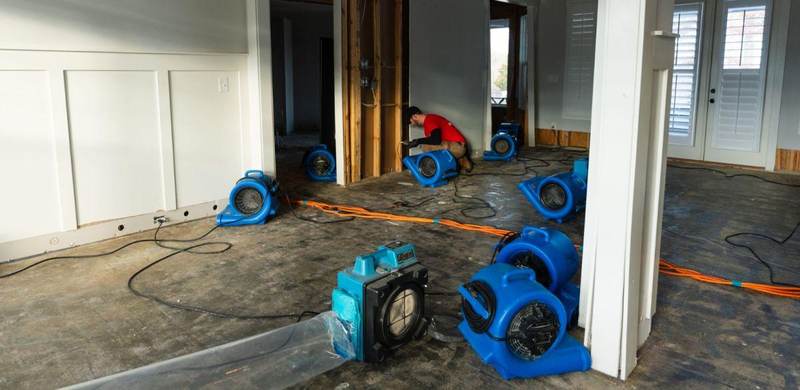
Then call a water damage restoration crew to map the moisture and start structural drying. Water under flooring and inside wall cavities does not evaporate on its own in a Texas house especially during humid months when the outdoor dew point is already high. Professional drying with LGR dehumidifiers pulling 130 to 200 pints per day and directed airflow through wall-cavity drying systems is the only way to get the structure dry before mold colonizes in the 24-to-48-hour EPA window.
The Water Damage Side of a Long-Running Drought Leak
Drought slab leaks are different from a sudden burst pipe. A burst pipe dumps a large volume fast, and the homeowner usually notices within hours. A drought slab leak can seep for weeks or months before anyone catches it, because the dry soil underneath absorbs the water and hides it. By the time damp shows on the surface, the wet area under the flooring is often much larger than what you can see.
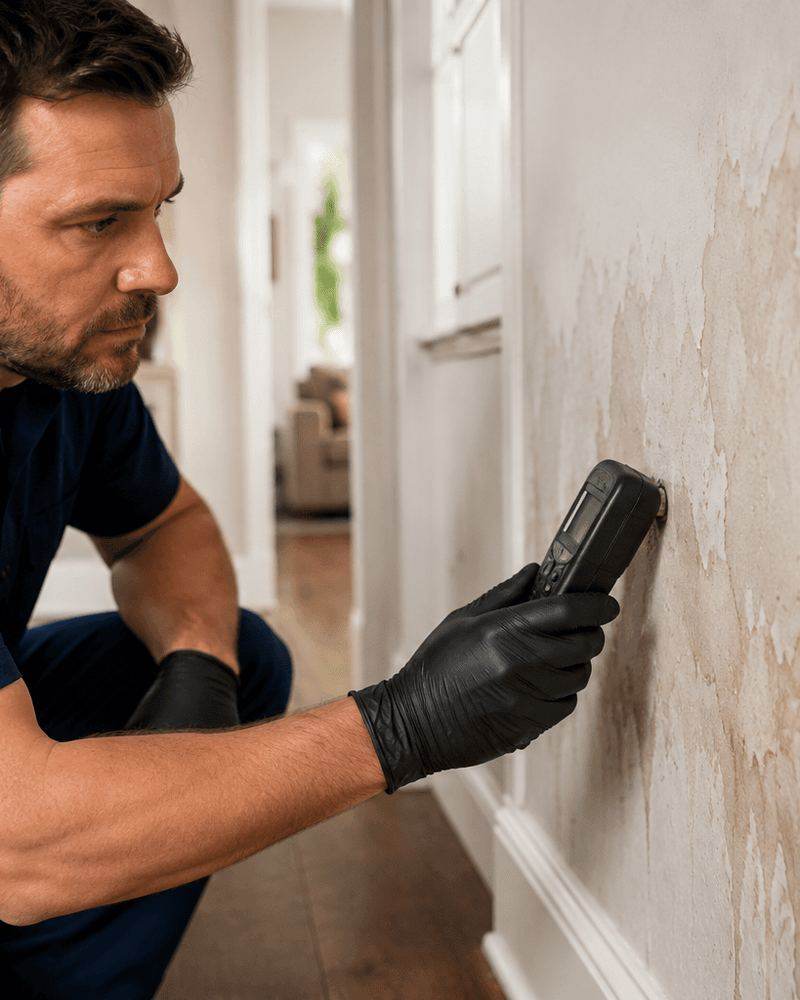
Restoration for a long-running slab leak typically includes moisture mapping of every room touching the leak using pin and pinless meters plus thermal imaging. Water extraction from carpet, pad and under laminate or vinyl plank so the slab surface can dry. Removing water-damaged drywall at the base of walls usually a two-foot flood cut and pulling wet fiberglass insulation from the cavities. Then structural drying with daily moisture readings until the framing, slab and subfloor match readings in unaffected areas.
If the leak has been running long enough, mold may already be growing behind baseboards and inside wall cavities. Aspergillus and Penicillium colonize damp drywall paper within days in warm Texas conditions. If you see or smell mold, a licensed mold remediation crew handles containment, removal and clearance under TDLR Chapter 1958 rules and under Texas law, the licensed assessor and the licensed remediator must be independent of each other on any job over 25 contiguous square feet.
Drought Leak Questions Every Texas Homeowner Asks First
Can a Texas Drought Actually Break the Pipes Under My House?
Yes. Drought shrinks expansive clay soil, which lets the slab foundation settle unevenly and stresses the copper supply lines, cast iron drains and PVC connections underneath. Old copper installed in the 1960s through the 1990s is the most vulnerable because decades of hard water and soil movement have already thinned the pipe walls. A single dry summer can produce enough differential settlement to crack a joint or split a thinned section of line.
Why Does My Slab Leak Show Up After the Rain Starts?
Two things happen at once. First, wet clay swells rapidly and lifts the slab, which can crack a pipe that was already weakened by months of drought settlement. Second, the saturated soil can no longer absorb the leaking water and hide it so water pushes up through the slab into your flooring and becomes visible for the first time. This drought-then-rain cycle is why flood damage restoration calls spike in the weeks after a drought breaks.
Should I Water My Foundation During a Drought to Prevent Slab Leaks?
Many foundation engineers recommend even, moderate watering with soaker hoses 12 to 18 inches from the slab on all sides. The goal is to keep moisture levels stable not to flood the clay. Follow your city's current drought-stage rules, and check whether foundation watering is exempt from landscape restrictions.
How Do I Check for a Slab Leak Myself Before Calling Anyone?
Turn off every water fixture in the house, including ice makers, irrigation timers and toilet fill valves. Watch the water meter for 15 minutes. If the dial or digital readout moves, water is leaving the system somewhere. A warm spot on a tile or concrete floor, a rising water bill with no usage change, or a musty smell near baseboards all point to a possible slab leak.
How Much Does It Cost to Fix the Water Damage From a Drought Slab Leak?
It depends on how long the leak ran, how much of the slab is wet, and whether mold has started. A small leak caught early may need only targeted drying and minor drywall repair. A leak that ran for months can mean tearing out flooring across multiple rooms, removing drywall at the base of every affected wall, weeks of structural drying and possible mold remediation. See our water damage restoration cost guide for estimated ranges.
Texas Communities Where Drought Slab Leaks Hit Hardest
Houston and the Gulf Coast Gumbo clay and thousands of older homes with cast iron drain lines under slabs. Long dry summers bring both supply and drain leaks, and the humid air slows drying once water reaches the surface. We serve Waller, Brookshire, Needville and Magnolia.
Dallas-Fort Worth Blackland Prairie clay and massive 1980s and 1990s subdivisions built with copper under slabs. The 2022 and 2023 dry spells produced waves of slab leak calls across the Metroplex. We serve Argyle, Ferris and Crandall.
Central Texas Heavy clay east of Interstate 35, limestone and rock to the west. Foundation movement is worst on the clay side, where homes in growing communities sit on freshly graded soil. We serve Jarrell, Rockdale and Caldwell.
San Antonio Area Clay on the east and south sides feeds slab movement during every dry spell. We serve Elmendorf and Saint Hedwig.
Do Not Wait for the Next Rainstorm to Find Out
If this summer was dry and your water bill crept up, check the meter now. A leak found during the drought means a small pipe repair and a short dry-out. A leak discovered after the rains return can mean saturated flooring across multiple rooms, mold behind every baseboard and a restoration bill that dwarfs the plumbing cost. Our crews handle emergency water extraction, moisture-verified structural drying and full damage restoration and we coordinate with your plumber and foundation specialist so you deal with one timeline, not three.
Call (469) 548-7594 24/7 Drought Slab Leak Water Damage Response
More Texas Water Damage Guides
Practical, no-pressure guides written for Texas homeowners.
Drywall Water Damage: When to Dry It in Place and When to Replace It
Read the guide →
Hardwood Floor Water Damage: Save Cupped Floors or Replace? Texas Drying Guide (2026)
Read the guide →
Leak Detection Cost in Texas: 2026 Estimated Ranges
Read the guide →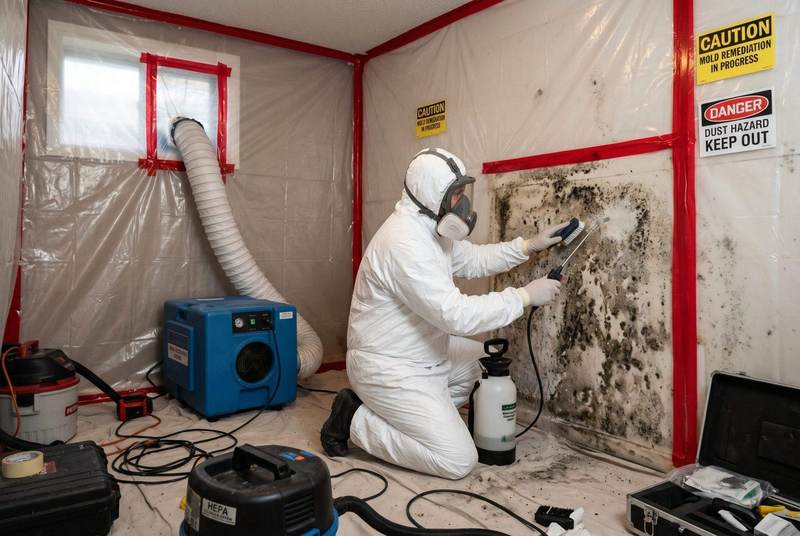
Mold Remediation Cost in Texas: 2026 Estimated Ranges by Job Size
Read the guide →
9 Signs of Water Damage in Walls: What Texas Homeowners Should Check Before Mold Spreads (2026)
Read the guide →