San Antonio Flash Floods Travel From the Edwards Plateau to Your Living Room in Under an Hour The Cleanup Must Start Just as Fast
San Antonio straddles the Balcones Fault Zone where Edwards Limestone meets Blackland Prairie clay, producing the exact same flash flood mechanics that make Central Texas the most flood-prone region in North America. The San Antonio River, Salado Creek, Leon Creek and Medina River all transition from steep Hill Country channels to flat urban corridors running through residential neighborhoods. The October 1998 flood killed 31 people across South Central Texas and caused $750 million in damage. The May 2013 flood sent Salado Creek through thousands of homes on the northeast side. Every major San Antonio flood follows the identical geological pattern rapid Hill Country runoff meets flat, clay-soil drainage that cannot keep up.
Call Texas Water Damage Solutions (469) 548-7594
(469) 548-7594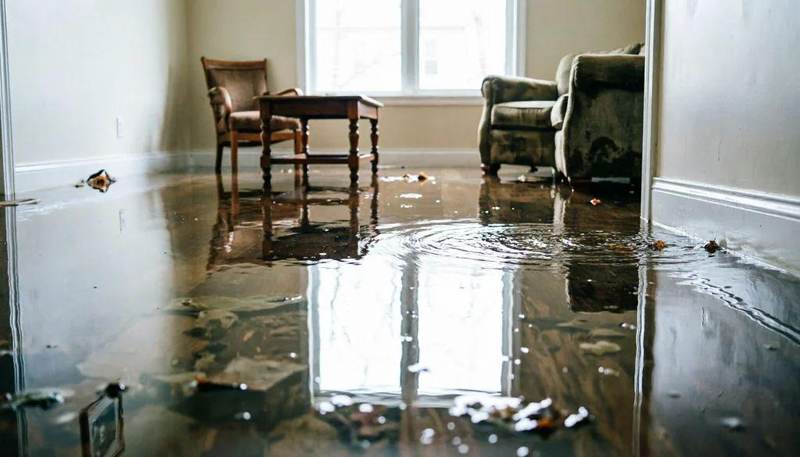
San Antonio Flash Flood Cleanup at a Glance
| Factor | Detail |
|---|---|
| Primary flood mechanism | Balcones Escarpment runoff steep limestone to flat clay transition |
| Peak flood season | May-June and September-October |
| Major flood-prone waterways | San Antonio River, Salado Creek, Leon Creek, Medina River, Olmos Creek |
| Historic floods | October 1998 (31 deaths), May 2013 (Salado Creek), October 2002, September 2018 |
| Water classification | Category 3 black water always during creek and river flooding |
| Mold colonization window | 24-48 hours in San Antonio's heat and humidity |
| SAWS sewer overflow risk | Combined storm/sewer sections overflow during rainfall exceeding 2 inches per hour |
| Cleanup timeline | Extraction within hours, gut-out within 24-48 hours, drying 3-7 days |

Why Every San Antonio Flood Is a Contamination Emergency
San Antonio's flash flood contamination comes from multiple sources that combine into IICRC Category 3 black water with pathogen loads exceeding what typical urban flooding produces.
San Antonio Water System (SAWS) sewer overflows Sections of San Antonio's sewer system still operate as combined storm and sanitary sewers. When rainfall exceeds the system's capacity, raw sewage mixes with stormwater and backs up through floor drains, toilets and fixtures into homes. The February 2024 infrastructure assessment identified over 180 miles of aging sewer mains at elevated overflow risk.
Agricultural runoff from the Hill Country Upstream ranching and agricultural operations in Medina, Bandera and Kendall counties contribute animal waste, fertilizer, pesticide and herbicide residue to floodwater that flows directly into San Antonio's creek systems. This agricultural contamination adds pathogens and chemical exposure beyond standard urban sewage overflow.
Edwards Aquifer recharge zone silt San Antonio sits above the Edwards Aquifer recharge zone where surface water enters the limestone through fractures and sinkholes. During floods, water carries fine limestone sediment and dissolved minerals that coat surfaces inside flooded homes. This mineral residue traps organic material against structural surfaces, creating ideal conditions for mold colonization under and behind the sediment layer.
Military base contamination proximity Homes near Joint Base San Antonio-Lackland and the former Kelly Air Force Base sit within watersheds that have documented PFAS and petroleum contamination in groundwater. Flash flooding can mobilize these contaminants from subsurface soil into floodwater that enters residential areas along Leon Creek and tributaries. Environmental testing beyond standard biological protocols is warranted for flood events in these corridors.
Every porous material that contacts San Antonio floodwater must be removed. No exceptions. Water extraction followed by full gut-out drywall, insulation, carpet, pad, particle board, upholstered furniture is the minimum standard. Trying to dry Category 3-contaminated materials in place creates a health hazard that compounds every day.
San Antonio's Flash Flood Neighborhoods Where the Water Arrives First
Olmos Basin and Alamo Heights
The Olmos Dam, built in 1926 after the devastating 1921 San Antonio flood, controls Olmos Creek flow through Alamo Heights and into the San Antonio River downtown. When rainfall exceeds the dam's detention capacity, controlled releases send water through the Olmos Basin and into neighborhoods along the San Antonio River Walk corridor. Homes south of the Olmos Dam between Hildebrand and Josephine Street face rapid water rise when the basin fills. The 1998 flood overtopped the Olmos spillway, sending a wall of water through Brackenridge Park and into the river channel.
Salado Creek Northeast Side to Southside
Salado Creek drains 200 square miles of northeast Bexar County through some of San Antonio's most densely populated residential areas. The May 2013 flood sent Salado Creek through the Woodlake and Windcrest areas, flooding hundreds of homes. Homes along Salado Creek between Eisenhauer Road and Rigsby Avenue face the highest flash flood risk on San Antonio's northeast side. The rapid urbanization of the upper Salado watershed in the Forum and Live Oak areas has increased runoff volume above what the downstream channel capacity can handle.
Leon Creek West Side and Lackland Area
Leon Creek runs through the west side of San Antonio past JBSA-Lackland and into the Medina River. The Leon Creek watershed includes some of the most rapidly developing commercial and residential areas in western Bexar County. Impervious surface increase from development along Loop 1604 and Potranco Road has raised flood peaks in the lower Leon Creek corridor. Homes along Leon Creek from Ray Ellison Boulevard to US-90 face both flash flood risk and the contamination concerns associated with proximity to the former Kelly AFB plumes.
Medina River Southwest Bexar County
The Medina River drains the Hill Country through Medina and Bandera counties before crossing southwestern Bexar County. The October 2018 flood sent the Medina River to near-record levels through communities along Highway 211 and Talley Road. Castroville on the Medina River west of San Antonio faces periodic flooding from Hill Country rainfall events that produce river crests arriving 6 to 12 hours after the upstream rain stops.
The San Antonio Flood Cleanup Protocol Step by Step
Safety first Confirm electrical disconnect before entering. San Antonio's older south-side and west-side homes often have electrical panels below the 3-foot level where floodwater reaches them. CPS Energy will disconnect at the meter upon request. Check gas connections damaged gas flex lines leak after water recedes.
Document before touching Photograph every room showing the high water line on walls. Video the exterior showing water entry points and debris fields. Mark the high water line on studs with permanent marker before cutting drywall your insurance adjuster needs this reference.
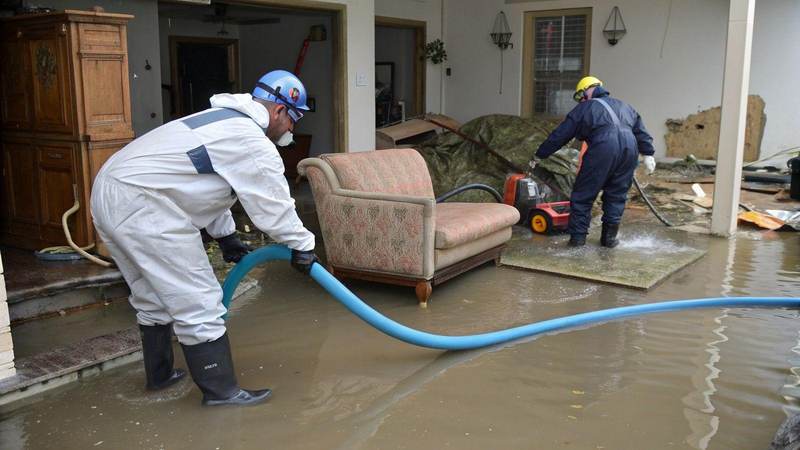
Extract immediately Truck-mounted extraction removes standing water. Submersible pumps handle anything deeper than 2 inches. Weighted extraction wands pull absorbed water from carpet before removal. Every gallon extracted mechanically is a gallon the dehumidifiers do not have to process as vapor.
Gut-out within 24 hours Cut drywall 24 inches above the water line. Pull all fiberglass insulation from cavities. Remove carpet, pad, baseboards, shoe molding. Remove any particle board cabinetry or shelving that was submerged. Drywall that absorbed Category 3 water cannot be saved regardless of how quickly you respond.
Antimicrobial treatment Spray all exposed framing, subfloor, sill plates and remaining structural surfaces with EPA-registered antimicrobial solution. This is not household bleach professional antimicrobial products penetrate wood grain where bleach cannot reach.
Structural drying Deploy LGR dehumidifiers (130-200 pints/day capacity) and high-velocity air movers. Set up wall-cavity drying systems above flood cuts. Monitor moisture daily at grid points. San Antonio's summer heat (highs above 100°F June through September) actually helps evaporative drying when humidity is controlled by dehumidifiers but without mechanical humidity control, the heat accelerates mold colonization rather than drying.
Questions San Antonio Homeowners Ask While Standing in Floodwater
How Fast Does Mold Start Growing After San Antonio Flash Flooding?
Mold spores begin colonizing wet organic materials within 24 to 48 hours at San Antonio's temperatures. At 95°F with 70%+ humidity typical from May through October colonization accelerates faster than in any other major Texas metro. Visible colonies appear on saturated drywall within 72 hours. Behind walls and under flooring, hidden growth can establish for weeks before producing the musty odor that alerts homeowners. Texas TDLR rules require a licensed mold assessor and licensed remediator when colonization exceeds 25 contiguous square feet.
Does CPS Energy Disconnect Power After Flooding in San Antonio?
CPS Energy will disconnect electrical service at the meter upon homeowner request during flood events. If your electrical panel was submerged, do NOT re-energize without a licensed electrician inspecting the panel, breakers and wiring. Water inside electrical panels causes corrosion that creates fire and electrocution risk when power is restored. The inspection and any necessary panel replacement costs $200 to $2,000 far less than the consequences of energizing a water-damaged electrical system.
Is San Antonio Flood Damage Covered by My Homeowners Insurance?
No. Standard Texas homeowners insurance excludes flood damage from rising water, surface runoff and creek overflow. You need a separate NFIP or private flood policy. San Antonio homeowners in Zone AE along Salado Creek, Olmos Creek, Leon Creek and the San Antonio River are required to carry flood insurance if they have a federally backed mortgage. Zone X homeowners have no requirement but face documented flood risk that makes the $350 to $800 annual Zone X premium one of the best insurance values in San Antonio.
Can I Clean Up San Antonio Flood Damage Myself?
Texas law allows homeowners to remediate their own property without a license. You can perform gut-out cutting drywall, pulling insulation, removing flooring. But professional flood restoration with commercial extraction equipment, LGR dehumidifiers, documented moisture monitoring and antimicrobial treatment produces verifiable results that DIY cleanup cannot match. Insurance claims require documented moisture readings and professional remediation records.
Should I Elevate My San Antonio Home After Repeated Flooding?
If your home sits in a Zone AE floodplain along any of San Antonio's major creeks and has flooded twice or more, elevation is the permanent solution. FEMA Increased Cost of Compliance coverage provides up to $30,000 toward elevation after a substantial damage determination. Bexar County has administered FEMA HMGP grants for elevation after major flood events. The rebuilding decision between repairing in place, elevating or relocating depends on the 50% substantial damage calculation and available grant funding.
San Antonio and Bexar County Communities Where We Handle Flood Cleanup
Alamo Heights and Olmos Park Olmos Basin flooding. Historic homes with pier-and-beam foundations that require specialized crawl space drying.
Northeast San Antonio and Windcrest Salado Creek corridor. Dense residential development with the highest flash flood claim frequency in Bexar County.
Castroville Castroville on the Medina River faces Hill Country-fed river flooding with 6 to 12-hour lag from upstream rain events.
Adkins and Saint Hedwig Adkins and Saint Hedwig in eastern Bexar County. Rural-urban interface where septic system contamination mixes with creek flooding.
Elmendorf Elmendorf south of San Antonio. Lower San Antonio River watershed where upstream flood releases from Olmos and Salado systems converge.
Devine and Lytle Devine and Lytle along the Medina River's lower reach. Agricultural flooding with heavy sediment loads requiring additional debris removal before standard restoration begins.
The Hill Country Will Send Water Down the Escarpment Again It Always Does
San Antonio cannot engineer its way out of flash flood risk because the Balcones Escarpment is a geological fact, not a design flaw. When the next flood puts Category 3 water inside your home, our truck-mounted extraction, commercial drying equipment and IICRC-trained crews deploy within hours because 48 hours after San Antonio floodwater touches drywall, the restoration job doubles in scope and cost.
Call (469) 548-7594 24/7 San Antonio Flash Flood Restoration
More Texas Water Damage Guides
Practical, no-pressure guides written for Texas homeowners.

When Is Mold Remediation Required in Texas? TDLR Rules, Size Thresholds and Homeowner Options (2026)
Read the guide →
Drywall Water Damage: When to Dry It in Place and When to Replace It
Read the guide →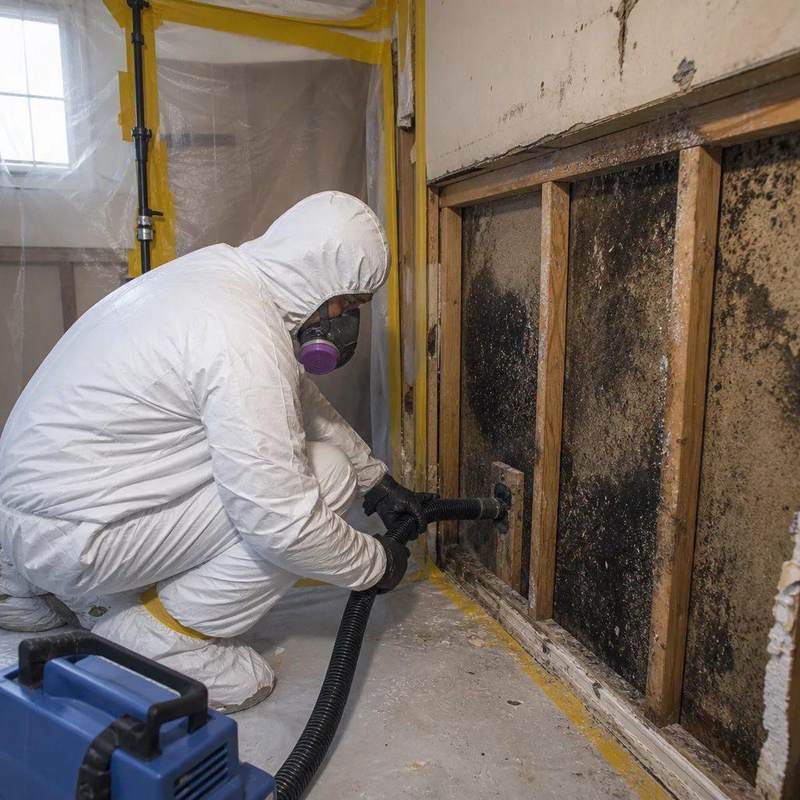
Mold Remediation Timeline in Texas: How Long Each Step Takes From Inspection to Clearance (2026)
Read the guide →
Mold Inspection vs Mold Testing in Texas: Which One You Actually Need and When Testing Is Worth It (2026)
Read the guide →
DIY vs Professional Flood Cleanup in Texas: When to Handle It Yourself and When You Need a Crew (2026 Honest Guide)
Read the guide →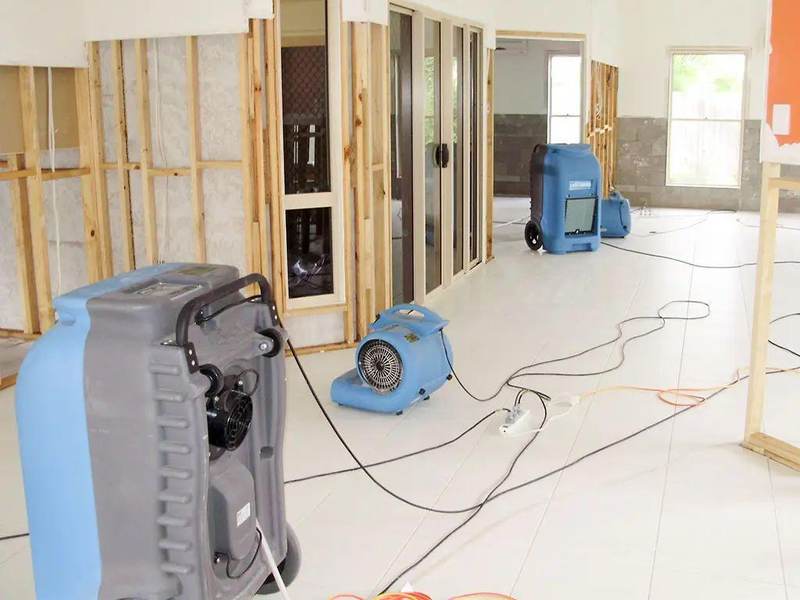
Rebuilding After a Flood in Texas Step-by-Step Recovery Guide (2026)
Read the guide →