Flood Cleanup in Texas: What You Can Do Yourself and When to Call a Professional
Here's the honest answer most restoration websites won't give you: a lot of small water problems are a homeowner job. A clean-water spill on tile, caught within a few hours, with nothing soaked into the walls, usually just needs towels, a wet vac and a fan. It's when water is dirty, has soaked into drywall or under flooring, or has sat for more than a day that DIY starts doing more harm than good, because the water you can't see is what turns into mold.
DIY or Pro? A Quick Decision Table
| Situation | DIY is usually fine | Call a pro |
|---|---|---|
| Clean water, tile or sealed floor, caught within hours | Yes | |
| Clean water soaked into carpet in one small area | Maybe, if pad dries within a day | If pad stays wet |
| Water wicked up drywall | Yes; walls hold water inside | |
| Water under laminate, vinyl plank or wood | Yes; it spreads where you can't see | |
| Wet ceiling or attic insulation | Yes | |
| Floodwater, storm runoff or sewage | Yes, always; it's dirty water | |
| More than one room, or water sat over 24 to 48 hours | Yes | |
| Musty smell or visible mold | Yes |
If You're Handling It Yourself
- Stop the source and turn off power to wet areas from a dry spot.
- Photograph everything before cleanup, for insurance.
- Get standing water up with a wet vac.
- Pull up wet rugs and lift furniture onto blocks or foil.
- Run fans and a dehumidifier with the room closed and the AC on.
- Check daily for swelling, smell or stains spreading. If it's not clearly drying after a day or two, call.
What Rental Gear Can and Can't Do
| Tool | What it does well | Where it falls short |
|---|---|---|
| Shop vac | Picks up puddles on hard floors | Can't pull water out of carpet pad |
| Box fans | Move air across surfaces | Don't dry inside walls or under flooring |
| Household dehumidifier | Helps one small room | Far less capacity than commercial units |
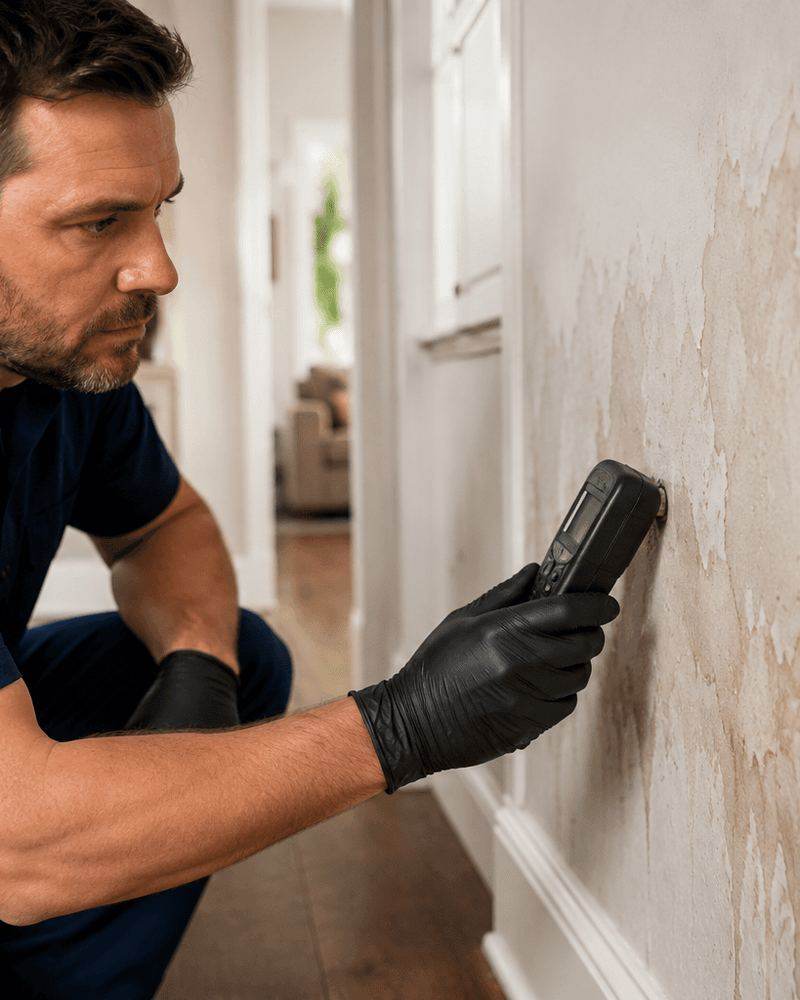
| Moisture meter (cheap) | Gives a rough idea | Easy to misread on different materials |
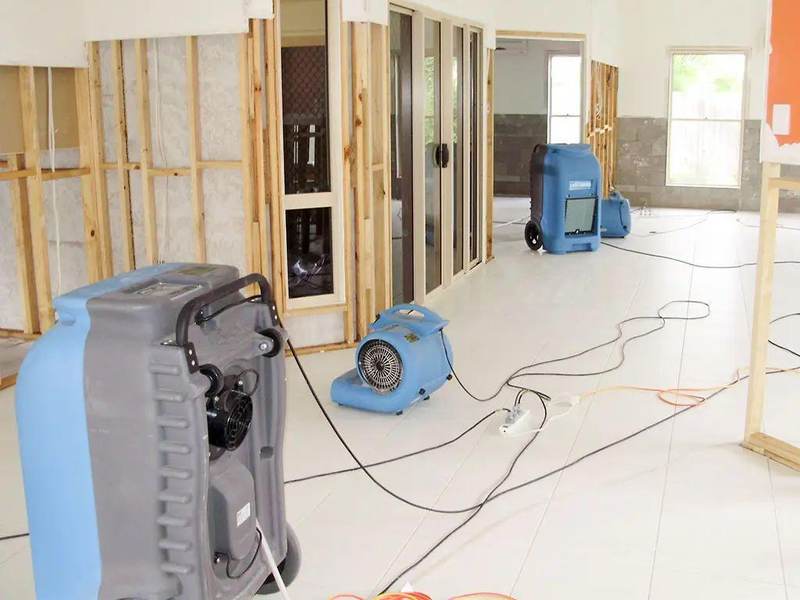
Professional crews use truck-mount or high-power extractors, commercial dehumidifiers, air movers aimed at wall bases, and meters to prove when materials match dry readings.
Never DIY These
- Floodwater and storm runoff: dirty water carrying bacteria and chemicals
- Sewage backups: see
- Anything near live electrical: wet panels, outlets or wiring
- Sagging ceilings: they can come down
- Mold you can see spreading over a large area
Cutting Wet Drywall: When It's Needed
After dirty water, drywall usually gets cut 2 to 4 feet above the highest wet reading (a flood cut), so the wall cavity can be cleaned and dried. After clean water caught early, drywall can often be dried in place. Moisture readings decide, not guesswork. See .
Texas Mold Rules Homeowners Should Know
General information only. Texas has state rules for mold assessment and removal on jobs of 25 square feet or more. Homeowners working on their own home are generally exempt, but anyone you hire for a job that size generally has to follow the rules. If mold is already spreading, see .
How Do You Know It's Actually Dry?
Not by touch. A wall can feel dry on the surface and still be wet inside. Professionals compare readings on wet materials to the same material in a dry room. When they match, it's dry. Closing up walls or laying new flooring before that is how mold ends up inside a finished wall.
Insurance and DIY (General Information)
Most policies expect you to take reasonable steps to stop more damage, so starting cleanup right away is usually the right move. Keep photos and receipts for anything you buy or rent. Floodwater usually needs a flood policy; sudden pipe bursts are often covered under homeowners. See .
Texas Flood Cleanup FAQs
Can I clean up water damage myself?
Often yes for small clean-water spills caught within hours. Not for floodwater, sewage, wet walls or ceilings, or water that sat over a day.
How long can water sit before mold grows?
Mold can start within 24 to 48 hours on wet drywall, pad and wood, faster in Texas heat and humidity.
Will fans and a dehumidifier dry my house?
They help on surfaces and in small areas. They usually can't dry water inside walls or under flooring.
Do I have to cut out drywall after a flood?
If floodwater touched it, usually yes. After a clean leak caught early, often not.
Do I need a professional for mold in Texas?
Homeowners can generally work on their own home. Jobs of 25 square feet or more done by someone you hire generally fall under state rules.
How do I know when my walls are dry?
Moisture readings that match dry materials in an unaffected room.
Not Sure If It's a DIY Job? Call (469) 548-7594
Tell Texas Water Damage Solutions what happened. If it's a towel-and-fan job, we'll say so.
Sources: EPA: Mold and moisture · EPA: Flood cleanup · Texas Department of Licensing and Regulation: Mold · IICRC S500