Water Heater Leaking? What to Do in the First Hour in Your Texas Home
Close the cold water valve on top of the tank, then cut the energy: gas to OFF or PILOT, or the breaker off for an electric heater. Move things away from the puddle, take photos, and start getting the water up. If water is coming from the bottom of the tank itself, the heater almost always needs replacing. The water on your floor needs drying within a day or two, before mold starts.
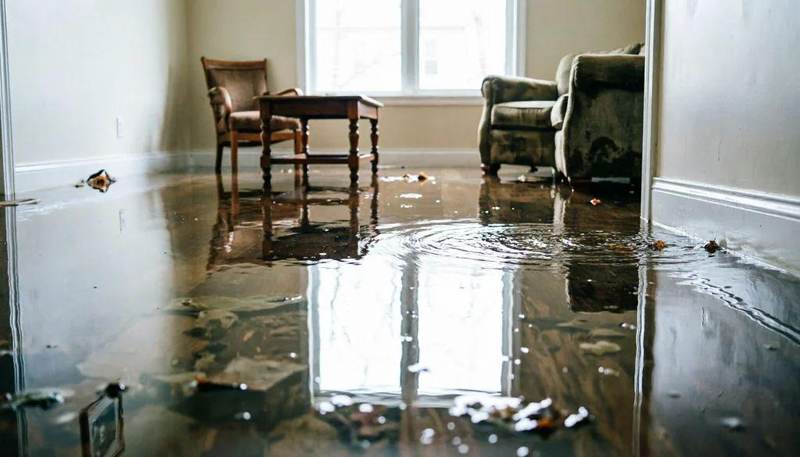
That's the short version. The rest of this page is about the part plumbers don't usually cover: what that water is doing to your floors, walls and ceilings, and how to stop a water heater leak from turning into a bigger job.
The First 10 Minutes
- Stay safe. Don't walk through water near the electrical panel or outlets. If you smell gas, leave and call the gas company from outside.
- Shut off the water at the cold inlet valve on top of the tank. If it won't turn, shut the main valve to the house.
- Shut off the energy (table below).
- Contain the water with towels, a wet vac or buckets. Move rugs, boxes and furniture away.
- Photograph everything before cleanup: the tank, the label with the model and date, the wet floor, walls and any ceiling below.
- Call for drying if water reached carpet, drywall, baseboards, cabinets or a ceiling.
How to Shut Off Each Type of Water Heater
| Heater type | Shut off the water | Shut off the energy |
|---|---|---|
| Gas tank | Cold supply valve on top | Gas control knob to OFF or PILOT |
| Electric tank | Cold supply valve on top | Water heater breaker at the panel |
| Tankless | Cold inlet and hot outlet valves under the unit | Power switch or breaker; close the gas valve on gas units |
| Heat pump | Cold supply valve on top | Its breaker |
First, Make Sure It's Really the Water Heater
A puddle near the heater isn't always the heater. Condensation, a nearby washer or supply line, or in Texas very often the AC, can put water in the same spot.
In many Texas homes the water heater and the AC air handler sit side by side in the attic or a closet. In summer, a clogged AC condensate line can overflow the same pan. Wipe everything dry and watch: if water comes back only when the AC runs, check the AC drain line first. If it comes back with the AC off, it's likely the heater or its connections. See .
Where Is the Leak Coming From?
| Where the water is | Likely cause | Usual fix |
|---|---|---|
| Dripping from the pipe on the side | Temperature and pressure (T&P) relief valve opening, or a failing valve | Plumber checks pressure; new valve or an expansion tank |
| Top of the tank, around the pipes | Loose or corroded fittings, flex connectors | Tighten or replace connectors |
| Drain valve near the bottom | Valve not fully closed, worn washer | Close or replace the valve |
| Bottom of the tank, rust underneath | Inner tank rusted through | Replace the heater |
| Water under the heater, tank dry | Condensation, AC line, washer or supply line | Find the real source |
Attic Water Heaters: The Leak That Comes Through the Ceiling
Because most Texas homes sit on slabs, water heaters often go in the attic or garage instead of a basement. An attic leak runs through insulation and into the ceiling below.
- Warning signs: a brown stain or bubbling paint on the ceiling under the heater, drips from a light fixture, a sagging spot.
- If the ceiling sags: keep everyone out of the room, turn off lights and fans there, and call. A soaked ceiling can come down.
- Drain pans: a pan with a drain line is required in many locations where a leak would cause damage, but pans rust, crack and drain lines clog. Check both once a year.
Garage and Closet Heaters on a Texas Slab
| Where the heater is | Where the water goes | What gets damaged |
|---|---|---|
| Garage | Across the slab and under the door into the house | Shared wall drywall and baseboards, carpet in the next room |
| Interior closet | Under flooring into nearby rooms | Hallway carpet and pad, laminate or vinyl plank |
| Utility room | Under laundry and kitchen cabinets | Cabinet bases, toe kicks, baseboards |
| Attic | Insulation, ceiling, rooms below | Ceilings, walls and floors on two levels |
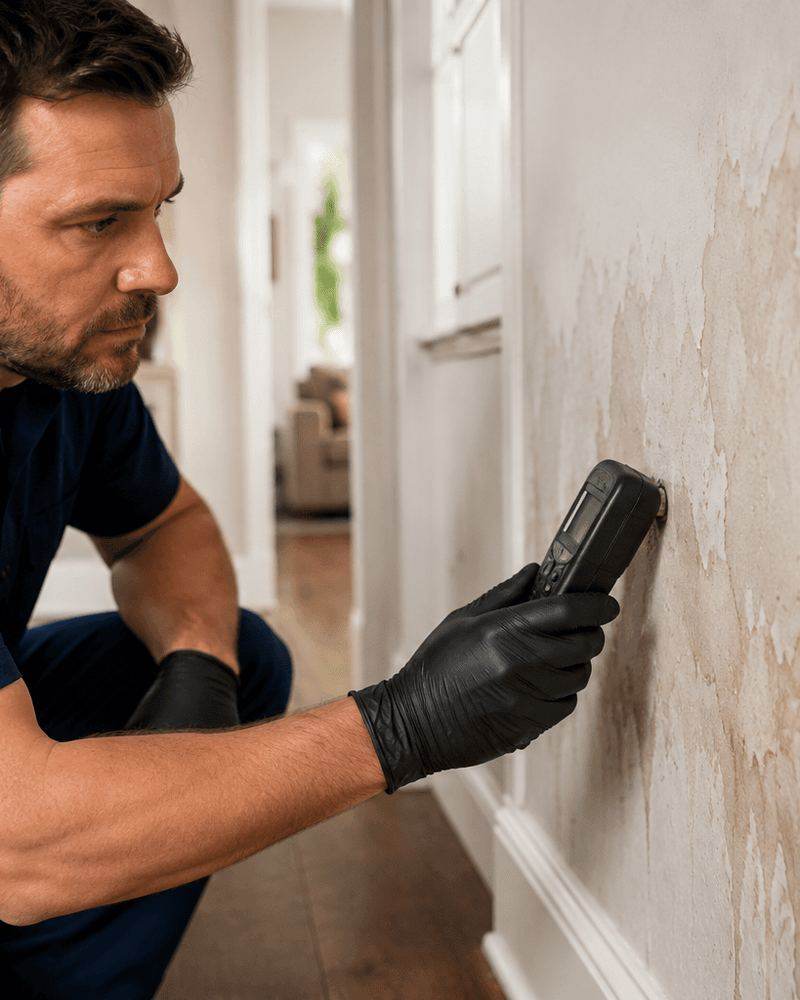
On a slab, water spreads under laminate and vinyl plank where you can't see it. A moisture meter shows how far it went without pulling up the floor.
Repair or Replace?
| Problem | Usually |
|---|---|
| Leaking fitting, connector or drain valve | Repair |
| Relief valve dripping | Repair or fix the pressure; maybe an expansion tank |
| Water from the bottom of the tank | Replace |
| Heavy rust on the tank | Replace soon |
| Old tank that's leaking | Replace |
Tank heaters often last around 8 to 12 years for gas and 10 to 15 for electric; tankless units longer with care. Hard water across much of Texas builds sediment that shortens that. Rumbling or popping when it heats is a common sign.
What the Leak Does to Your Home, Hour by Hour
| Time | What happens |
|---|---|
| First hour | Water spreads under flooring and into baseboards |
| Within 24 hours | Drywall wicks water up, carpet pad soaks through, laminate starts to swell |
| 24 to 48 hours | Mold can start on wet drywall, pad and wood, faster in Texas heat |
| Several days | Baseboards and cabinet bases swell, odors build, more has to come out |
Gulf Coast humidity slows drying. Even in drier parts of Texas, water trapped under flooring and inside walls won't dry on its own.
Plumber or Water Damage Company: Who First?
If water won't stop, call the plumber first. If it's shut off and floors or walls are wet, call for drying first. Calling both at once is best, so drying doesn't wait on the new heater.
How We Dry a Home After a Water Heater Leak
- Moisture mapping around the heater and into nearby rooms, walls and the floor below
- Extraction from carpet, pad and hard floors
- Removing only what can't be dried, like soaked pad, swollen baseboards and wet insulation
- Dehumidifiers and air movers, including drying the slab and wall cavities
- Daily readings until walls and floors match dry materials, then repairs
For walls, see . For wood floors, see .
Water Heater Leaks and Insurance in Texas (General Information)
This is general information, not insurance advice. Many policies treat sudden damage from a failed heater differently from slow, long-term leaks, and the heater itself often isn't covered. Check your policy and talk to your agent. What helps either way: photos of the heater, its label and every wet area before cleanup; a note of when you found the leak; and the drying company's moisture readings. See .
How to Prevent the Next One
- Flush the tank once a year
- Test the T&P relief valve once a year
- Check the anode rod every few years
- Keep a pan and drain line under attic and closet heaters, and check them yearly
- Add a leak sensor or automatic shut-off valve next to the heater
- Replace the heater before it reaches the end of its expected life
Texas Water Heater Leak FAQs
What should I do first when my water heater is leaking?
Close the cold water valve on top, then turn the gas to OFF or PILOT or switch off the breaker. Then contain the water and take photos.
Why is my water heater leaking from the bottom?
Usually the inner tank has rusted through, often from sediment and age. It can't be repaired.
Is a leaking water heater dangerous?
It can be: hot water can scald, water near the panel is a shock risk, and gas units need careful shut-off.
How do I know if water got under my floor?
Look for lifting laminate or vinyl plank, soft spots, damp baseboards or a musty smell. A moisture meter confirms it.
How long does drying take after a water heater leak?
Most rooms dry in 3 to 5 days with professional equipment. Water under flooring, in a slab or a ceiling below can take longer.
Can I keep using hot water?
No. Keep the water and energy off until a plumber repairs or replaces it.
Water Heater Flooded Your Floor? Call (469) 548-7594
Once the water and energy are off, the clock is on your floors and walls. Texas Water Damage Solutions extracts the water and dries the structure with daily readings, so a water heater failure stays a small job. See .
Sources: EPA: Mold and moisture · IICRC S500 water damage standard · U.S. Department of Energy: water heating