Hurricane Water Damage on the Texas Coast: Storm Surge, Rain Flooding and Wind-Driven Rain
After a hurricane, the first question isn't really "how much water got in." It's "how did it get in?" Storm surge, rain flooding and wind-driven rain do different damage, need different cleanup, and usually fall under different insurance. Get safe first. Then photograph how the water entered as carefully as what it damaged, because that's what adjusters will ask about.
Three Kinds of Hurricane Water
| Storm surge | Rain flooding | Wind-driven rain | |
|---|---|---|---|
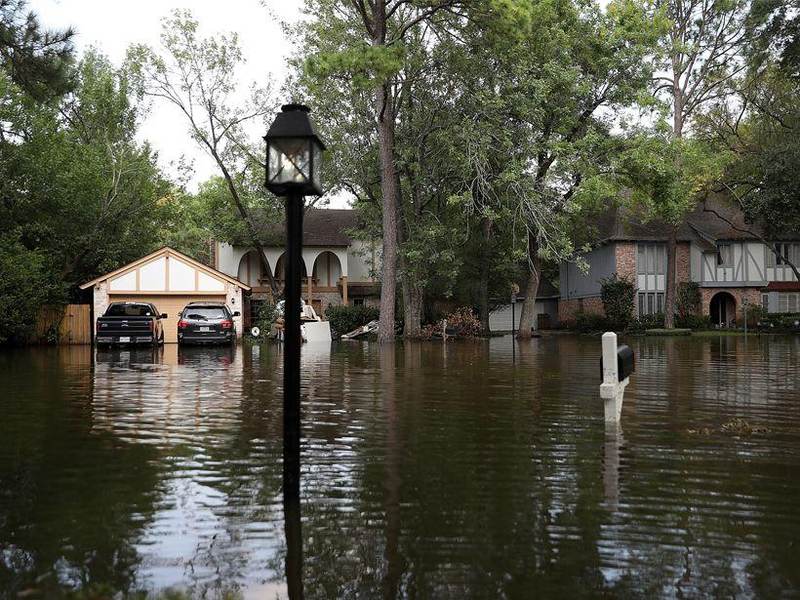
| What it is | Gulf or bay water pushed inland by the storm | Rain faster than drainage can carry it | Rain forced through a damaged roof, windows or walls |
| Where it hits | Coastal and bay-front homes | Anywhere low, even far inland | Any home with roof or window damage |
| What it brings | Saltwater, sand, mud, debris, fuel | Dirty runoff, sewage | Rainwater through attic and walls |
| What it damages first | Lower walls, floors, appliances, wiring | Floors, lower drywall, cabinets | Attic insulation, ceilings, upper walls |
| Usual coverage | Flood policy | Flood policy | Wind or windstorm coverage |
The First 48 Hours After the Storm
- Wait for the all-clear. Watch for downed lines, gas smells, snakes and damaged structure.
- Never run a generator inside the house or garage.
- Photograph everything: the waterline on every wall, the roof, broken windows, the outside, and belongings.
- Mark the waterline with tape before drywall comes out.
- Tarp roof and window openings as soon as it's safe to stop more rain getting in.
- Call your insurer(s) and get claim numbers.
- Start removing wet materials within 24 to 48 hours; coastal heat and humidity grow mold fast.
See First 48 Hours After a Flood.
Storm Surge Cleanup: Why Saltwater Is Different
Surge water is dirty water under the IICRC S500 standard, and it carries salt, sand and often fuel or chemicals. Salt keeps attracting moisture and corrodes metal long after the water leaves.
- Remove soaked drywall, insulation, carpet and pad, usually higher than you'd think
- Rinse framing and hard surfaces with fresh water before disinfecting, to get salt out
- Have an electrician check any wiring, outlets and panels that saltwater touched
- Have HVAC equipment and ducts that went underwater checked or replaced
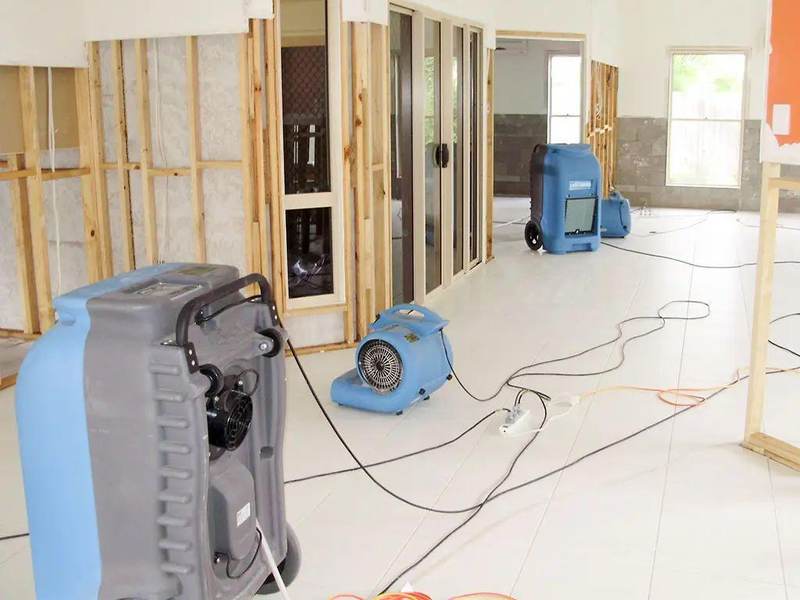
- Dry with dehumidifiers until readings are normal, not just until it looks dry
Rain Flooding Far From the Coast
A slow storm can drop rain faster than bayous, ditches and storm drains can carry it, flooding homes miles from the coast. This water is also dirty: soaked porous materials come out and everything gets disinfected. See .
Wind-Driven Rain Through the Roof
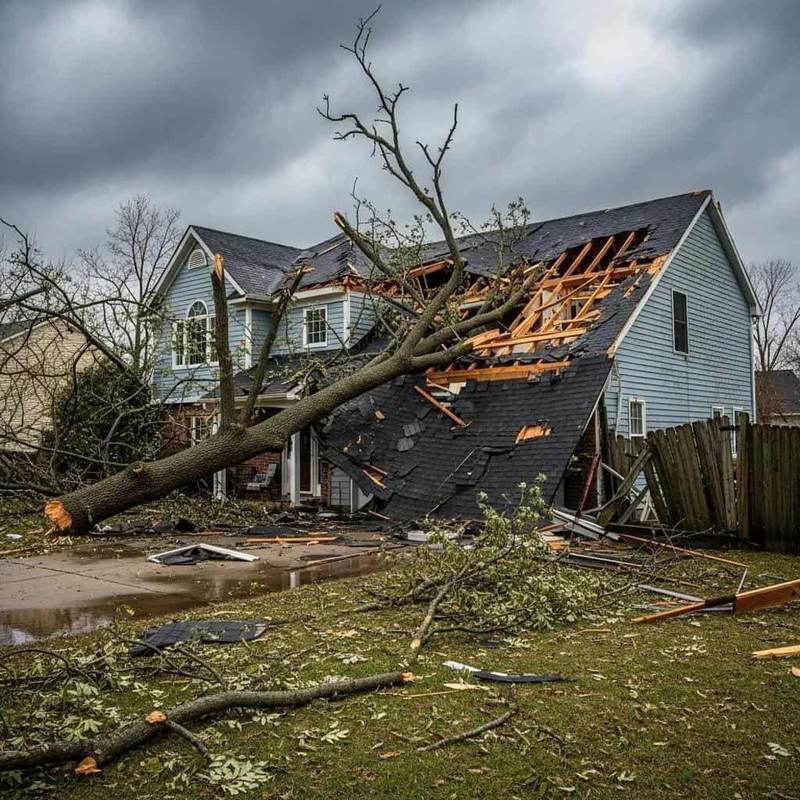
This one hides. Rain soaks attic insulation first, then the ceiling and the top of the walls. Wet blown-in insulation is heavy and can bring a ceiling down. Get the roof tarped, stay out from under sagging spots, and have wet insulation and ceiling drywall pulled. See and .
Power Out? How to Slow Mold
- Pull wet carpet, pad and rugs out the same day
- Remove soaked lower drywall and insulation if you can do it safely
- Open windows only when outside air is drier than inside, often early morning
- Run fans or a dehumidifier only from a generator that's outside
- Get professional drying in as soon as roads open
Wind vs Flood Coverage (General Information)
This is general information, not insurance advice.
- Standard homeowners policies usually exclude flood, and that exclusion usually includes storm surge.
- Flood insurance (NFIP or private) is what usually covers surge and rising rain water. New policies usually take 30 days to start.
- Wind and wind-driven rain fall under homeowners or, in designated Texas coastal areas, windstorm coverage often through TWIA.
- When both happen, photos of the roof opening and the waterline help adjusters separate wind damage from flood damage.
See Water Damage Insurance in Texas.
Avoid Post-Storm Scams
- Don't sign on the spot with someone knocking on doors
- Don't pay the full amount up front
- Ask for proof of insurance, a written scope and daily moisture logs
- Get the drying finished and documented before rebuilding
Texas Coast Hurricane Water Damage FAQs
Is storm surge covered by homeowners insurance in Texas?
Usually not. Surge usually falls under flood insurance; homeowners policies usually exclude it.
What's the difference between storm surge and flood damage?
Surge is seawater pushed inland by the storm; rain flooding is rainfall that can't drain. Both are dirty water and usually need a flood policy.
Do I need to rinse saltwater out before drying?
Yes. Rinsing framing and hard surfaces with fresh water removes salt that otherwise keeps pulling in moisture and corroding metal.
How fast does mold grow after a hurricane?
Often within 24 to 48 hours, faster when the power is out and there's no AC.
How long does drying take after a hurricane?
Often 5 to 10 days or more after wet materials come out; coastal humidity slows it.
Can I rebuild right away?
Only after readings show the framing is dry, and after checking permit and floodplain rules. See .
Storm Damage on the Texas Coast? Call (469) 548-7594
Texas Water Damage Solutions handles tarp-to-dry-out recovery, with photos and readings that separate wind from flood for your adjusters.
Sources: National Hurricane Center: storm surge · FloodSmart (NFIP) · TWIA · CDC: Clean up safely after a disaster