Commercial Water Damage in Texas: How to Keep Your Business Running
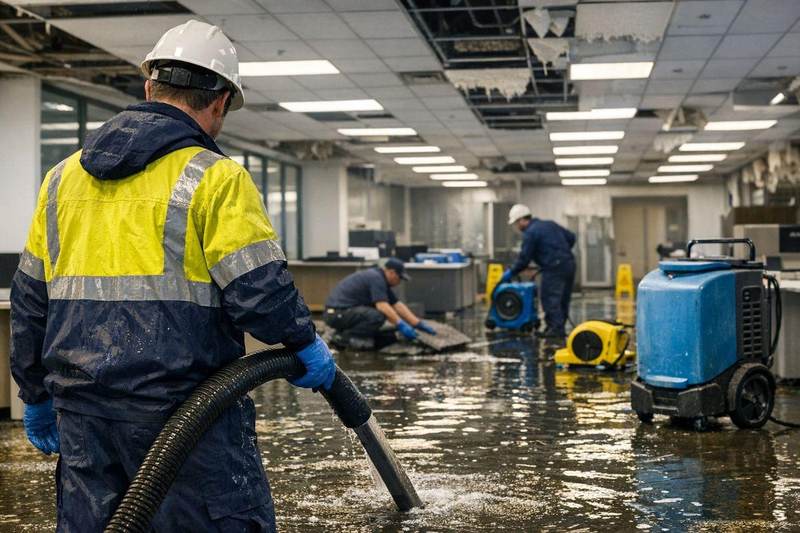
When water hits a business, the building is only half the problem. The other half is every hour you can't serve customers, ship orders or open the doors. The goal is simple: get the water out and the wet area walled off fast, dry it in phases, and keep the rest of the space working. That usually means after-hours crews, plastic containment, and a clear record of what was lost.
The First Hour at a Texas Business
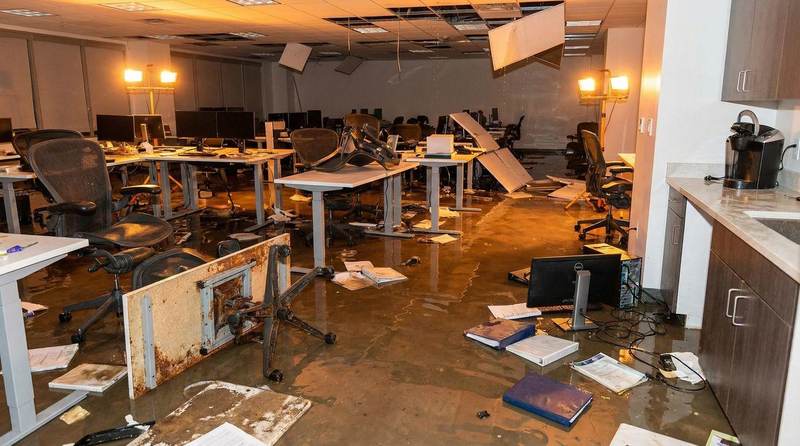
- Get people clear of wet areas, especially near outlets, power strips and server rooms.
- Stop the source: main valve, fixture valve, or the sprinkler zone per your fire protection company's procedure.
- Cut power to wet areas from a dry panel.
- Protect what matters most: computers, records, stock, equipment.
- Photograph and count everything affected before moving or tossing it.
- Call your carrier and call for mitigation.
Playbook by Business Type
| Business | Most common source | What matters most |
|---|---|---|
| Office | Sprinkler discharge, flat roof leak, restroom overflow | Protect IT and files; dry overnight so staff work tomorrow |
| Restaurant | Kitchen drain or grease line backup, ice machine, walk-in | Disinfect food areas; check on a health inspection before reopening |
| Retail | Roof leak, sprinkler, backup | Close wet aisles; protect and count stock |
| Warehouse | Roll-up door flooding, roof leak, sprinkler | Lift pallets; dry slab and racking areas |
| Medical or dental | Supply line, water heater, roof | Containment and clean air around patient areas |
| Apartments | Unit-above leaks, water heater closets | Check every unit next to and below the source |
How After-Hours Drying Keeps You Open
- Containment: plastic walls and HEPA air scrubbers seal off the wet area from the open area
- Phased drying: one suite, aisle or floor at a time
- Night and weekend work: extraction and tear-out when you're closed
- Big-space equipment: desiccant and high-capacity dehumidifiers for open floors and warehouses
- Moisture maps across suites: so nothing wet is missed between tenants
Fire Sprinkler Discharge
Sprinkler water has sat in pipes for years and comes out dirty. In multi-story buildings it reaches the floor below in minutes. Shut the system off the way your fire protection company says (the fire department may need to reset it), cut power to wet areas, move electronics and files off the floor, and get extraction started. Wet ceiling tiles usually come out.
Tenant or Landlord: Who Handles What?
General information only; your lease decides.
| Usually the landlord | Usually the tenant | |
|---|---|---|
| Building structure, roof, main plumbing | Yes | |
| Tenant improvements (walls, flooring added for you) | Depends on lease | Depends on lease |
| Stock, equipment, furniture | Yes | |
| Lost income | Tenant's business policy |
One shared moisture report across every affected suite saves arguments later.
Business Interruption: What to Track
General information only. Ask your agent whether your policy includes business interruption coverage and what it requires. Start keeping these from day one:
- Days and hours closed or partly closed
- Sales for the same period last year, if you have them
- Extra expenses to keep operating (temporary space, rented equipment, overtime)
- Damaged stock with photos and counts
- The mitigation company's daily moisture logs and photos
Mold Rules for Texas Businesses
Texas has state rules for mold assessment and removal on jobs of 25 square feet or more. Unlike a homeowner working on their own house, commercial properties generally don't get an exception. Fast drying is the best way to keep a water loss from becoming a mold job. See .
How to Pick a Commercial Water Damage Company in Texas
- They work nights and weekends without making you ask twice
- They have large-space drying equipment, not a few fans
- IICRC-trained technicians and proof of insurance
- One clear scope and daily readings for every suite
- They talk to your property manager and your carrier
Texas Commercial Water Damage FAQs
Can my business stay open during water damage restoration?
Often yes, in part. Containment, phased drying and after-hours work keep unaffected areas running.
What should I do after a fire sprinkler goes off?
Get people clear, shut the system off per your fire protection company, cut power to wet areas, protect equipment and call for extraction.
Who pays for water damage in a leased space?
It depends on the lease and the cause. Landlords usually handle the structure; tenants usually handle their stock and equipment.
Do restaurants need an inspection after a backup?
Often, if sewage or floodwater reached food areas. Check with your local health department before reopening.
How long does commercial drying take?
Often several days to a week, depending on size and materials. Readings decide.
Water at Your Texas Business? Call (469) 548-7594
Texas Water Damage Solutions works around your hours, contains the wet area and documents everything for your landlord and carrier. See .
Sources: IICRC S500 water damage standard · Texas Department of Licensing and Regulation: Mold Assessors and Remediators · EPA: Mold remediation in schools and commercial buildings