
Water Damage Restoration in Carrollton, TX
Call any time, day or night, and a crew comes to your Carrollton home to pull the water out and dry it to a measured reading. The Elm Fork runs along the west edge of town, four creeks cut through the neighborhoods, and most homes sit on slabs over clay that moves with every wet spring and dry August. This page shows what that means for your street, what we do first when we arrive, and what to do before we get there.
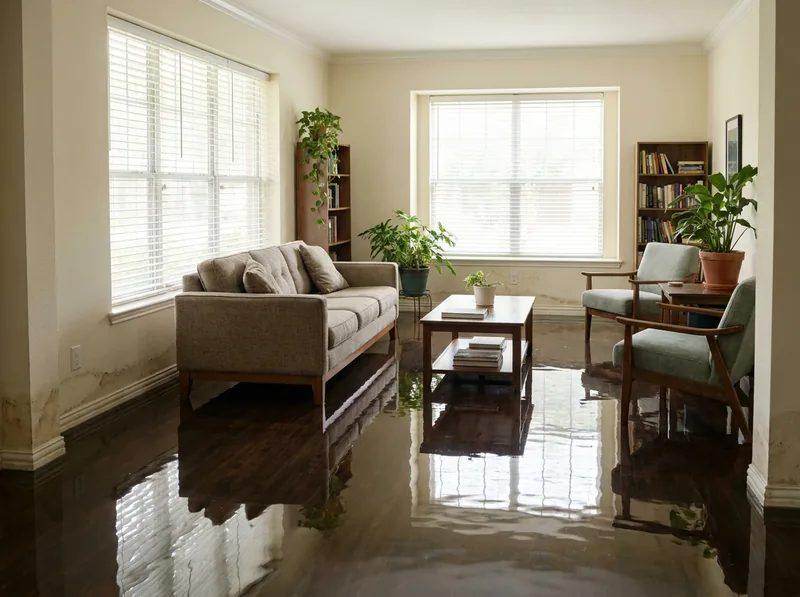
Water damage restoration in Carrollton, TX means stopping the water, pulling out what is standing, mapping moisture through the structure, and drying to a measured reading before anything is rebuilt. The work runs in order: extraction, moisture mapping, structural drying with daily readings, cleaning, and rebuild matched to what was there before. Crews answer around the clock for active water.
Key Facts: Carrollton, Dallas County, Denton County and Collin County
Carrollton is one of the few Texas cities that sits in three counties: Dallas, Denton and Collin. Most Carrollton residents live in the Denton County part, about 61.5 percent of the city, while most of the city's land sits in Dallas County. Only a small piece at the northeast corner sits in Collin County, home to about 230 people.
The city covers about 37 square miles, about 15 to 20 miles north of downtown Dallas. About 132,700 people live here. Four ZIP codes cover the city: 75006, 75007, 75010 and 75011. The Elm Fork of the Trinity River forms the city's western edge.
More than 54,000 homes stand in Carrollton, and about 25,000 of them went up in the 1970s and 1980s. The median Carrollton home dates from 1988. Most of those homes are brick, built slab-on-grade, with copper supply lines now 30 to 50 years old. That age and that soil shape almost every water call we take in this city.
Why Do Carrollton Homes Flood After Heavy Rain?
Carrollton homes flood after heavy rain because the city sits between a river and four creeks, and its storm drains were built for a smaller town. The Elm Fork runs along the west edge. Dudley Branch, Furneaux Creek, Hutton Branch and Indian Creek drain the neighborhoods. When a hard storm drops inches in an hour, the creeks rise first and the streets go under next.
The National Weather Service gauge on the Elm Fork near Carrollton reaches minor flood stage at 9 feet. On May 30, 2015 it crested at 13.12 feet, the fourth highest crest on record there. The record stands at 19 feet, set on May 25, 1908. At 13 feet, most of McInnish Sports Complex floods and Sandy Lake Road east of the George Bush Turnpike sits under 1 to 2 feet of water.
Street flooding is a separate problem from the river. On June 19, 2026, crews made high-water rescues at Sherwood Lane and Josey Lane, at Hutton Drive and West Belt Line Road, and at Mill Road and Lockwood Drive. The city's storm system covers 243 miles of underground storm sewer, 27 miles of creeks and channels, and two dams, but a fast storm can still beat it. The city now requires new finished floors to sit 2 feet above the 100-year floodplain. That rule protects newer buildings. Older homes near the creeks do not have that margin.
Three Ways a Carrollton Emergency Usually Starts
An emergency in Carrollton usually starts one of three ways. A pipe splits on a freeze night and runs until morning. A creek jumps its banks and water comes in under the doors. Or a slab leak surfaces as a warm spot on the floor and a water bill that doubled for no reason. All three need the same first move: stop the water, then pull out what is standing.
We answer around the clock. Tell us the address, whether water is still coming in, and which rooms are wet. We bring truck-mounted extractors, moisture meters and drying equipment on the first visit. We check every room the water could have reached, not just the one with the puddle. Water under a slab home spreads under the flooring and wicks into the bottom of the drywall, often well past the room where it started.
Before we leave, we take photos and moisture readings and write down what we found. That record goes to your insurer and your landlord or HOA if one is involved. If the water is still rising outside, wait for the roads to clear before anyone drives in. A crew is dispatched once it is safe to travel. See our emergency water damage service and our water extraction service for the full process.
Elm Fork and Four Creeks: Flood Cleanup in Carrollton
Floodwater in Carrollton is not clean water. Water that comes in from the Elm Fork or one of the four creeks carries silt, soil and whatever the street washed in. It soaks carpet pad, swells the bottom of drywall, and sits under baseboards where a mop never reaches. Drying the surface is not enough. The wet material has to come out or be dried from the inside.
We pull the standing water first, then cut drywall at the wet line and lift pad that will not dry in place. Floors get cleaned and disinfected before any drying equipment goes down. Then we set air movers and dehumidifiers and take readings every day until the structure is dry to the standard. Wet drywall that has sat more than about 48 hours usually comes out. We do not try to save it.
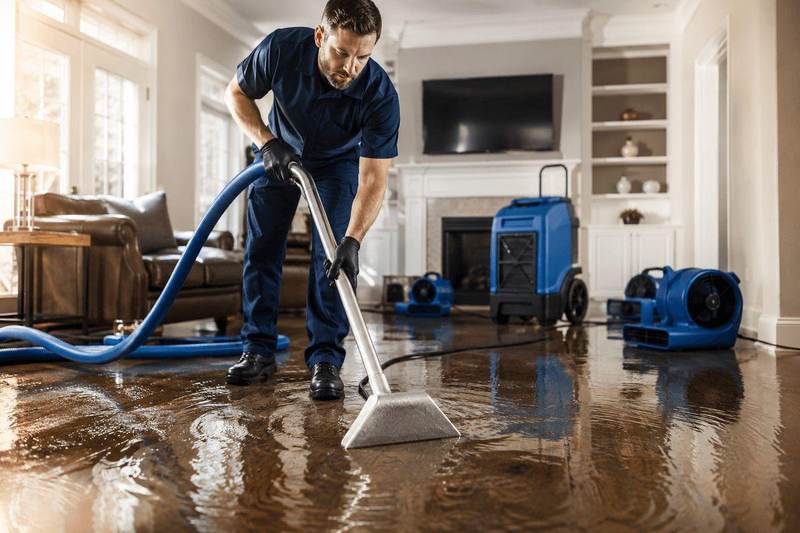
Homes near Indian Creek, Furneaux Creek and Hutton Branch see this work most. So do low spots along Sandy Lake Road and the streets around McInnish Park when the Elm Fork runs high. If your home took river or creek water, keep the photos and the readings. Homeowners insurance does not cover rising water. A flood policy does. That distinction matters before you call anyone. See flood damage restoration for the full service.
Carrollton Pipes Fail in Two Seasons: Freeze Nights and Shifting Ground
Carrollton pipes fail in two seasons. In winter, hard freezes split lines in attics, exterior walls and garages. The 2021 freeze showed how many exterior-wall pipes in this city were under-insulated. In every season, the ground itself works on the lines. Carrollton sits on Heiden clay and Stephen silty clay, soils the USDA rates high in shrink-swell. The clay swells when wet and shrinks when dry, and cracks in it can stay open 90 to 150 days in a normal year. That movement stresses the copper lines buried in or under the slab, year after year.
Most Carrollton homes were built in the 1970s and 1980s, and their copper supply lines are now 30 to 50 years old. Homes north of Trinity Mills built before 1985 often still have galvanized steel lines, which corrode from the inside and burst under normal household pressure. The tells are a warm spot on the floor, the sound of running water with every fixture off, and a water bill that jumps for no reason.
When a pipe bursts, shut off the main valve first. It is usually near the street or where the line enters the house. Then call. We pull the water, open the wet walls, and dry the framing before mold gets a start. A plumber repairs the line. We handle the water, the drying and the record of what got wet. See burst pipe water damage for the full service.
Hot, Humid Summers: Mold in a Carrollton Wall Cavity
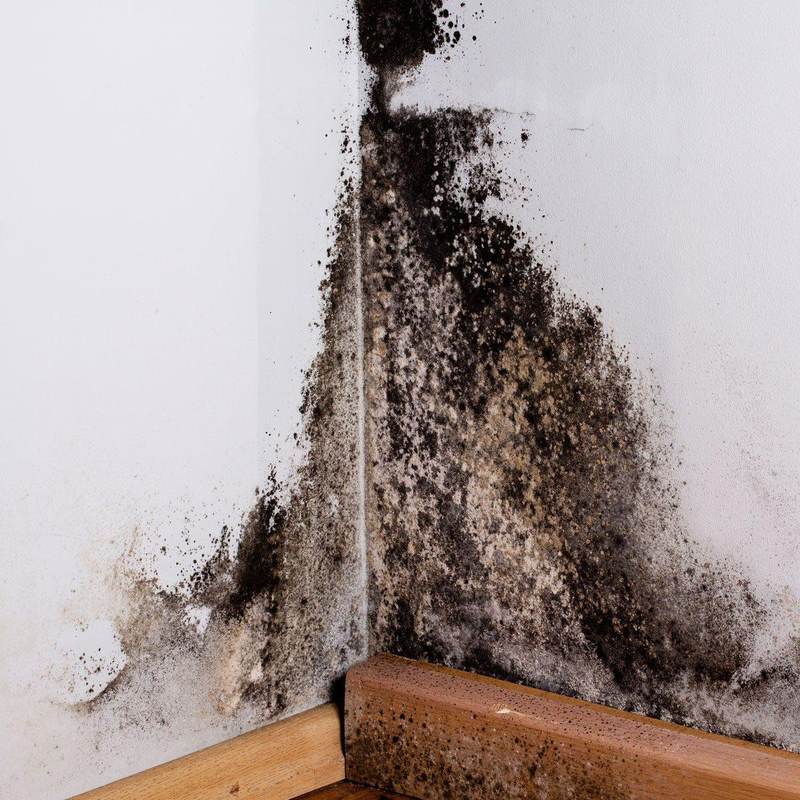
Mold starts fast in Carrollton. The summers run hot and humid, and a wet wall cavity stays damp long after the floor looks dry. Mold can start within 24 to 48 hours on wet drywall, wood and carpet pad. That is why the drying matters more than the cleaning. A room that looks dry can still be wet inside the wall.
Slab homes hide it well. Water from a supply line spreads under the flooring and wicks up the drywall from the bottom. The paint may look fine while the back of the board is wet. We check with a moisture meter and open what needs opening. Wet material comes out. What stays gets dried to a measured reading and cleaned. We do not paint over wet drywall and call it done.
Older homes around Historic Downtown and the 1960s stock near the rail crossing have their own pattern: original galvanized lines, aging water heaters, and rooms that were added over the years with plumbing run through unheated space. If you smell musty air near a bathroom or kitchen wall, or you see staining along the baseboard, call before it spreads. See mold remediation for the full service.
Sewage Backups in Carrollton Floor Drains and Tubs
Sewage water is Category 3 water. That means it carries bacteria and waste, and it must be removed and the area cleaned, not dried in place. A sewage backup in a Carrollton home usually starts in a floor drain, a tub or a low toilet, and it often happens during or right after heavy rain, when the ground is saturated and the old lines cannot keep up.
Many Carrollton sewer laterals are clay or cast iron, laid decades ago under streets now shaded by big oaks and pecans. Roots get into the joints every chance they get, especially in the older neighborhoods around Mary Heads Carter Park and Furneaux Creek. The shifting clay moves the joints apart, and a heavy rain finishes the job. A camera down the line shows whether it is roots, a separated joint or a collapsed pipe.
When sewage backs up, stop using every sink, toilet and washer on that line. Keep people and pets out of the water. Anything soft that touched it gets thrown out. Floors, walls and equipment bases get cleaned, disinfected and dried. Call a plumber to clear the line and call us for the cleanup at the same time. See sewage cleanup for the full service.
Dry or Only Looks Dry? Structural Drying in Carrollton
Structural drying is the work that decides whether your home is really dry or only looks dry. We set air movers to push dry air across wet surfaces and dehumidifiers to pull the moisture out of the air. Then we measure. A moisture meter and daily readings tell us when the wood, drywall and slab are back to normal. The readings decide when the equipment comes out, not the calendar.
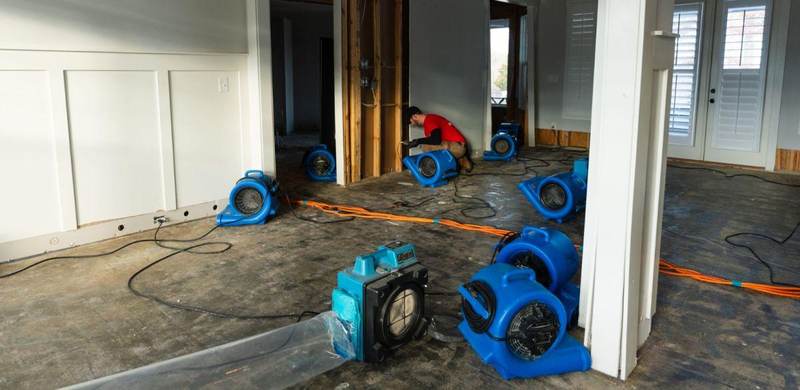
Carrollton's clay soil makes this step matter more. A slab that sat in water keeps giving moisture back for days. Brick veneer and slab-on-grade construction hold water in the wall base and under the flooring. We dry to the IICRC S500 drying standard and record every reading, so your insurer and your builder see the same numbers we do.
| Material | What drying usually looks like |
|---|---|
| Drywall, wet at the base | Cut at the wet line and dried open, often 3 to 5 days |
| Carpet and pad | Pad usually removed, carpet dried in place when it is clean water |
| Hardwood floors | Surface dried fast, then checked for cupping over several days |
| Concrete slab | Slowest to give up moisture, checked with readings until it holds steady |
| Framing and subfloor | Dried with air movers and dehumidifiers until readings match dry areas |
See structural drying for the full service.
The First Visit to Your Carrollton Home: What We Do First
We stop the water at the source, or show you where the shutoff is. We pull out the standing water with truck-mounted extractors. We check every room with a moisture meter and map where the water went.
We lift wet pad and cut wet drywall at the wet line so drying can start. We set air movers and dehumidifiers, take readings, and write down what we found.
Four ZIP Codes: Where We Work in Carrollton
We serve all four Carrollton ZIP codes. In 75006, that covers Historic Downtown Carrollton, Josey Ranch and the older homes near the rail crossing and Belt Line Road. In 75007, it covers Indian Creek, Rosemeade and the central-north neighborhoods. In 75010, it covers the northwest side near Hebron Parkway, including Castle Hills and Ranchview. In 75011, it covers the Dallas County side of the city.
Other neighborhoods we work in include Valley Ridge, Homestead, Perry Heights, Northlake Woodlands, Trinity Mills, Nob Hill and Meadow Ridge. We also help property owners in Farmers Branch, Addison, Grapevine and Southlake, and in Irving, Coppell, Lewisville, Plano and Dallas. If your street sits near a creek or the Elm Fork, tell us when you call. We check the flood map for your lot before we plan the drying.
Questions Carrollton Homeowners Ask Us
Does the Elm Fork flood homes in Carrollton?
The river itself floods parks and roads first. At 9 feet it reaches minor flood stage near the gauge, and at 13 feet McInnish Sports Complex and parts of Sandy Lake Road go under. Most homes flood from the creeks and street runoff instead, so check the FEMA flood map for your exact lot.
Why does my Carrollton slab leak?
Carrollton sits on Heiden clay that swells when wet and shrinks when dry, and that movement stresses the copper lines under your slab year after year. Most homes here went up in the 1970s and 1980s, so their copper lines are 30 to 50 years old. A warm spot on the floor, running water sounds with fixtures off, and a jumping water bill are the usual signs.
Which Carrollton streets flood first?
Low crossings flood first. High-water rescues on June 19, 2026 happened at Sherwood Lane and Josey Lane, at Hutton Drive and West Belt Line Road, and at Mill Road and Lockwood Drive. Sandy Lake Road near the George Bush Turnpike also goes under when the Elm Fork runs high. Never drive through standing water on any of them.
How long does drying take in a Carrollton brick home?
Often 3 to 5 days for clean water in one or two rooms. Floodwater, a slab that sat wet, or water that reached several rooms takes longer. The moisture readings decide when the equipment comes out, not the calendar.
Do you serve all three counties in Carrollton?
Yes. We serve the Dallas County, Denton County and Collin County parts of Carrollton, across ZIP codes 75006, 75007, 75010 and 75011. Your county decides your appraisal district and part of your tax bill, but it does not change whether we come to your street.
A pipe burst in the freeze. What do I do first?
Shut off the main valve first, usually near the street or where the line enters the house. Then call (469) 548-7594. Move rugs and valuables off the wet floor, take photos, and do not turn on wet lights or outlets. We pull the water and dry the framing before mold gets a start.
Does homeowners insurance cover river flooding?
No. Homeowners insurance does not cover rising river or creek water. That needs a flood policy. A burst pipe or a failed appliance line is a different claim, and it is usually covered. Keep the photos and the moisture readings either way, and call your carrier for a claim number before the drying starts.
Get Help in Carrollton
Tell us what you are dealing with. For immediate help, call us.
Water in Your Carrollton Home? Call (469) 548-7594
Shut off what you can, take photos, and call. A crew heads to your home right away.