
Water Damage Restoration in Allen, TX
You get a crew that answers around the clock, pulls the water out, and dries your home to a measured reading before anything is rebuilt. This page shows what that work looks like in Allen, from creek water along Rowlett Creek to slab leaks in Blackland clay, so you know what happens next before you call.

Water damage restoration in Allen, TX means stopping the water, pulling out what is standing, mapping moisture through the structure, and drying to a measured reading before rebuilding. The work runs in order: extraction, moisture mapping, structural drying with daily readings, cleaning, and rebuild matched to what was there before. Crews answer 24/7.
Call (469) 548-7594 any time, day or night. Texas Water Damage Solutions sends a local crew to extract the water, find where it went and dry it, with photos and moisture readings your adjuster can use.
Key Facts: Allen, Collin County
Allen sits in Collin County, about 25 miles north of downtown Dallas. The 2020 census counted 104,627 people in Allen. The city has two ZIP codes, 75002 and 75013.
Three creeks run north to south through Allen: Cottonwood Creek, Rowlett Creek, and Watters Creek. Their floodplains form the spine of a trail network that has passed 100 miles.
Most Allen homes are brick-veneer houses on slab foundations, built from the 1990s on. The older west side near downtown Allen still holds 1970s and 1980s homes. US 75 runs down the west side of the city, and Stacy Road, Bethany Drive, and McDermott Drive cross it east to west.
Why Do Allen Homes Flood After Heavy Rain?
Allen homes flood after heavy rain because three creeks cut through the city and the ground under it is Blackland clay. Cottonwood Creek, Rowlett Creek, and Watters Creek carry storm water north to south. The clay soaks up water slowly, so a hard rain runs off fast and ponds around slabs instead of sinking in.
The federal flood map follows those creeks. Along them it shows Zone AE, the 1 percent annual chance floodplain, with a regulatory floodway. Most of the city sits in unshaded Zone X, an area of minimal flood hazard. Homes near a creek corridor need a different plan than homes on high ground.
The clay adds a second problem. It swells when wet and shrinks when dry. That movement opens gaps at the slab edge and stresses water lines under the floor. A downspout that ends at the foundation pours roof water straight into that gap. Short downspout extensions and flat lots in newer subdivisions make it worse. On May 19, 2023, hail up to tennis ball size hit Allen and damaged roofs across the city, and an EF0 tornado crossed west Allen on October 20, 2019. A roof opened by hail or wind lets the next rain in through the attic.
Water in the House at 2 a.m.? What Happens Next in Allen
Water does not wait for office hours. A supply line can split at 2 a.m. in a Twin Creeks laundry room. A washer hose can burst while a family in Summerfield is out for the day. A sprinkler head can get knocked in an office off US 75 and soak two floors before anyone notices. Each hour the water sits, it wicks deeper into drywall, subfloor, and framing.
When you call, we ask three things: your street, whether water is still coming in, and where it is pooling. That tells the crew what gear to load. The crew shuts the water off if it is still running. Then they pull out the standing water with truck mounted extractors. Then they check every room the water may have reached with a moisture meter, including rooms that look dry.
Allen homes are mostly slab on grade, so water spreads sideways across the slab instead of draining down. It hides under tile, under baseboards, and behind the kick plates in a kitchen. A room can look fine on top and be wet underneath. That is why the meter check matters more than the eye. We leave air movers and dehumidifiers running, and we come back each day to take readings until the numbers say the structure is dry.
Emergency water damage help runs 24/7 in Allen. Water extraction starts the moment the crew arrives, not the next morning. Call (469) 548-7594 now if water is moving in your home.
Rowlett Creek Water in Allen Homes: Flood Cleanup on the Creek Corridors
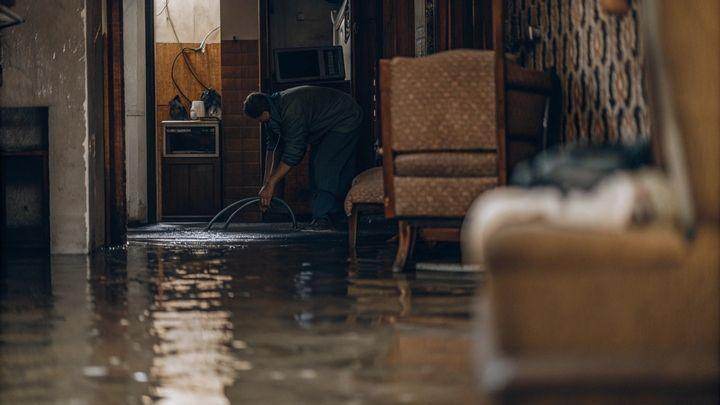
Creek water is the flood risk in Allen. Rowlett Creek runs through the east side of the city near Ridgeview Drive and Exchange Parkway. Cottonwood Creek cuts through the west side near the old water station on the 1874 railroad dam. Watters Creek runs past Montgomery Farm and the shops at Watters Creek Village. When a hard storm stalls over Collin County, these creeks rise fast and push water into low yards, garages, and ground floor rooms.
Flood water is not clean water. It carries mud, silt, and bacteria from the creek bed and the streets it crossed. That changes the job. Soaked carpet pad, insulation, and drywall below the water line usually come out. Hard surfaces get washed and disinfected. We photograph the water line in every room before anything moves, so your flood policy claim has a clear record.
One more thing to know: flood damage from a rising creek is usually covered by a separate flood policy, not by a standard homeowners policy. Check which policy you hold before the adjuster visits. We dry the home the same way either way. Our moisture logs and photos work for both kinds of claim.
See flood damage restoration for the full process, from extraction to disinfection to drying.
Two Burst Pipe Problems in Allen: Winter Freezes and Slab Leaks
Allen gets two kinds of burst pipe. The first is the winter freeze. A hard freeze splits pipes in outside walls, garages, and attic runs. The 1970s and 1980s homes on the west side near downtown Allen have the oldest pipe runs in the city, and they freeze first. The second kind is the slab leak, and it is the one Allen sees all year.
Most Allen homes sit on a concrete slab, and the water lines run under it. The Blackland clay under the slab swells and shrinks with the seasons. That movement stresses copper lines in 1990s and 2000s homes. A pinhole leak under the slab can run for weeks before anyone sees it. The signs are quiet: a warm spot on the floor, a water bill that climbs for no reason, a patch of tile that stays damp, or the sound of running water when every tap is off.
We find the leak with a moisture meter and a listening check, then we dry the slab and the rooms around it. A plumber repairs the line. We do not guess at the leak spot and tear up a whole floor to find it. If the leak has been running a while, the framing and baseboards near it may need to come out too.
See burst pipe water damage for shut off steps and the full drying process.
Mold After the May 2023 Hail Storm: Allen Roofs and Attics
Mold starts fast in a North Texas home. Wet drywall and wood can grow mold within 24 to 48 hours. That clock starts the moment the water hits, not the moment you find it. A slow slab leak in a Bethany Ridge Estates home can feed mold behind a wall for weeks while the room looks normal.
Allen has a second mold path: the roof. The May 2023 hail storm damaged roofs across the city. A lifted shingle or a cracked pipe boot lets rain into the attic. Attic insulation holds that water against the ceiling drywall. By the time a stain shows on the ceiling, the mold is already growing above it.
We treat mold by removing the source first. Wet drywall comes out. Wet insulation comes out. Then we clean the framing and dry it to a measured reading. We do not paint over mold and call it done. Paint hides it for a month. The moisture behind it keeps feeding it.
If you smell a musty odor in a room that had water, call. The meter finds what the nose only guesses at. See mold remediation for the full process.
When a Sewer Line Backs Up After Heavy Rain in Allen
Sewage water is Category 3 water. That means it carries bacteria and must be removed, not dried in place. A sewer backup in an Allen home usually starts the same way: heavy rain overloads a line, a drain slows, then a toilet or a floor drain in a low bathroom backs up.
Do not use any sink, toilet, or dishwasher on the same line once a backup starts. Every flush pushes more water into the room. Keep children and pets out. Anything soft that touched the water gets thrown out. That includes rugs, towels, and the carpet pad under the spot.
We extract the water, remove the soaked materials, and clean and disinfect the floors, walls, and fixture bases the water touched. Then we dry the area to a measured reading. A backup that reached a kitchen or a food prep area needs a check with the city before the room goes back into use.
See sewage cleanup for the full process and what to do in the first hour.
How Long Drying Takes in an Allen Home, by Material

Drying is a measured job, not a guess. We set air movers to push dry air across wet surfaces. We set dehumidifiers to pull the moisture out of that air. Then we take readings every day with a moisture meter until the wood, drywall, and slab read dry against a dry room in the same home.
Allen homes dry at different speeds because they are built differently. A 1990s brick home in Twin Creeks with tile on slab dries differently from a 1970s home near downtown with wood floors over a crawl space. Tile holds water at the grout lines. Wood floors cup and buckle if they dry too fast on one side. We adjust the gear to the material, not the other way around.
Here is what drying usually takes in an Allen home. These are typical times after extraction, and the meter readings decide in every case.
| Material in the home | Typical drying time |
|---|---|
| Carpet and pad in one room | 2 to 4 days |
| Drywall and baseboards, one wall | 3 to 5 days |
| Tile floor on a concrete slab | 3 to 5 days |
| Hardwood floors | 5 to 10 days |
| Framing and subfloor after a slab leak | 5 to 7 days |
| A whole ground floor after creek flooding | A week or more |
See structural drying for the equipment list and how readings work.
The First Visit to Your Allen Home: What We Do First
Stop the water at the source or shut the main valve. Pull out standing water with truck mounted extractors. Check every room with a moisture meter, including rooms that look dry.
Set air movers and dehumidifiers, then take a baseline reading. Photograph the damage and the water line for your claim file.
That is the first visit. After that we come back each day, take new readings, and move the gear as the rooms dry. Nothing gets rebuilt until the readings say the structure is dry.
Allen ZIP Codes and Neighborhoods We Serve
Allen has two ZIP codes, and they split the city cleanly. ZIP 75013 covers the older west side near downtown Allen, Main Street, and Greenville Avenue. ZIP 75002 covers the newer east side around Allen High School and Twin Creeks. We work in both, every day.
In 75013, we serve Fountain Park near the Allen Freshman Center, Morningside in east Allen, and the homes around Allen Heritage Village and the old train depot. These are the older streets in the city. Their pipes and roofs have the most years on them, and their lots sit closer to Cottonwood Creek.
In 75002, we serve Twin Creeks, the largest master planned area in Allen, and StarCreek, Watters Crossing, Bethany Ridge Estates, Cumberland Crossing, and Summerfield. Twin Creeks alone holds more than 3,300 homes, built from 1994 into the 2020s. Most of these homes are brick veneer on slab, with copper or CPVC lines in the older builds and PEX in the newer ones.
We also serve Waterford Crossing, Beacon Hill, Glendover Park, Chase Oaks, Cottonwood Bend, Shadow Lakes, Suncreek, Bethany Lakes, Rolling Hills, Amberwood, and Montgomery Farm beside Watters Creek Village. The shops and restaurants at Watters Creek Village, the Allen Premium Outlets on Stacy Road, and the Credit Union of Texas Event Center are all in our service area too.
Questions Allen Homeowners Ask Us
Can you come tonight to my home in Allen?
Yes. Call (469) 548-7594 any time, day or night. Tell us your street, whether water is still coming in, and where it is pooling so the crew brings the right gear.
My home sits near Rowlett Creek. Does that change the drying?
Yes. Creek water is flood water, not clean water. It carries mud and bacteria, so soaked carpet pad, insulation, and drywall below the water line usually come out before drying starts.
Why does my slab keep moving in Twin Creeks?
Twin Creeks sits on Blackland clay, and that clay swells when wet and shrinks when dry. The movement can open gaps at the slab edge and stress water lines under the floor. We find the leak, dry the slab, and tell you plainly what needs a foundation specialist.
How long does drying take in an Allen home?
Often 3 to 5 days for one room with wet carpet and drywall. A slab leak under tile, a flooded ground floor, or a whole house after a storm can take longer. The moisture meter readings decide, not the calendar.
What should I do first if a pipe bursts?
Shut the water off at the main valve first. Then kill power to any wet rooms at the breaker, move rugs and valuables off the floor, and call (469) 548-7594. Do not step into standing water near outlets.
Is flood water from a creek safe to clean up myself?
No. Creek water carries mud, sewage, and bacteria. Wear boots and gloves, keep children and pets away, and let a crew extract it and disinfect the surfaces it touched.
Do you also work in Plano and McKinney?
Yes. We cover Allen and the towns right around it, including Plano, McKinney, Frisco, Richardson, and Wylie.
Near Allen
We also help homeowners in Wylie, Plano, McKinney, Frisco, and Richardson.
Get Help in Allen
Tell us what you are dealing with. For immediate help, call us.
Water Damage in Allen Right Now? Call (469) 548-7594
Shut off what you can, take photos, and call. A crew heads to your home right away.